
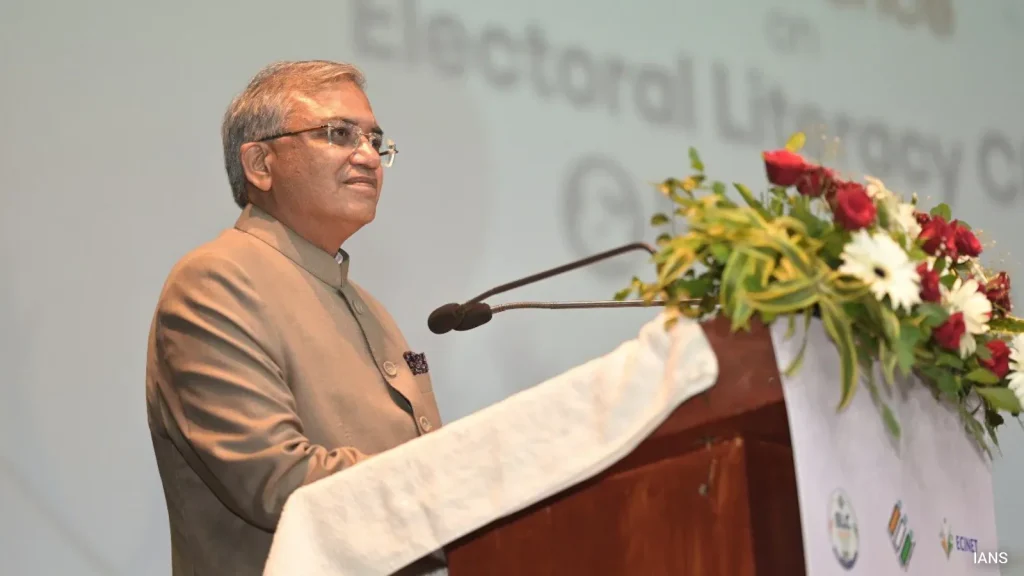
Young voters are at the heart of the Election Commission of India’s renewed push to build an informed and engaged electorate, with Chief Election Commissioner Gyanesh Kumar calling for sustained engagement with students and first-time voters as the poll panel launched Electoral Literacy Clubs 2.0 in Patna on Monday.
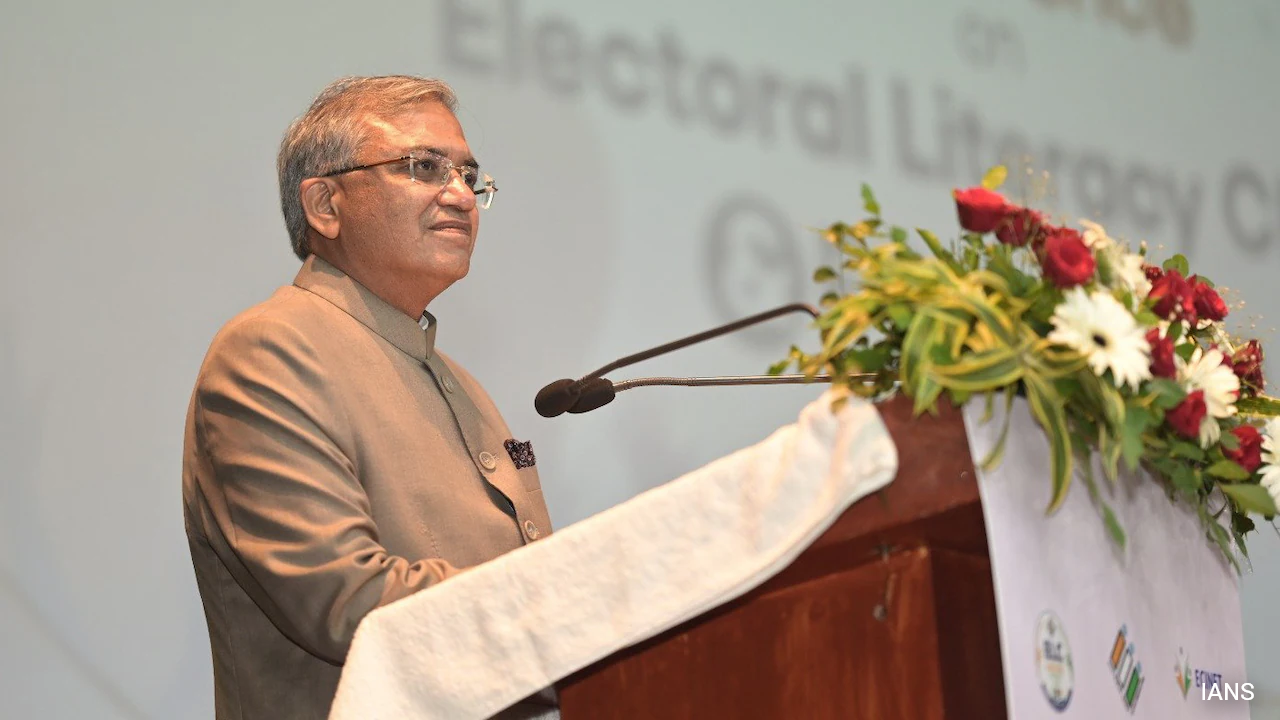
The Commission’s focus on first-time voters and electoral literacy assumes added significance in these states, where young electors will form an important part of the electorate. The ECI has been stepping up voter awareness and registration efforts ahead of the polls. Kumar stressed the need to familiarise young electors with the functioning of India’s electoral system, including voter registration, polling and counting, democratic values and the role of the Election Commission.
The launch comes as several states head into the Assembly election cycle, with Goa, Uttarakhand, Punjab, Manipur and Uttar Pradesh in the first part of 2027, followed by Himachal Pradesh and Gujarat later in the year. The ECI’s ELC programme was first introduced in 2018 under its Systematic Voters’ Education and Electoral Participation (SVEEP) programme to introduce students to democratic values, the electoral process and the role and functioning of the Commission. Officials said ELC 2.0 has been conceived as a response to a rapidly changing communication environment, shifting media consumption patterns and the growing reliance of young people on digital platforms.
He said elections in India are held “strictly as per the Constitution of India, law and instructions issued by ECI” and conducted transparently, with political parties, candidates and their representatives able to participate in and scrutinise the process at different stages.
Under the new framework, Electoral Literacy Clubs will be transformed into structured, visible and digitally enabled platforms across schools, colleges and universities. The scale of the initiative is significant. The ECI sees this network as an opportunity to institutionalise electoral education rather than rely solely on election-time voter awareness campaigns. The clubs will also familiarise young citizens with ECINet, the Commission’s digital platform for election-related services and information.
India has approximately 15 lakh schools with nearly 25 crore students and around one crore teachers, while the higher education system comprises about 1,500 universities and 70,000 educational institutions with more than four crore students. EC officials said ELC 2.0 will provide students with factual and experiential understanding of the entire electoral cycle – from registration and preparation of electoral rolls to polling and counting.
Rather than functioning only around election periods, the clubs will conduct continuous, year-round activities aimed at building electoral literacy among young people and awareness among citizens more broadly, according to EC officials.
