
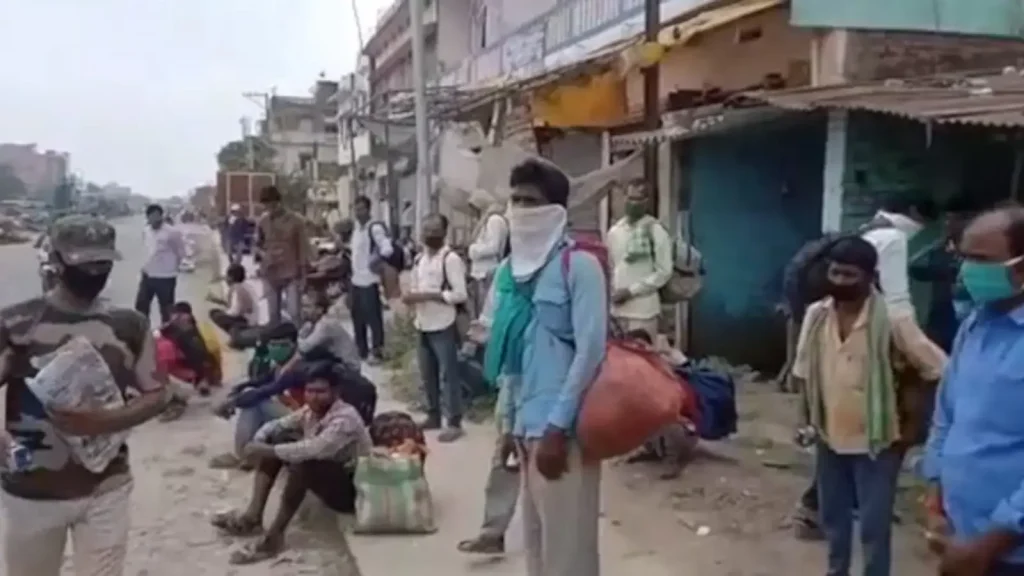
Migrant labourers, who form the backbone of Punjab’s economy today, had started making a beeline for the state in 1960s and early ’70s, when the Green Revolution started. Even so, their presence is largely ignored by political parties during the state elections. Today, from 4,000 in 1971, their numbers have reached an estimated 3.3 million. Around 70 per cent of them work in industrial units and the rest in the farm sector.
Government data shows that migrant labourers account for 12 to 15 per cent of Punjab’s population; the majority (80 to 90 per cent) come from Bihar and Uttar Pradesh.
It is not clear why migrant labourers, who helped Punjab shape its economy, remained politically sidelined and were not given representation in the state assembly and local self-government. Language barriers, weak knowledge of local administration and absence from neighbourhood patronage networks keep them outside everyday circuits of politics. Parties invest little in registering, informing or integrating them. “The labourers are not united; they belong to fragmented groups. They fear a backlash and are not assertive.
Government data shows that migrant labourers account for 12 to 15 per cent of Punjab’s population; the majority (80 to 90 per cent) come from Bihar and Uttar Pradesh.
They can only become a force if they are united,” Darshan said.
