
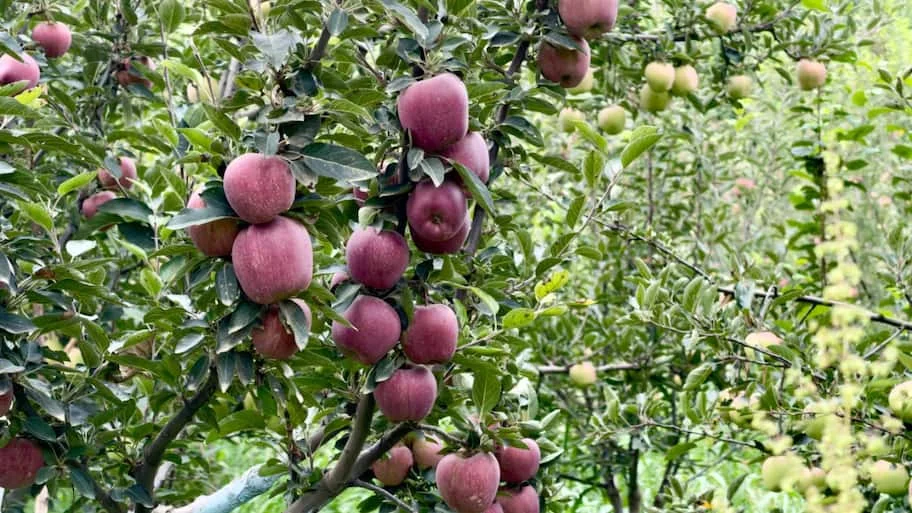
Unpredictable hailstorms, heavy rains, flash floods, cloudbursts, landslides, and repeated closures of National Highway 44 have inflicted heavy damage on the fruit crop. Rough estimates put the losses to fruit produce at around ₹400 crore, concentrated largely in four districts of south Kashmir. Kulgam is reported to have suffered nearly 90% losses, Shopian—the leading apple-producing district—80–85%, Pulwama around 55%, and Anantnag approximately 35%. Overall, the quantity of apples available for market is estimated to have fallen by about 36%.
Ghulam Nahi Hajam is a fruit. Right after the harvesting, time. A little help from the government is necessary for the farmers. Roads should not get jammed badly; it spoils produce. Shopian is badly hit. Yet the current season has turned that promise into a story of mounting distress, driven by increasingly erratic weather patterns linked to climate change.
Almost 70 percent of the crops have gone. Kashmir produces the bulk of India’s apples, with annual output typically in the range of 20–23 lakh metric tones—the highest in the country.
Grover said, “This time huge damage has happened. Previously trains brought cement from outside, which had high temperatures and ruined the fruit, turning it into “C grade” by the time it reached the mandis. This “red gold” has long been a source of pride and prosperity.
Imtiyaz Ahmad, a fruit grower, said, “This season has suffered immense losses due to weather events like hailstorms (chalabari), heavy rains, and flash floods. Around 80% to 90% of crops have been damaged across various districts in Kashmir, with South Kashmir experiencing the most severe impact. Kulgam had a 90% loss; Shopian had an 85% loss, with some areas having 100% affected. Pulwama: 55% loss Rain-induced diseases and a lack of expert local guidance compounded the crisis.
Faced with these successive blows, farmers are demanding immediate compensation for crop losses and the introduction of a robust crop insurance scheme that would offer a meaningful sense of security against future weather shocks. Those who had taken Kisan loans are also appealing to the government for loan waivers to ease their financial burden. The crisis underscores a deeper challenge. Climate change has already sounded alarm bells in Kashmir through water stress, floods, and cloudbursts. It is now directly disrupting the region’s most important economic activity. Erratic weather is no longer a distant threat; it is actively eroding trade volumes, farm incomes, and the broader economy of the Valley. How the government responds—through timely compensation, expanded cold-storage infrastructure, improved highway resilience, effective crop insurance, and longer-term climate adaptation measures—will determine whether Kashmir’s horticulture sector can withstand the growing pressures of a changing climate or continue to face recurring setbacks that threaten both livelihoods and regional growth.
