
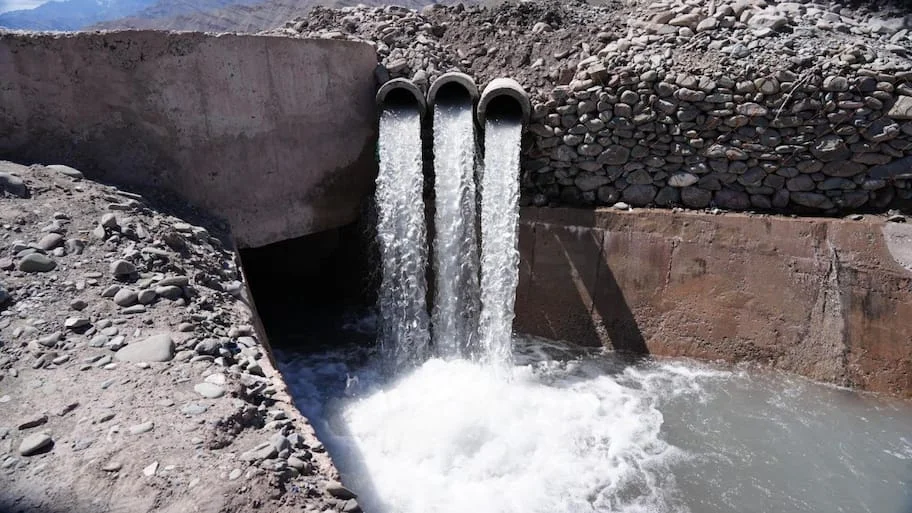
The move uses two temporary earth trenches and no capital spending, turning water that once ran into the Indus River into a source for farms in Leh each day. A simple diversion of glacial meltwater is set to bring daily irrigation to 12 villages in Ladakh, with about 90 million litres of water now flowing into the Igoo-Phey Canal.
The administration expects the change to support crop yields, farm incomes and rural employment in the affected villages. He called it a blueprint for a wider programme targeting other nearby streams, including Matho Nallah, Tuchik Chenmo, Tuchik Chon and Stakna Nallah, while following low-cost and environmentally sound principles. The initiative is part of the administration’s stated goal of a green, water-secure and self-sustaining Ladakh by turning scattered glacial runoff into a dependable source of water for agriculture. Ladakh Lieutenant Governor Vinai Kumar Saxena described the intervention as proof that large-scale, sustainable water management is feasible in Ladakh’s cold desert using only gravity and basic earthwork.
On 14 August, the Irrigation and Flood Control Department acted on the directions of the Lieutenant Governor of Ladakh and used a JCB to create two temporary trenches.
