
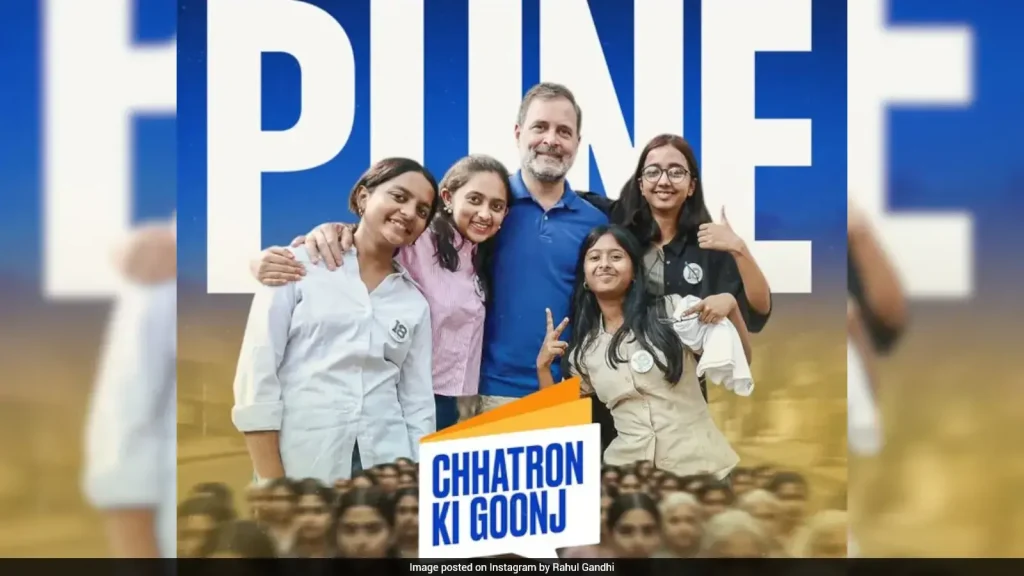
There’s a quiet, but noticeable, change in the way political parties are reaching out to young voters. Senior Congress leader Rahul Gandhi has been leaning into this shift, reshaping his youth outreach to focus directly on Gen Z and young women through a mix of spontaneous town halls and digital interactions.
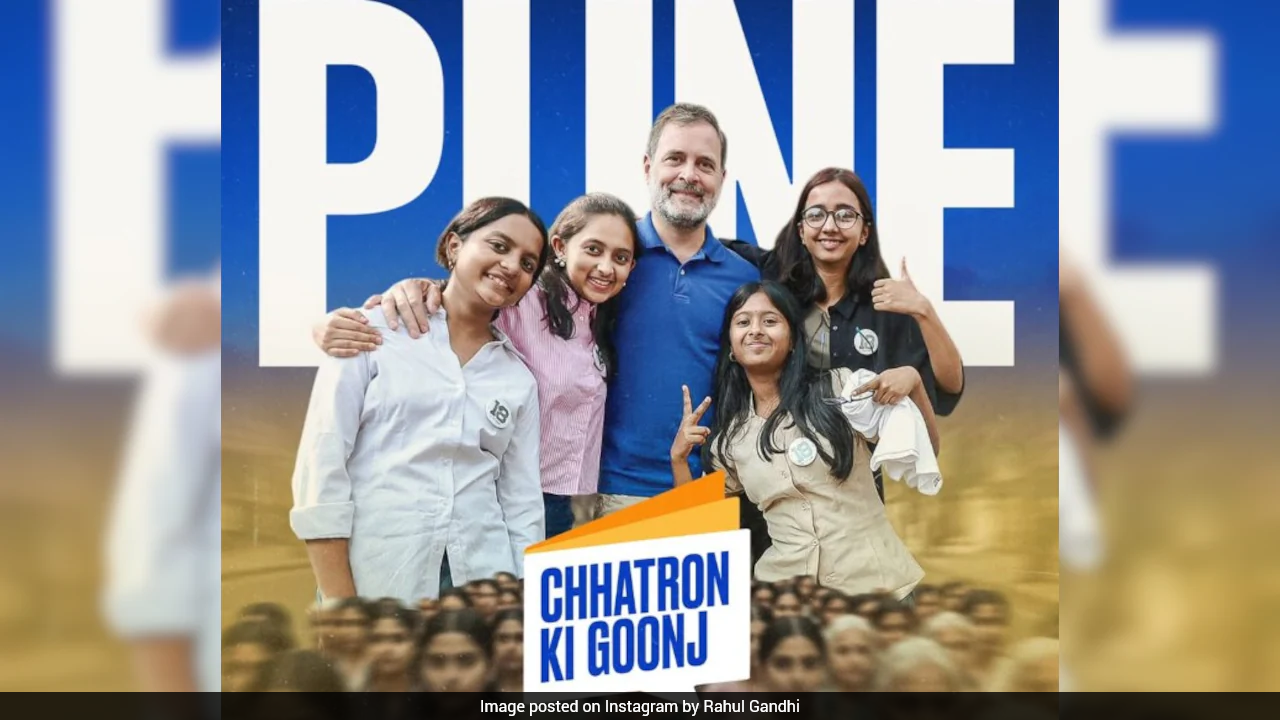
Instead of relying solely on massive rally grounds, the strategy often centres on meeting students where their everyday anxieties lie. The broader push gained momentum through the ‘Chhatron Ki Goonj’ initiative, which began by focusing on student issues like competitive exam pressure, paper leaks, and systemic delays in education. What started in major student hubs like Kota, Dehradun, and Prayagraj has gradually evolved. I would invite as many of you to join the conversation in Pune. These are the type of conversations that we need to be having. Thank you.
“This is the type of discussion we need to have so that we can, together, improve the situation and the conditions Indian women face in their lives.
He invited women to join the conversation in Pune and said such discussions were important to understand and improve the situation of Indian women. He said women would be asked about issues including how society treats them, how fear is used against them, the violence they face and where they experience it. Looking forward to seeing you all there,” he said.
A key part of this approach is making the conversation feel personal rather than policy heavy. Ahead of recent interactions, Gandhi shared insights from internal team discussions where women colleagues spoke candidly about their lived experiences.
