
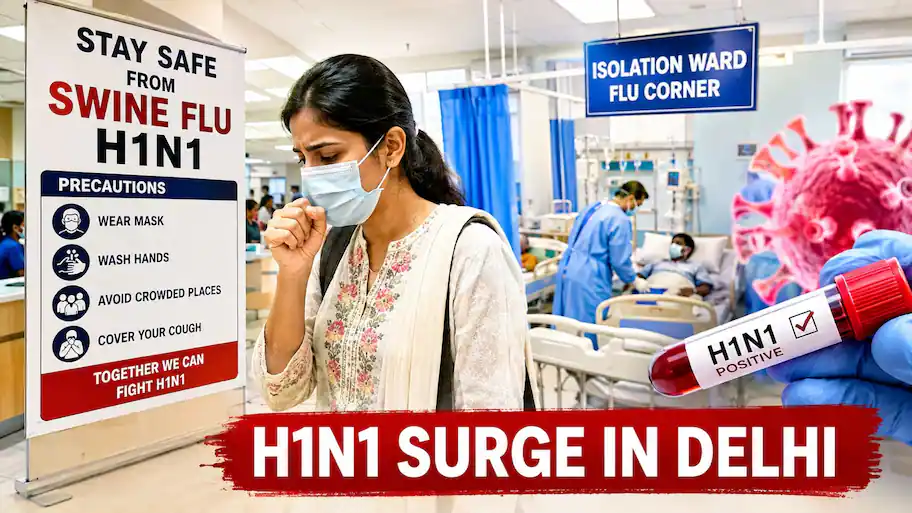
This called for immediate and effective administrative measures from the Delhi government. With 138 additional cases recorded over the course of one day, the aggregate number of H1N1 cases in Delhi rose to 2,446. the total number of influenza-A cases in the national capital rose to 3,177 While there was a significant increase in the swine flu cases.
A high-level virtual meeting was conducted by Health Minister Pankaj Kumar Singh with medical superintendents of all state-run facilities to discuss the issues of assessing institutional capacity, isolating vulnerable patients, and ensuring availability of uninterrupted medical supplies. Quotas for isolation beds : Smaller hospitals are required to keep at least five beds for isolation of patients, while the larger hospitals should have ten or more. There was a specific focus on protecting high-risk demographics such as children and elderly people as well as conducting an immediate clinical examination of the patients. The administration advised people to practice respiratory hygiene, use masks in crowded places, and consult a doctor immediately if needed. The medical diagnostics and treatment are available in all government hospitals, health centers, and Ayushman Arogya Mandirs.
