
Prime Minister Narendra Modi is in Kyrgyzstan to attend the Shanghai Cooperation Organisation (SCO) meeting. Kyrgyzstan, a Muslim-majority country with nearly 90% Muslim population, has adopted a modern approach towards women’s freedom, including restrictions on face-covering in public spaces.
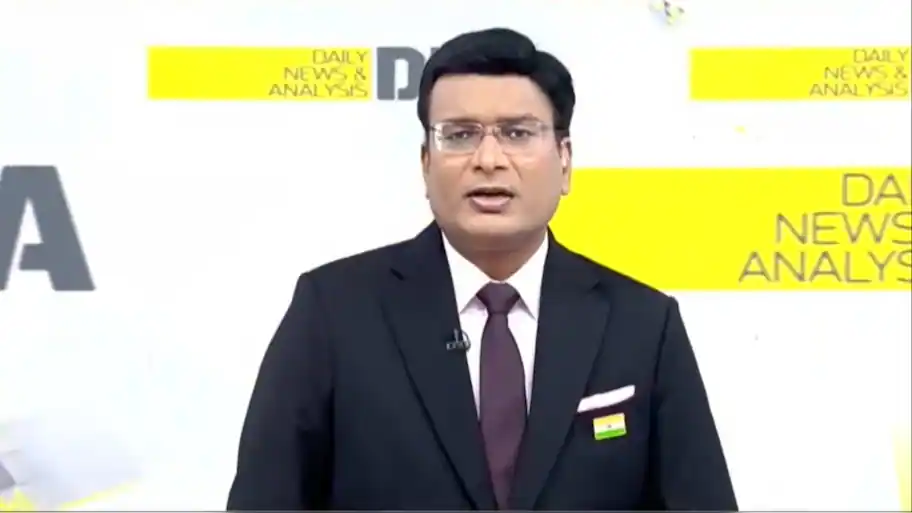
In today’s episode of DNA, Rahul Sinha, Managing Editor of Zee News, conducted a detailed analysis of the contrasting positions on women’s freedom, Sharia, the Uniform Civil Code (UCC), Vande Mataram and the ongoing political debate over the ‘Manusmriti’. Kyrgyzstan presents a different picture from several countries where Muslim women face pressure to wear the burqa or niqab.
The programme then turned to the All India Muslim Personal Law Board (AIMPLB), which has announced a campaign called “Save Constitution, Save Sharia”.
The discussion also highlighted the broader situation in Central Asia. Despite this, their governments have imposed restrictions on the niqab and burqa citing security and national identity. Kazakhstan has gone further by restricting the wearing of the hijab as well as the burqa. Women in these countries have the freedom to leave their homes alone, work and travel, while women also work alongside men in offices. Muslim organisations in these countries have also supported such government measures. Against this backdrop, the programme examined statements made by Kerala’s Grand Mufti Abu Bakar Musliyar. His organisation, Samastha Kerala Jamiyyathul Ulama, is a prominent religious organisation in Kerala and plays an important role in the state’s Muslim political and social life. It also has close links with the Indian Union Muslim League, a partner in the Kerala government. The organisation had recently issued a circular stating that women should not be present on public platforms. Several organisations opposed the circular. Constitution-maker Dr BR Ambedkar was a strong supporter and advocate of the UCC. However, in the absence of broad consensus, the provision was kept voluntary when the Constitution came into force. The programme argued that since UCC is explicitly mentioned in the Constitution, describing it as unconstitutional is not accurate. Similarly, Vande Mataram has a significant place in India’s freedom struggle, with the makers of the Constitution discussing its historic contribution and according it equal honour and status with the national anthem. The programme also stressed that peaceful protest is a democratic right, but argued that protests should not become a means of inciting or misleading people. If organisations believe that the UCC or Vande Mataram violates constitutional principles, they can approach the courts rather than challenge laws through street protests. At the time, claims were made that the law would take away the citizenship of Muslims, although the legislation did not concern the withdrawal of citizenship. The programme also referred to tensions surrounding the Waqf issue, including violence in West Bengal’s Murshidabad, where three people were killed in anti-Hindu violence and Hindus were forced to migrate. The programme subsequently examined the ongoing political campaign against the Manusmriti. Congress workers have been organising protests against the ancient text in several cities, with copies being burnt at some locations. The programme questioned the relevance of the Manusmriti in contemporary India, asking whether it has any role in governing the country when India functions under the Constitution, Parliament and a system of laws. It also pointed out that the Manusmriti is not a basis for determining citizens’ rights under the Constitution or existing laws. The programme argued that the text is instead being used as a political issue to target Hinduism and Hindutva. The larger argument presented in the episode was that while debates over Sharia, women’s freedom, UCC and Vande Mataram continue, political parties and organisations should engage with the Constitution and the country’s existing legal framework rather than use religious or historical texts to mobilise their respective constituencies.
Because abu Bakar Musliyar is regarded as a major religious leader of Sunni Muslims in Kerala, India and South Asia, the remarks have drawn attention. The country has a law restricting the wearing of the ‘niqab’ in public places and government offices, with violations reportedly attracting a fine of around Rs 20,000. Uzbekistan, Kazakhstan, Tajikistan and Turkmenistan, along with Kyrgyzstan, are Muslim-majority countries where Muslim populations range from around 70% to 98%. The country has a Muslim population of around 70%, but its government introduced legislation against wearing the hijab and burqa last year. The 94-year-old cleric is considered the 10th religious scholar in India to hold the status of Grand Mufti. Article 44 of the Indian Constitution mentions the Uniform Civil Code under the Directive Principles of State Policy. The discussion referred to the protests against the Citizenship Amendment Act (CAA) passed by Parliament in 2019. More than 80 people died in violent protests in different cities in the country.
Women are like gold ornaments that should be kept safely inside a box, according to his view cited in the programme. He has argued that women should remain inside their homes and suggested that their appearance outside or on public platforms could lead to “devastation”. It says that the State shall endeavour to secure a uniform civil code for citizens throughout the territory of India.
The debate has also drawn in AIMIM president Asaduddin Owaisi, who has criticised the Manusmriti while advocating the hijab. The programme questioned the apparent contrast between opposing the Manusmriti on constitutional grounds and refusing to accept a High Court order concerning the hijab.
The campaign began after Leader of Opposition Rahul Gandhi described the Manusmriti as anti-women during the “Students’ Goonj” programme in Pune.
It is expected to extend beyond the national capital, with demonstrations and processions planned in different cities. The organisation has raised several issues, but the Uniform Civil Code and Vande Mataram are among its principal concerns. AIMPLB has argued that the implementation of the UCC in different states is against Sharia. It has also opposed making Vande Mataram mandatory.
The campaign will begin on September 17 with a protest at Delhi’s Jantar Mantar, according to AIMPLB.
