
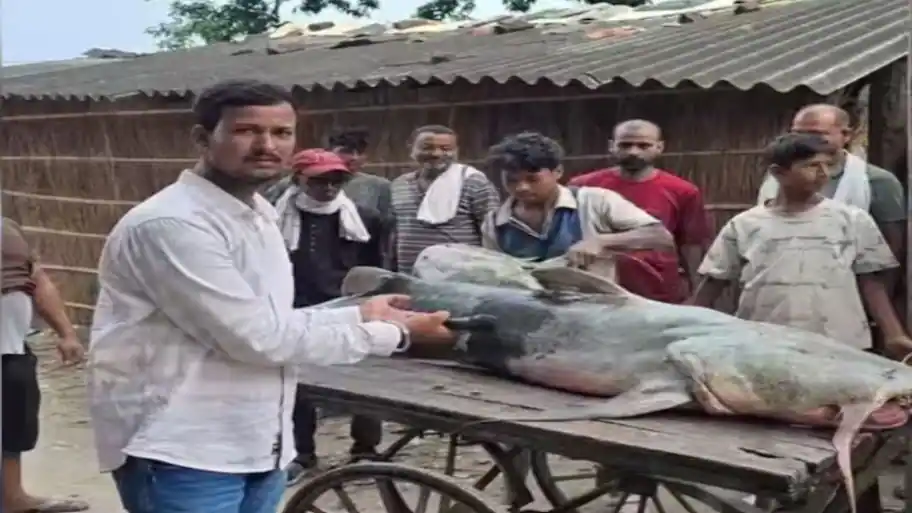
Patna: After unusual fish were found in flood-hit areas and some people were reportedly taken ill after consuming them, Bihar has warned people against eating fish caught from floodwaters flowing into the state from Nepal.
The warning comes after flash floods in Nepal sent large volumes of water from the Trishuli River towards Bihar through the Gandak and Kosi rivers. Both rivers are major waterways in northern Bihar and have seen rising water levels following the floods. The Bihar government’s Animal and Fisheries Resources Department has advised people not to catch, buy, sell or eat fish taken from floodwaters until conditions return to normal. Officials have warned that fish moving through flooded areas can come into contact with sewage, dead animals, polluted drains, bacteria, viruses and other disease-causing organisms. The Nepal police have issued a similar warning to people living in areas affected by the floods. Fish exposed to polluted water and other contaminants may become unsafe for human consumption. The department has also asked people to avoid unknown or unusual-looking fish and not assume that any unfamiliar species is safe to eat without checking with the concerned authorities. The health concerns extend beyond fish. The Gandak and Kosi rivers are carrying large amounts of debris after the flash floods in Nepal, with dead fish, silt, mud, stones and large tree trunks among the material being washed downstream. Landslides and glacial bursts in Nepal’s hilly regions have added to the volume of material entering the rivers. Wreckage from collapsed bridges and damaged hydroelectric projects has also been seen floating towards Bihar, along with vehicles, household belongings and LPG cylinders from flooded villages. Human and animal remains washed down from Nepal have added another source of possible contamination. Health experts have warned that contaminated floodwater entering drinking-water sources such as hand pumps and wells could increase the spread of waterborne diseases. Diarrhoea and cholera are among the immediate risks, while contaminated food and water can also cause typhoid. Hepatitis A and hepatitis E can spread through contaminated water and affect the liver. Stagnant water and widespread waterlogging could create conditions for mosquito breeding, increasing the risk of dengue, malaria and chikungunya. The situation is more difficult for several Bihar districts along the Nepal border, where groundwater contamination is a concern. The highest arsenic concentrations in Bihar are found in districts along the Ganga, while high levels have also been detected in floodplains fed by rivers originating in Nepal. High iron levels have also been recorded in water across nearly all seven districts bordering Nepal. Excess iron can give water an astringent taste and leave red-yellow stains on utensils and clothes. Kishanganj has recorded iron levels several times above normal. Officials have warned that iron and other material carried by floodwaters could add to the contamination of local water sources, making access to safe drinking water harder for affected communities.
Because they are available in floodwaters, officials have urged people not to act on rumours or consume unfamiliar fish simply. Because of prolonged exposure to polluted water, flood-hit communities could also see more cases of skin and eye infections. West Champaran, East Champaran, Sitamarhi, Kishanganj, Purnia and Araria have recorded arsenic levels above the safe limit of 10 ppb or parts per billion.
The advisory issued by Bihar’s Department of Dairy, Fisheries and Animal Resources says floods force fish out of ponds, rivers, lakes and reservoirs, allowing them to spread into areas covered by floodwater.
People who develop vomiting, diarrhoea, abdominal pain, dizziness or breathing difficulty after eating such fish have been advised to seek medical attention at the nearest health centre. Residents have also been asked to report sightings of unusual fish to their District Fisheries Officer or local administration.
Flooding Threatens Agriculture in Bihar’s Border Districts
Recent flooding in Bihar’s border districts is poised to significantly impact local farmland, posing new challenges for agricultural communities. The floodwaters threaten to damage fields, which could lead to a decrease in the availability of grains and vegetables within the state. This situation exacerbates the difficulties already faced by farmers who are grappling with the consequences of the floods.
In response to the flooding, authorities have advised residents in affected areas to minimize contact with floodwater and adhere to official health and safety guidelines until river levels stabilize and water bodies return to normal.
