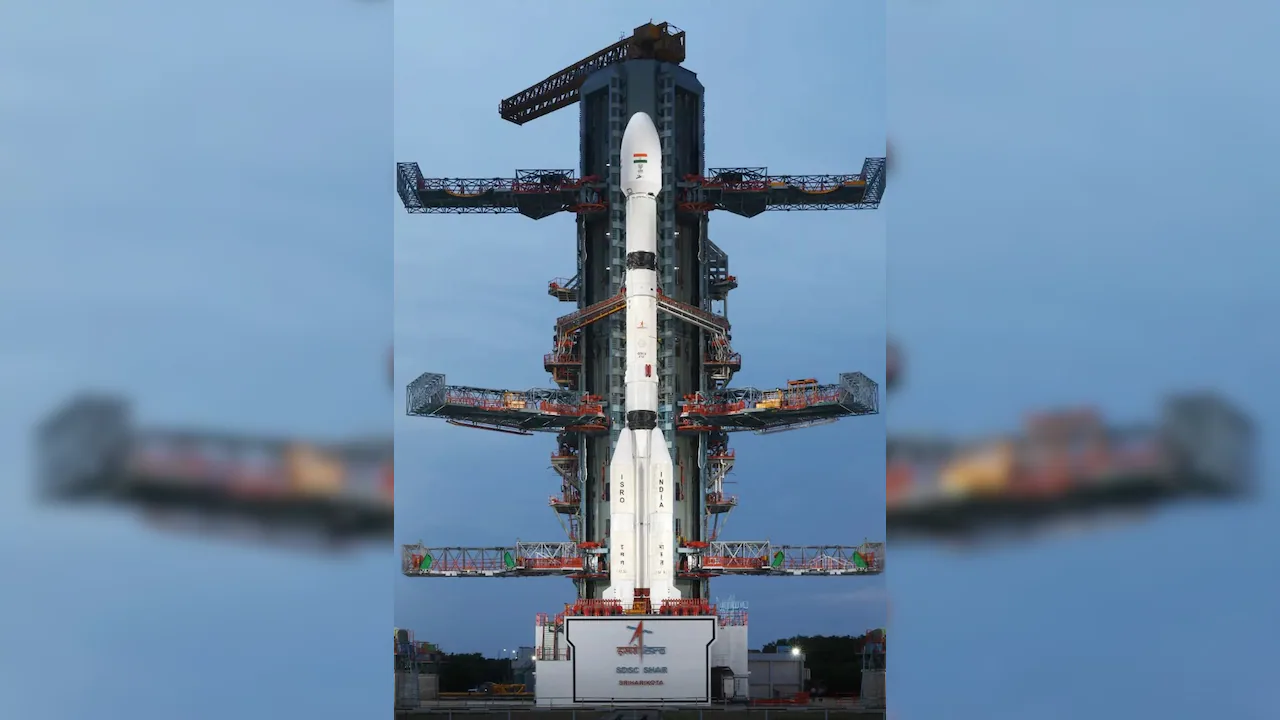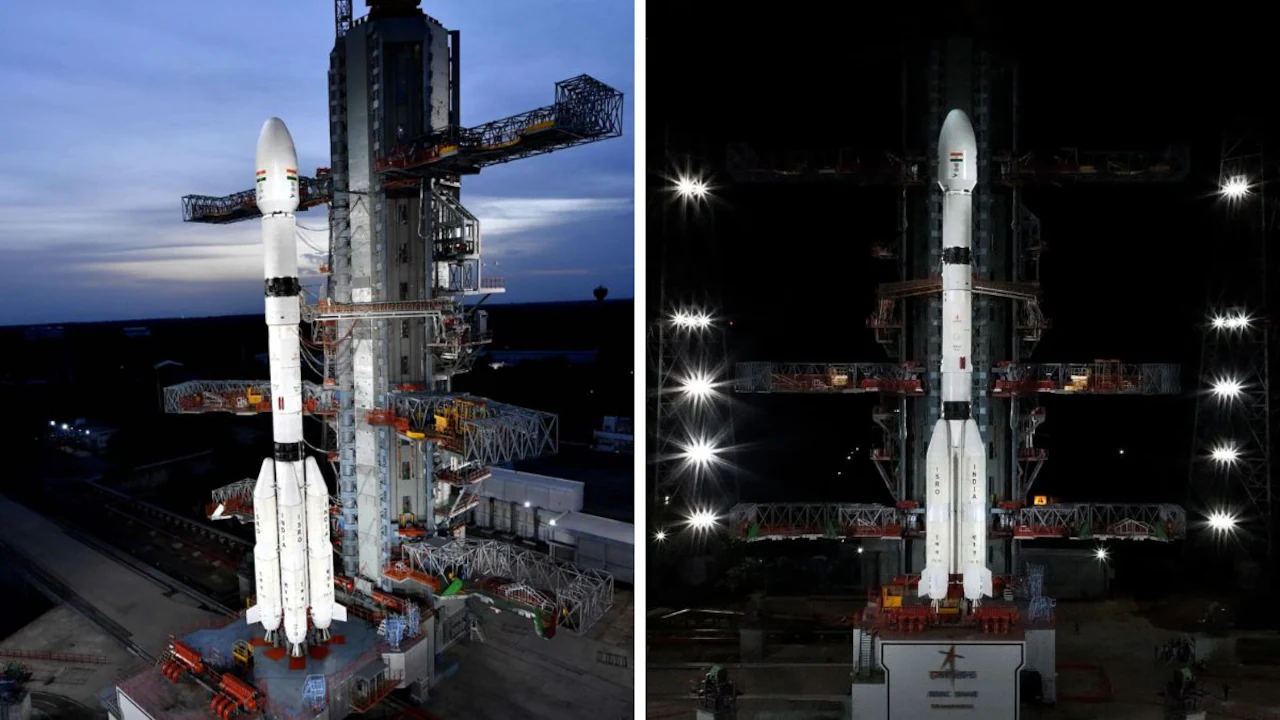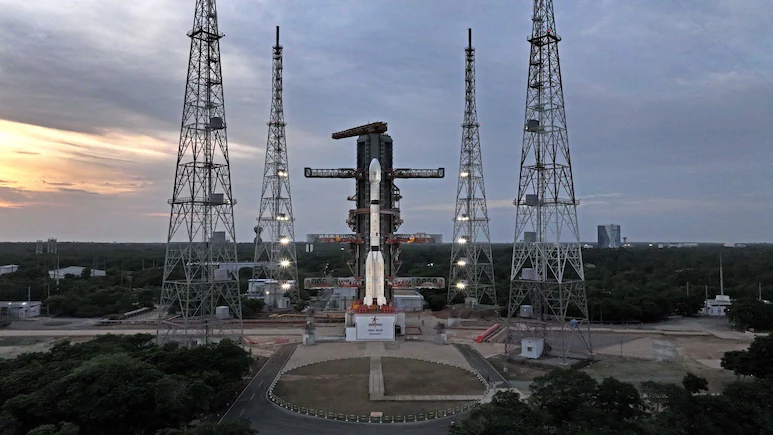
When most of India will be asleep in the early hours of September 4 at 2.55 am, the Indian Space Research Organisation (ISRO) will be at a crucial crossroads. From the Second Launch Pad at Sriharikota, the Geosynchronous Satellite Launch Vehicle (GSLV-F17) will thunder into the darkness carrying EOS-5, India’s first imaging satellite to operate from geosynchronous orbit, 36,000 kilometers above India.
For ISRO, this is more than just another launch. It is a comeback attempt. It is a test of confidence. And perhaps most importantly, it is an opportunity to restore faith after a bruising period marked by back-to-back launch setbacks. At stake is not only an advanced Earth observation satellite but also the reputation of an organisation that has become a symbol of India’s technological prowess. Recent months have been unusually difficult for ISRO. The PSLV has long been regarded as one of the world’s most reliable rockets, making the setbacks both unexpected and painful.
The workhorse Polar Satellite Launch Vehicle (PSLV) suffered consecutive failures in 2025 and 2026, forcing the government to ground the launcher while detailed investigations and tests still continue.
The spacecraft itself is arguably one of the most important Earth observation missions undertaken by India in recent years. It will keep a close watch on India’s hostile borders. The satellite will be placed into a Sub Geosynchronous Transfer Orbit by GSLV-F17 before manoeuvring into its designated position. It will signal resilience. It will demonstrate that setbacks do not define ISRO. And it may well mark the beginning of the agency’s climb back from one of the most challenging periods in its recent history. The naughty boy may once again have an opportunity to save the day.
EOS-5 is a state-of-the-art Earth observation spacecraft and India’s first imaging satellite operating from geosynchronous orbit, according to ISRO’s mission documentation. The spacecraft weighs approximately 2,367 kilograms. Read | After A Quiet 2026, ISRO Targets Gaganyaan Lift-Off In Four Months If GSLV-F17 successfully places EOS-5 into orbit, the mission will achieve far more than the deployment of a satellite.
The mission was lost, and with it disappeared India’s immediate hopes of placing an advanced Earth observation satellite into geosynchronous orbit. Fortunately for ISRO, the mission now waiting on the pad is riding a completely different family of launch vehicle. The GSLV Mk II and PSLV do not share engines or major propulsion systems. That distinction is critical. Problems affecting the PSLV are not directly linked to the GSLV Mk II. As engineers prepare for liftoff, that fact provides a measure of reassurance that the upcoming mission can proceed on its own technical merits. Yet confidence and GSLV have never had a simple relationship. Inside ISRO, the GSLV earned an infamous nickname over the years: the “naughty boy. Despite decades of effort, every GSLV launch has carried a degree of tension that the PSLV rarely generated. And yet this same rocket remains one of the crown jewels of India’s space programme. The reason lies not merely in what the GSLV does, but in what it represents. The vehicle embodies one of the most remarkable technological struggles in modern Indian science. At the heart of that story is the cryogenic engine, often considered the most complex propulsion system in rocketry. During the 1990s, India sought cryogenic technology from Russia to accelerate its capabilities in launching heavy satellites. The effort triggered a major geopolitical controversy. The United States strongly opposed the transfer, citing missile proliferation concerns. International pressure led to restrictions and complications that effectively denied India access to critical cryogenic technology. For many nations, that would mean the end of the dream. Instead, ISRO chose the difficult path. Indian scientists embarked on the long and uncertain journey of developing cryogenic propulsion indigenously. It took years of failures, setbacks, redesigns, and repeated testing. The eventual success transformed India’s launch capabilities permanently. Every flight of the GSLV equipped with an indigenous cryogenic upper stage stands as a reminder that India refused to abandon the quest despite immense international pressure and technological barriers. Ironically, one of the most painful chapters in that journey involves the very satellite now returning to the launch manifest. The mission rode aboard GSLV-F10. The launch began normally, but disaster struck during the crucial cryogenic phase when the indigenous cryogenic upper stage failed to ignite properly. From that extraordinary perch, the satellite will provide a continuous view of the Indian landmass and surrounding region. Imagine a hawk circling high above the subcontinent, never blinking and never leaving its station. Such continuous monitoring can prove invaluable for weather systems, cloud movements, cyclones, environmental monitoring, disaster response, and national infrastructure surveillance. For decades, India has lacked a dedicated imaging spacecraft capable of maintaining such a constant watch from geosynchronous orbit. The mission also arrives at a time when Earth observation has never been more important. Climate change, extreme weather events, glacial activity in the Himalayas, floods, droughts, forest fires, and coastal changes increasingly demand rapid and continuous monitoring. A permanent eye in the sky offers strategic and scientific advantages that extend far beyond traditional remote sensing applications. The launch vehicle carrying this valuable cargo is itself an impressive machine. The first stage combines a solid core motor with four liquid fuel strap on boosters. The second stage uses liquid propulsion, while the third stage features the indigenous cryogenic upper stage that remains central to the vehicle’s identity. The significance of the GSLV Mk II has only grown in recent years. The launcher was trusted to place NISAR, the world’s most expensive civilian Earth imaging satellite, into orbit. That decision reflected international confidence in the Indian launcher’s capabilities despite its turbulent past. Now another defining moment awaits. The PSLV remains grounded. Questions linger after recent failures. India’s space programme seeks momentum and reassurance. For decades, GSLV Mk II has frustrated engineers, tested patience, and delivered dramatic moments. Yet it has also embodied India’s determination to overcome technological denial, master cryogenic propulsion, and build capabilities once thought beyond reach.
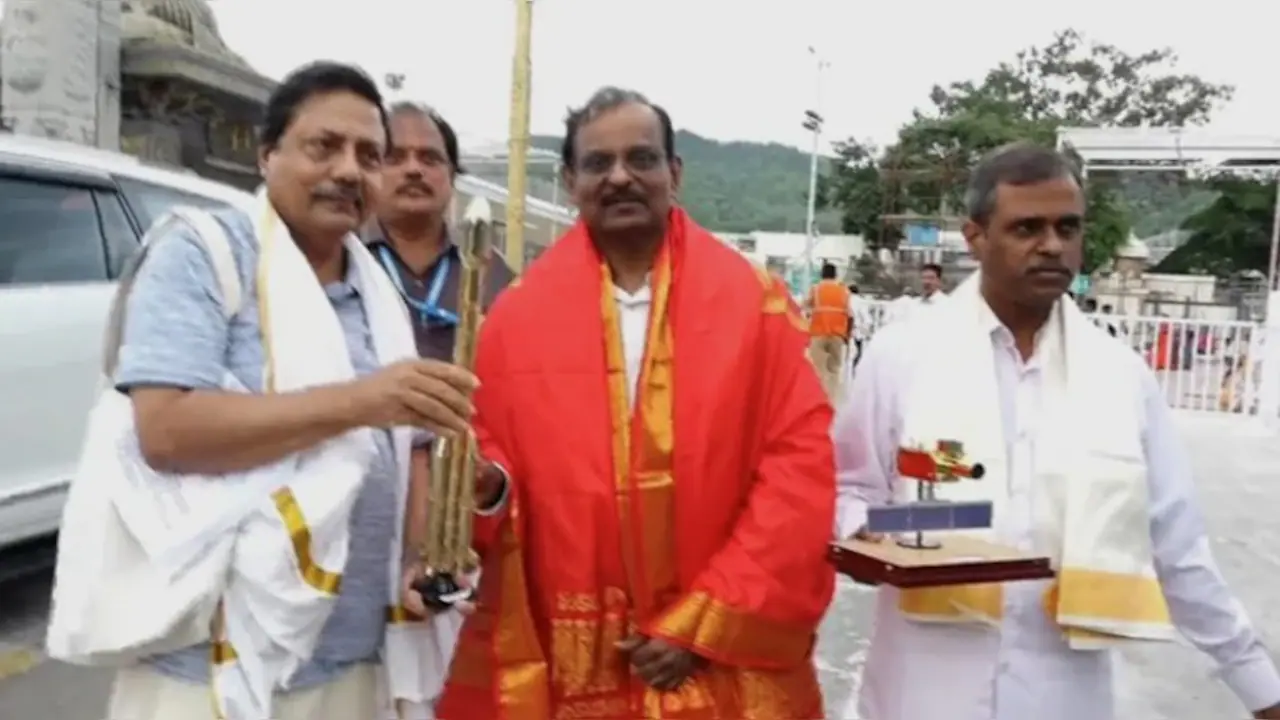
Because the rocket often displayed unpredictable behaviour during its developmental years, the name emerged. In its first 18 flights, six did not achieve full mission success. Read | With Rocket Model, ISRO Chief Prays At Tirumala Temple Ahead Of Crucial Launch ISRO Chairman Dr V Narayanan prayed at Tirumala ahead of GSLV-F17/EOS-05 launch on September 4. The task demanded mastery over technologies operating at temperatures colder than minus 250 degrees Celsius, where liquid hydrogen and liquid oxygen become powerful rocket propellants. In August 2021, ISRO attempted to launch EOS-03, a mission essentially designed to provide capabilities similar to those planned for EOS-5 today. Five years later, EOS-5 represents a second chance. Unlike satellites in low Earth orbit that periodically pass over a location, EOS-5 will maintain a vantage point nearly 36,000 kilometres above Earth, locked in step over India. That perspective is what makes EOS-5 unique. EOS-5 promises something much closer to persistent observation While low orbit satellites offer snapshots separated by hours or days. EOS-5 seeks to fill that gap. Standing 51.7 metres tall and weighing 420.5 tonnes at liftoff, GSLV-F17 consists of three stages. The rocket will lift off from the Second Launch Pad at Sriharikota and inject EOS-5 into a Sub Geosynchronous Transfer Orbit. As mid night gives way to early dawn on September 4, engineers, scientists, and space enthusiasts across the country will be watching closely.
Perhaps fittingly, the responsibility falls on a rocket affectionately nicknamed the “naughty boy”.