
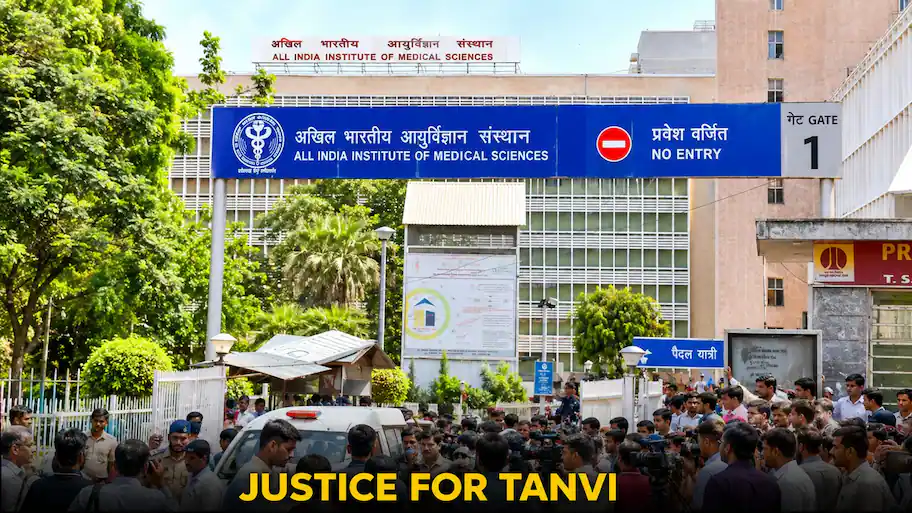
Because she did not have any pulmonary blood vessels, while her family claims that she spent more than a decade waiting for an operation that never took place, AIIMS has confirmed that the extensive evaluation of the girl revealed that surgery was not possible. Fifteen-year-old Tanvi Pariyani succumbed to her disease on September 1, 2026, at the All India Institute of Medical Sciences (AIIMS). She had been battling her congenital heart disease for thirteen years since her diagnosis in 2012.
The hospital has formed an independent inquiry committee in the wake of public outcry and complaints that reached the Prime Minister’s Office. Her medical condition was ventricular septal defect (VSD) along with pulmonary atresia. The rare congenital heart disease means that the child does not have a channel for blood flow from the heart to the lungs. Assessment of the hospital : The treating specialists, one of whom is Dr.
Sachin Talwar, assessed that around 2017–2018 the possibility of corrective surgery is nonexistent due to the lack of major blood vessels to her lungs. The medical records of Tanvi started accumulating at AIIMS on October 10, 2012, at the age of two. In 2013, Tanvi’s condition included multiple tests such as cardiac catheterisation, CT angiography, and conventional angiography to assess her pulmonary anatomy.
By January 2014, there was already a proposed procedure called “unifocalisation & conduit” costing Rs 1.2 to Rs 1.25 lakh as per an AIIMS estimate certificate, giving hope to the family of surgery soon to come, according to the report.
Investigation Highlights Gaps in Pediatric Heart Care Communication
An ongoing investigation is examining whether the treatment provided to Tanvi adhered to standard medical protocols. This case underscores significant deficiencies in how complex pediatric heart conditions are communicated to families in distress.
For Tanvi’s family, the investigation represents a quest for accountability following years of unfulfilled hopes. Meanwhile, the medical institution faces a challenge in demonstrating transparency regarding the limits of surgical intervention in such cases.
