
Washington is publicly playing down the idea of an ongoing war with Iran, yet its military planning points to a much longer confrontation. Vice-President J.D. Vance says there will be no talks until attacks on commercial ships stop, while Defence Secretary Pete Hegseth is extending some US deployments into 2027, clearly showing a gap between public messaging and military planning.
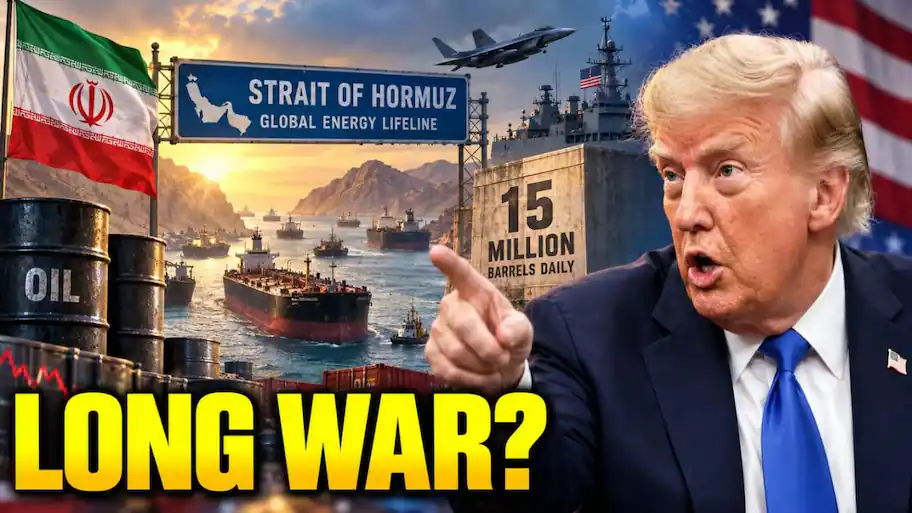
Vance argued that US action has so far prevented a wider energy crisis. “The Iranians would like zero million barrels to come out of the Strait of Hormuz. Last night, 15 million barrels came out of the Strait of Hormuz,” he said.
“The President’s been very clear, we’re not talking to them and we’re not going to talk to them unless they stop shooting at commercial shipping,” Vance said during a White House press briefing. “That’s because of the United States of America.”
The administration is also trying to widen the pressure on Iran beyond military force. He also cited cooperation from Turkey, Azerbaijan, the United Arab Emirates, Saudi Arabia and Qatar, including some governments working quietly. Chinese cooperation could be particularly important if financial channels and energy trade become harder for Tehran to use. At the same time, Vance kept the military and covert options open. The idea is that economic pressure could force Iran to give up its nuclear programme.
Because iran’s ability to withstand pressure depends partly on trade, finance and regional access, this coalition matters. Because president Donald Trump has reportedly discussed whether to declare the war over, this is striking.
Vance said China had responded to some US requests and described Beijing as more responsible than Tehran. He declined to say whether Washington was considering support for Iranian dissidents but said the president had several choices. “Everything that could happen is on the table: Economic pressure, military pressure, diplomatic pressure, covert pressure,” Vance said.
