
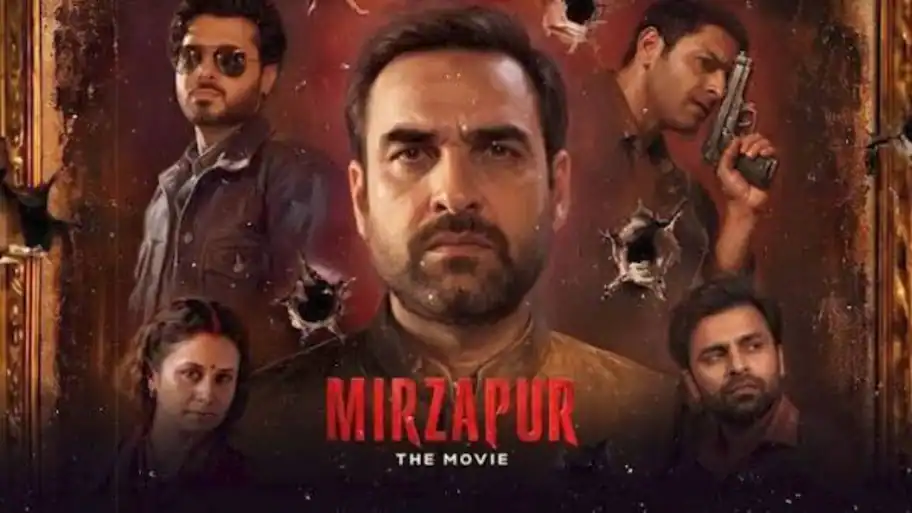
New Delhi: The district of Mirzapur in Uttar Pradesh is often linked to crime and violence, particularly through its portrayal in the popular OTT series ‘Mirzapur’, featuring characters like ‘Kaleen Bhaiya’ and depicting illegal arms, gang rivalries, and the drug trade. The recent release of ‘Mirzapur: The Movie’ has reignited interest in this fictional narrative, yet the real-life crime statistics in the area remain a pressing concern. The juxtaposition of entertainment and reality highlights ongoing issues within the district’s social fabric.
The numbers also give a different picture when specific crimes shown frequently in the series are examined. These numbers cover crimes that were registered with the authorities and do not describe every incident that may have taken place in the district. They provide the official crime record used to compare crime levels across districts. That picture is far removed from the fictional world built around Kaleen Bhaiya, played by Pankaj Tripathi. In the crime thriller, his character is presented as the ‘un-crowned king’ of Mirzapur, with control over crime, weapons and the drug trade. The story also suggests that whoever controls Mirzapur can wield influence over politics across eastern Uttar Pradesh. Mirzapur had a very different identity long before it became a household name through the web series. Mirzapur is known for its carpets and brassware, and the city was once an important trading centre in northern India. Historical records suggest that the name Mirzapur dates to the Mughal period. It is derived from ‘Mirza’, which comes from the Persian ‘Amirzad’, meaning a child or descendant of an ‘Amir’ (ruler). The East India Company developed the city to connect trade routes in central and western India. Mirzapur later became an important centre for the trade of cotton and silk. It lies in the Vindhya region and has a mix of historical sites and natural scenery. It also has an important place in the state’s economy. The contrast between Mirzapur’s real-world identity and its fictional image has become noticeable with the return of the movie.
An analysis of National Crime Records Bureau (NCRB) data for 2024 shows that 5,152 cases were registered in the district during the year. Of these, 2,332 cases were filed under serious sections of the Indian Penal Code (IPC) and the Bharatiya Nyaya Sanhita (BNS). Uttar Pradesh recorded 7,08,399 cases during the same year. Mirzapur’s share was around 0.7 per cent of the total cases registered across the state. Mirzapur recorded 20 murder cases in 2024, according to the data. There were 15 rape, 28 abduction and 176 theft cases during the year. The district also recorded 204 cases under the Arms Act. Cases registered under the Narcotic Drugs and Psychotropic Substances (NDPS) Act stood at 96. The data places Mirzapur among Uttar Pradesh’s 15 districts with the lowest crime levels. The district is around 650 km from Delhi and about 67 km from Varanasi. Mirzapur had a population of around 24.96 lakh, according to the 2011 Census. Before Sonbhadra was carved out of the district in 1989, it was the largest district in Uttar Pradesh. Its GDP is estimated at more than Rs 10,266 crore.
