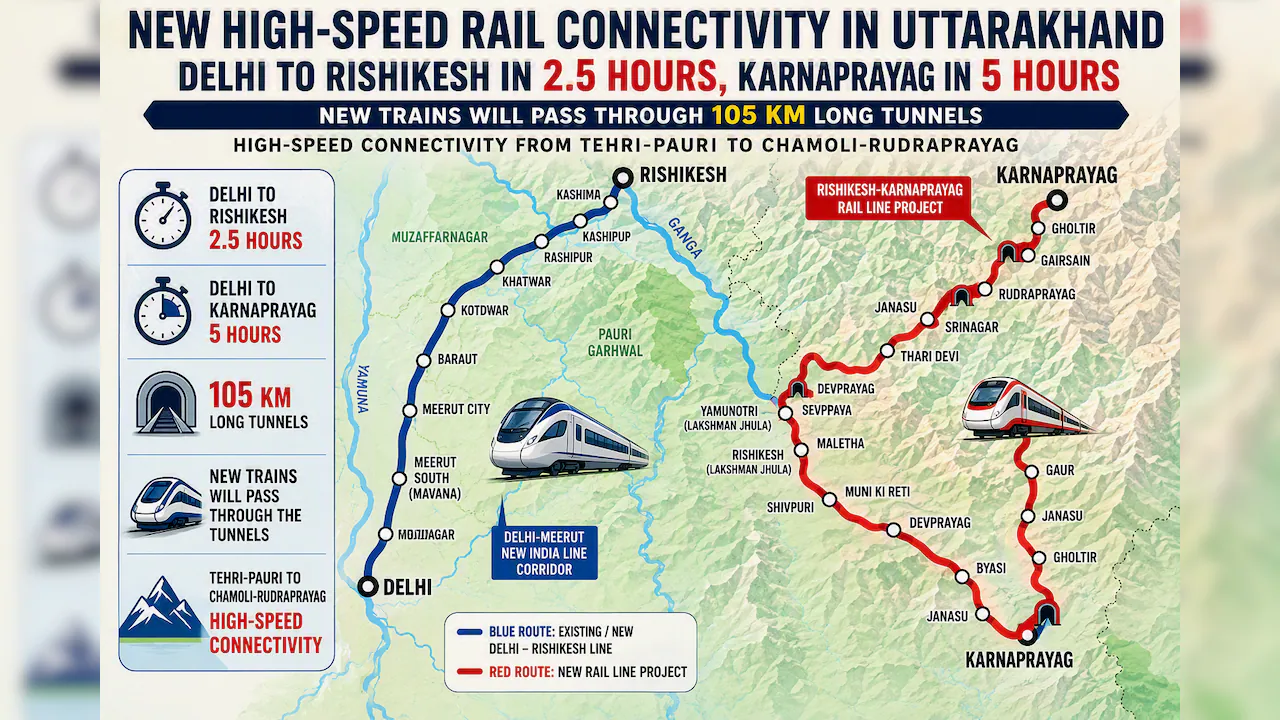
Travel from Delhi to Uttarakhand’s Char Dham region could become much faster with two major rail projects planned to improve connectivity between the National Capital Region and the Himalayan state. The proposed Meerut-Rishikesh Namo Bharat corridor and the under-construction Rishikesh-Karnaprayag railway line are expected to cut travel times for pilgrims heading towards Kedarnath and Badrinath.
Easier access to Kedarnath and Badrinath Officials involved in the project have said around 75% of the work has been completed and the railway line is expected to become operational by 2029. A section up to Shivpuri-Biyasi is expected to be ready earlier, in 2028.
For Badrinath, travellers will be able to take a train to Karnaprayag before continuing by road towards Joshimath and Badrinath.
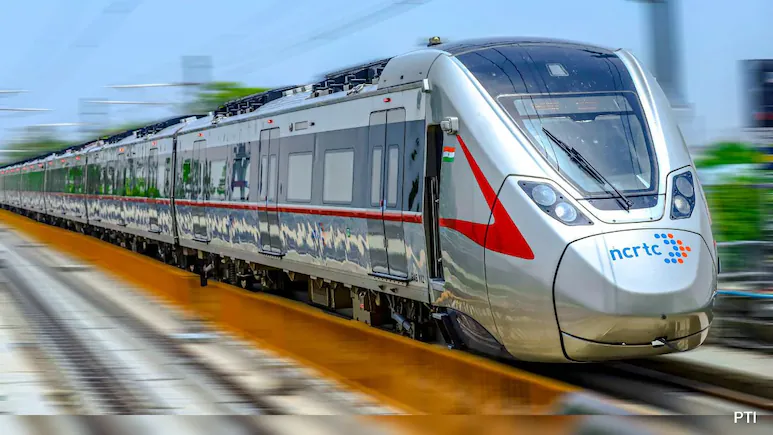
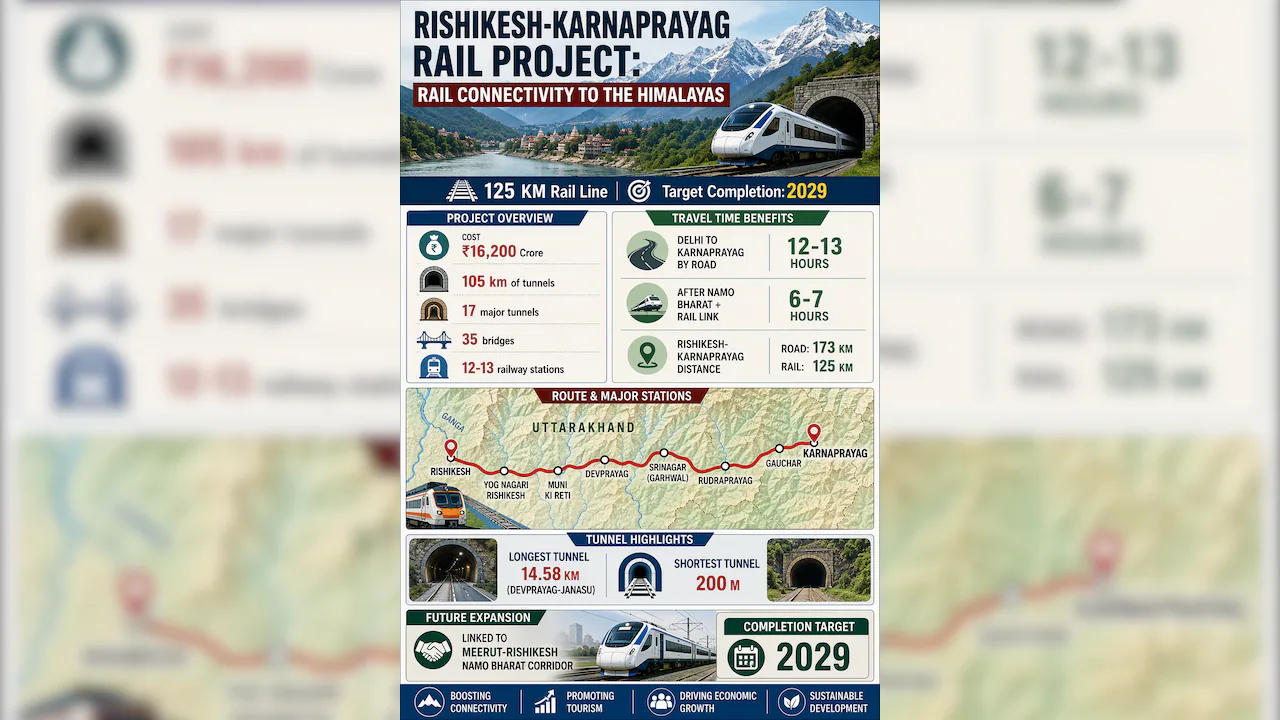
Delhi already has a Namo Bharat connection to Meerut. At present, the journey from Rishikesh to Karnaprayag by road can take six to seven hours, depending on traffic and road conditions. The new railway is expected to reduce this to around two to two and a half hours. The project has also reached an important construction milestone. The new railway will not take trains directly to the Kedarnath or Badrinath temples. Instead, it will bring pilgrims much closer to the road routes leading to these destinations. For Kedarnath, the railway will reach the Rudraprayag and Tilani areas. Travellers can then continue by road towards Gaurikund, the main base for the Kedarnath trek. The changes could be particularly useful for elderly pilgrims and other travellers who currently have to spend several hours on winding mountain roads. Five Garhwal districts to benefit The railway will pass through parts of Dehradun, Tehri Garhwal, Pauri Garhwal, Rudraprayag and Chamoli districts. The improved rail network is also expected to help residents, farmers, traders and tourism businesses by making it easier to move to the hills and Delhi-NCR. For pilgrims, however, the biggest change could be the reduction in travel time and the possibility of avoiding long journeys on busy and sometimes landslide-prone mountain roads.
The projects are therefore expected to play a major role in changing how tourists and pilgrims travel from Delhi and other parts of northern India to Uttarakhand’s Char Dham region. The Rishikesh-Karnaprayag rail line is around 75% complete, according to the latest project update. The 127-km railway route will include about 105 km of tunnels, making it one of the most ambitious rail projects in the Himalayan region. Delhi to Rishikesh in around 2.5 hours The planned Namo Bharat connection from Meerut towards Haridwar and Rishikesh could significantly reduce travel time from Delhi. Rishikesh to Karnaprayag in 2 to 2.5 hours The Rishikesh-Karnaprayag railway line will provide a new rail connection deep into the Garhwal region. This means the combined journey from Delhi to Karnaprayag could eventually take around five to six hours, compared with roughly 12 to 13 hours by road. 105 km of the route will run through tunnels The railway project has been designed for the difficult Himalayan terrain. Around 105 km of the 127-km route will pass through tunnels. The final breakthrough of Escape Tunnel-1, which is around 10 km long, was completed on 11 September. The planned route includes 12 stations, including Rishikesh, Muni Ki Reti, Shivpuri, Byasi, Devprayag, Maletha, Srinagar Garhwal, Tilani, Gauchar and Karnaprayag.
Once the proposed extension towards Rishikesh is completed, the journey from Delhi to Rishikesh could take around two to two and a half hours, according to the project projections.