
One of the biggest concerns surrounding artificial intelligence (AI) is whether it will remain a tool for the richest and widen inequality.
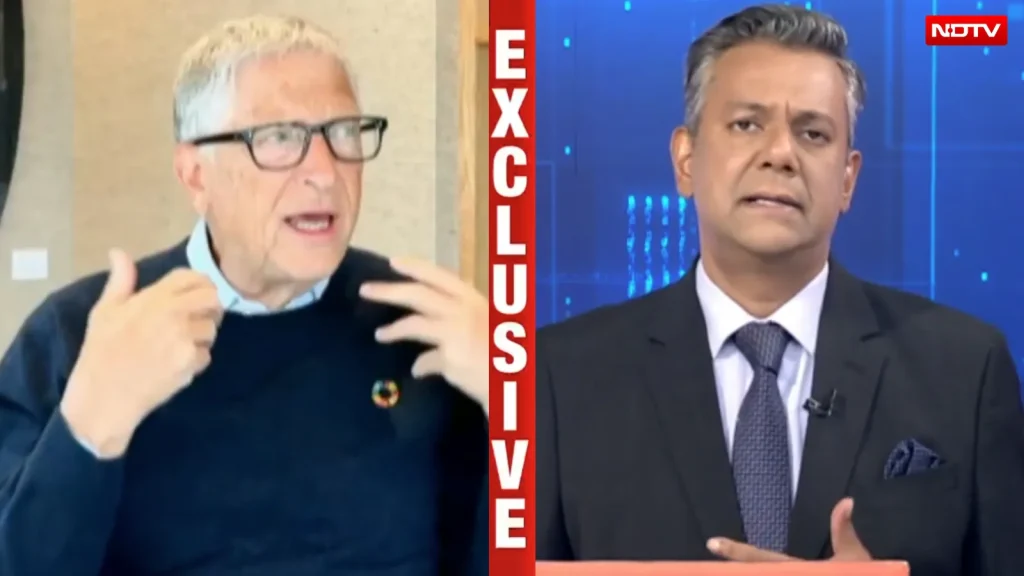
Asked how India must ensure the world’s latest technological revolution benefits the most vulnerable, Microsoft co-founder Bill Gates said he expects changes in health and agriculture.
However, referring to improvements in India’s health system, he stressed, “AI will help address those things in a way that won’t be completely unaffordable. Innovations in the health sector take time, and the cost is higher, he acknowledged during an interview with NDTV’s Vishnu Som, but flagged issues related to health that India can or is trying to resolve using AI. “For everyone, that (health) takes longer. It’s a much more regulated area. The cost of a mistake is much higher than, say, agricultural advice. But even so, India knows it can’t implement a medical system that’s as costly as, say, the United States’ medical system. One of the challenges, he underlined, was related to keeping digital records of patients, especially in view of maintaining privacy. “The AI systems’ ability to advise doctors or even help patients in a very direct way is on an ongoing basis. You’re talking to your AI about your health practices. I think getting the data right and maintaining privacy are particularly challenging,” the Microsoft co-founder added. And while it isn’t going to be easy, Gates remained hopeful that India will move faster than most in this integration of the patient level with the primary healthcare level and then integrate up to more intensive hospital care. “It’s clear to me now that agriculture will move the fastest. The ones that we really have to think hard about how to accelerate are uses in education and healthcare,” he added. Gates also pointed out the abundance of talent in the IT sector that could push further on innovations. Recalling his meeting at NITI Aayog, he added that time is never enough to prepare, but India has the talent to make beneficial use of AI. Gates’ comments came in the backdrop of the Gates Foundation suggesting that AI must be built to benefit those who need it the most, for it to become a great equaliser. The Foundation’s ‘Goalkeepers Report’ warned that the rapid rise in AI risks widening the gap between the rich and the poor.
In the report, Gates noted that decisions made over the next 12 or 18 months about how AI is built, funded, and deployed will determine if AI will reach the rich or the poor.
Thank goodness that AI has come along,” Gates said. Exclusive: “Innovation Champion” Bill Gates’ Stunning U-Turn On AI: “We Are Not Ready” India is working on health conditions like blood pressure and diabetes due to the disease burden, he pointed out, adding that there are infectious diseases like tuberculosis as well as challenges of malnutrition and aging that need attention. Exclusive: Artificial Intelligence Sentient, Self-Aware: AI Risk Expert Nick Bostrom Making it seamless for patients with the greatest need is where, he said, he feels the need for maximum innovation. On agriculture, he said thousands of farmers are now connecting to AI-linked systems, and that he has been receiving feedback. “No one can do too much to prepare and get ready for this, but the depth of talent and the engagement in the previous digital revolution mean that a lot of the early beneficial usage will be in India,” he noted.
