
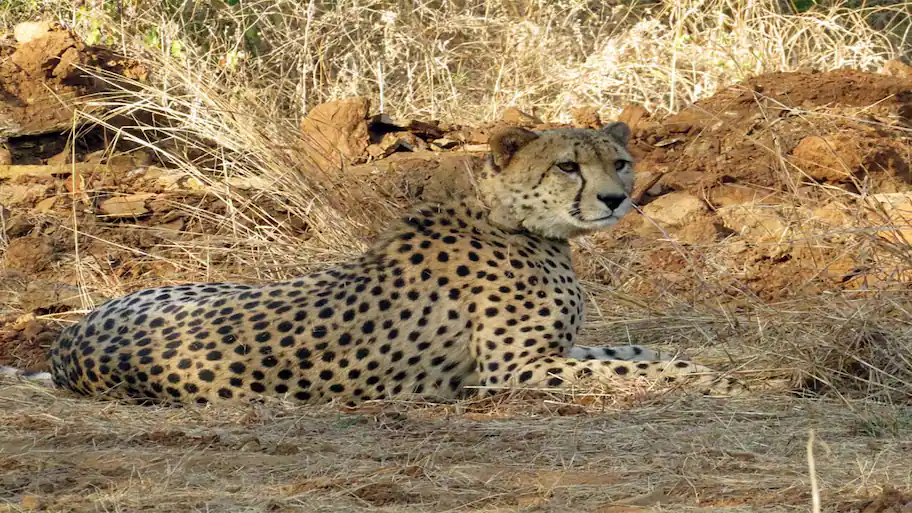
The latest status review of Project Cheetah shows how the programme has moved from bringing animals from Africa to breeding them in India and releasing them into larger habitats. New Delhi: Four years after India brought back the cheetah, the country now has 52 of the animals, including 32 born on Indian soil.
The existing population includes surviving cheetahs from those batches and their offspring. She delivered five cubs. The project was launched on September 17, 2022, when Prime Minister Narendra Modi released eight cheetahs brought from Namibia at Kuno National Park in Madhya Pradesh. More animals were brought from South Africa in 2023 and from Botswana in 2026. The programme recorded its first Indian-born cheetahs in 2023. In November 2025, Mukhi became the first female cheetah born in India to give birth. The programme also recorded another large litter in March 2026 when Jwala, a Namibian cheetah, gave birth to five cubs at Kuno. That took the number of Indian-born thriving cubs to 33 at that point and pushed the overall population to 53. The population later stood at 52 after subsequent deaths. Of the animals at Kuno, 17 are presently moving in the open forest, according to officials cited in the four-year review. The others are being managed in enclosures, including 19 cubs that are less than a year old.
Since then, several litters have been born at Kuno.
The government has also increased the area available for the animals. Banni Grasslands in Gujarat and Nauradehi Wildlife Sanctuary in Madhya Pradesh have been identified as possible future release sites. The programme is now looking at habitat, prey availability and movement between suitable areas to support a larger population.
At a review meeting in Bhuj on September 13, Environment Minister Bhupender Yadav said protected habitat for cheetahs has increased to 3,428 square kilometres through the integrated management of Kuno and Gandhi Sagar. The latest data also puts the cub survival rate at Kuno at around 68 per cent.
What next phase looks like
The next stage of the project involves building a long-term population across several suitable habitats rather than relying on a single national park. The expansion to Gandhi Sagar has given the programme a second site, with other areas being assessed for future releases.
