
A New Dawn for Kashmir; From Pulpits of Faith to Platforms of Change: Islamic Scholars got United Across Sects to Reshape the Kashmir Future and Mosques, shrines, seminaries Set to Guide Youth on Good vs Bad for the foundation of a New Kashmir.
Kashmir is reclaiming its original identity as the land of peace and love. Once celebrated for the message of togetherness and non-violence spread by Sufis and Reshis, the Valley was later transformed into a hub of violence, terrorism, protests, and stone-pelting, allegedly orchestrated by Pakistan-based terror handlers and the ISI. These external forces were accused of influencing radical and hardline Islamic scholars to radicalize the young generation and fuel terrorism across Jammu and Kashmir. Mosques and madrasas will no longer serve merely as places of worship and religious education. They will function as centers for guidance, counseling, youth engagement, and family support. Religious leaders also resolved to transform these spaces into safe environments where youth and families can speak freely about loneliness, stress, or domestic pressures without fear or hesitation. So, for unity and harmony, I first tried here to bring people together under one platform regardless of their school of thought. I achieved success in this, and the Muslim Waqf Board carried out this endeavor. The actual point is that when our scholars come and appear on social media and then fling turbans at each other, the primary target is that we appear in the eyes of others as if we use incitement or foster this fitna (discord). Although this is not a fact. We are against fitna. Islam gives the message of peace, safety, and security. Islam is the guarantor of protecting another person’s honor and rights. But unfortunately, some people do not understand this, and the result that comes out is that fingers are raised at mosques and minarets, and fingers are raised at pulpits. But the conference that took place recently is a very good conference for the future of Kashmir. The entire Kashmir has hope from the mosque that from there, the entire nation should get such a guidance, should get such a way, through which the nation becomes united. But I would like to add to this that we should popularize Sufism, which is Tasawwuf, Sufism; Sufism should be popularized, the Sufi Islam should be popularized. The terminology of Jihad is not carnage, that is terrorism. Terrorism is another thing and Jihad is another thing. Jihad is a separate thing and terrorism is a separate thing. I have stated before as well that terrorism refers to acts of terror, causing fear among people, or forcibly usurping someone’s wealth. So any human who usurps someone’s wealth, he is also a terrorist, he is also an extremist/terrorist, and someone who devours someone’s rights, he is also a terrorist, someone who inflicts oppression on someone, he is also a terrorist. And Jihad the literal word Jihad, which is Jihad in Islamic terminology Jihad means striving, striving with one’s inner self (nafs), supporting one’s family is also Jihad, and spreading good things in the nation is also Jihad; the real meaning of Jihad is this. There is not, I mean there is no place whatsoever in Islam for terrorism, there is not even an iota of room for it in Islam. Now, from this Hadith, It is a very good initiative, a very big initiative, and we appreciate it, that such conferences should take place. The Prophet (PBUH) stated that whoever oppresses a non-Muslim on the Day of Judgment, Muhammad will come as that non-Muslim’s advocate. Where did my Muhammad give permission? This is an allegation against us, and those who do this, throw them in jail. Now our Kashmir is going downhill. Kashmir has been ruined and devastated. There is no permission to speak. We earnestly appeal to the youth here and those educated youth to come to their senses. Do not do this wrong, step back from wrong deeds. Toward intoxication, neither let anyone advance nor advance yourself. Whatever happens regarding intoxication or stone-pelting, sever all relations with them. Otherwise, do not even sit or associate with them, and do not even give them a place to be buried in your graveyards. Sheikh-ul-Islam, what a great hope there is for Kashmir. Inshallah, this is just the last hope. If we do not reform now, then ruin will follow, an earthquake is about to come, and the whole of Kashmir will be destroyed. The MMU will further organize regular district-level meetings across Jammu & Kashmir and Ladakh to tackle growing concerns over drug abuse, suicides, youth distress, family problems, environmental degradation, and other pressing issues. Substance abuse remained the primary concern at the meeting.
Because mosques are closest to people’s homes, they are best placed to identify problems early. Because of this, our social fabric gets damaged. Because of this, I want unity and harmony to be established among people, and Islam not only protects its own religion, but the responsibility of protecting other religions is also incumbent upon is incumbent upon Muslims, and. Because you show correct news and other media sources, this face has now come before the people that the Ulema (scholars) of Kashmir are peace-loving, teach peace, and teach the lesson of peace and brotherhood, maulana Syed Mudasir Gilani said “ I want to tell through your media. Because there are thousands of institutions here that hold such conferences, and Alhamdulillah, and if such a step has also been recently taken meaning Shia and Sunnis coming together then such conferences have taken place before as well, and such conferences will continue to take place. Such conferences should take place so that people spread the lesson of peace and tranquility. Because in Sufism, there is “hate for none, love for all, because of that, and due to Sufi Islam only, peace and brotherhood will be established here,.
People have been sitting here for years, for 60-70 years, those who ruined Kashmir, those who taught this here.
Mufti Nasir-Ul-Islam Grand Mufti Jammu Kashmir said “Khalid Sahib, for the past several years, we have been seeing that our scholars appear on social media and spread religious hatred. Mufti Sher-ul-Haq Bukhari the ulma who also attended the meeting said “Islam has never permitted this thing.
Secondly, we decided—which I consider a very important decision—that Insha’Allah, very soon, once a month, a joint Friday sermon will be issued from every grand mosque, every member, every mosque, and every Imambara. We will take up one issue every month concerning the mosques and Ladakh of entire Jammu and Kashmir, carrying a message on those social issues. The ulama will speak on it, and we will try to formulate a course of action regarding that issue which we have brought to your attention.
Along with that, other proposals that have come up have been referred to a committee formed to study them so that it can work on them. Resolutions are regarding the social issues and social problems currently prevailing in Jammu and Kashmir, We also stated that, Insha’Allah, we are expanding the scope of Muttahida Majlis-e-Ulama, and we have decided that every month we will visit one district to start engagement not only with local mosques and madrasas, but also to establish contact with local institutions and NGOs working there, so that these social issues and problems can be addressed.
Mirwaiz Umar Farooq said “In the meeting the issues on our agenda include two types of resolutions that we have adopted.
And once we assume that our mosques here, or Aastaan Sharif, or madrasas, will become centers of reform, centers to reform society. No matter what kind of problems we have youth problems, addiction problems mosques will be viewed as a center for reform. Maulana Sahib will explain in the sermons what kind of difficulty there is, whether employment is an actual issue will the mosque become a center of reform. The mosque is fundamentally a place of reform, when this message of unity goes out, its effect falls on the hearts of people. And besides this, fundamentally, such matters are resolved from mosques that are the cause of discord among the Muslim brotherhood. And when the mosque committee sits together and deliberates, makes decisions, the effect of these decisions the implementation is on Muslims, and they think that this decision has happened through our secretariat. They accept it, they revere it, and I understand that the role of the mosque is always there. Mosques are not just places to offer prayers, but through mosques, matters can be resolved, people of other religions can be given protection, it can be made certain when we consult with each other this is only possible in a mosque. And since we gather in the mosque for prayers and afterwards sit, consult, make decisions about each other, and these decisions are in a collective manner and can be fulfilled in a better way. Through mosques we can transform people’s minds. If someone’s mind is wrong, if they are addicted to intoxicants, or if they are victims of alcohol, or if the issue is unemployment, all these issues can be resolved only through mosques. Under the MMU’s new framework, a specific social issue will be addressed across all mosques in the Valley every Friday. The goal is to help families recognize early warning signs, remove the stigma around counseling, and instill a sense of responsibility toward the environment. In addition, combined sermons will be held once a month to focus on one major social issue across the entire region of Jammu & Kashmir.
Imams and Islamic scholars, especially in India and regarding Kashmir, have repeatedly stated that there is no place for communalism, terrorism, or violence in the name of Islam or “jihad,” and that authentic Islamic teachings emphasize peace, the sanctity of life, love, mercy, and coexistence.
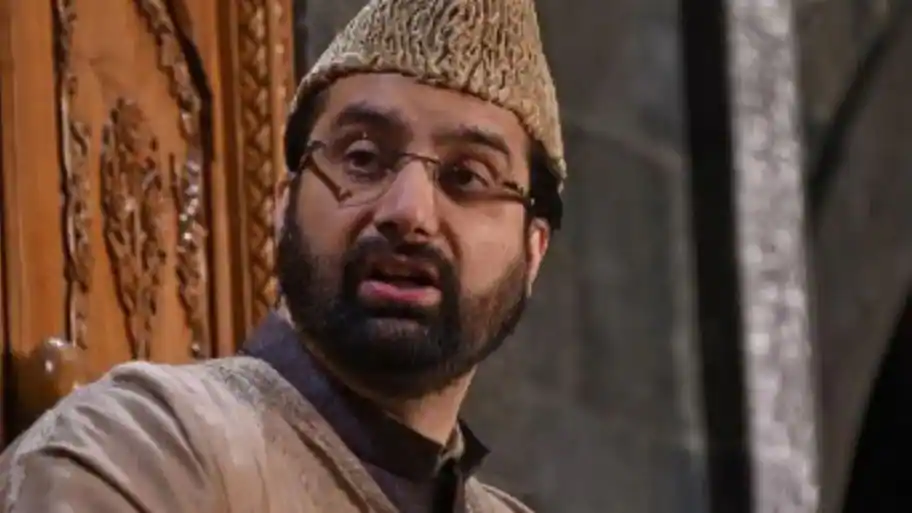
For decades, the region endured relentless daily violence. Now a profound change is underway. Islamic scholars from all ideologies/ sects have come together to take responsibility for guiding future generations toward distinguishing good from bad. The centers of this transformation will be the mosques/shrines/ seminaries of Jammu & Kashmir and Ladakh. Mosques in the Kashmir Valley will no longer echo solely with sermons on faith and religion. Their platforms will now also address society’s most painful wounds. Issues such as youth falling into drug abuse, rising cases of suicide and depression, and environmental degradation will be openly discussed in sermons every Friday. This significant and historic decision emerged from a crucial meeting of prominent religious leaders from Jammu & Kashmir and Ladakh. Notably, Shia and Sunni leaders united on a single platform after decades. The meeting was presided over by the Valley’s chief cleric, Mirwaiz Umar Farooq, under the banner of the Muttahida Majlis-e-Ulema (MMU). Mirwaiz Umar Farooq highlighted the rising instances of self-harm and emotional distress among the youth and the deteriorating social environment. He stressed that these problems cannot be left solely to the government or occasional seminars; society must work together consistently to confront them. He made clear that mosques and their pulpits possess a unique reach and influence. It is the duty of religious leaders to channel this power constructively. Civil society in Kashmir has welcomed the recent initiative by the Muttahida Majlis-e-Ulema (MMU) the umbrella body of religious scholars and organizations as a constructive and timely step toward social reform. This is widely viewed as contributing to a more positive, community-focused foundation for the region’s future. We are seeing mutual conflicts increasing day by day in mosques and khanqahs people speak against one another. Apart from this, there are social problems like the massive issue of drugs, lawlessness, and bribery. But In regard to these matters, these ulema have a very large role to play. If this alliance of the Mutahida Majlis-e-Ulema has taken place, then something or the other will come out of it. Somewhere down the line, it can put a check on the innovations (bidaat) spread in society or the wrong practices currently taking place in society. I understand, as a citizen, that this is a very good step, and the ulema should unite for the sake of their people, their country, and their society, and try to reform society on every front. I believe that over the past three decades in the Kashmir Valley, some such circumstances did come up, and there were some people who misused these things and these important places. But the whole world is undergoing a transformation now, and change has also come to Jammu and Kashmir. Yes, they have a responsibility regarding the common people of Kashmir to maintain religious brotherhood. Regarding reforming the social evils and social affairs here, they can play a very big role if these people take the initiative whether it is Mirwaiz Kashmir Maulvi Muhammad Umar Farooq or the Mufti-e-Azam of Kashmir. Whosoever has taken an initiative in this regard, it is a positive and excellent step. In the future, this step, in my opinion, could prove to be a good one. If unitedly these ulema try to give a single sermon on a particular issue together, then in my opinion, it is no sin at all; rather, it is a good thing and a positive step. In the coming days, these religious leaders will travel across the Valley to meet local imams and develop grassroots solutions tailored to the specific challenges of each area. Through this unified effort, Kashmir’s mosques are set to become the foundation of a new Kashmir one that returns to its roots of peace, compassion, and collective responsibility while equipping the next generation to build a healthier, more resilient society peaceful, developed Kashmir.
In Kashmir, you can see that since August 5, 2019, I would say not a single incident of stone-pelting has taken place, nor any such major incident that would make society feel these people are doing such things.
Rashid Rahil ( Editor & Civil society member said “ Over the past three decades, as far as Jammu and Kashmir is concerned especially in the valley these ulema have fractured. it is said: better late than never Although this step should have been taken earlier.
