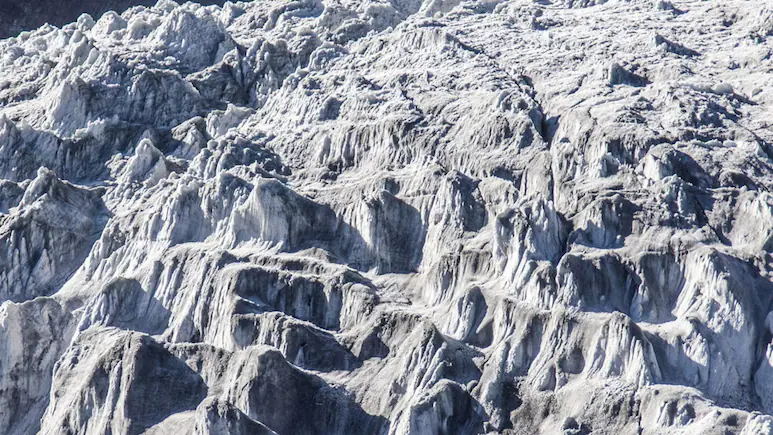
Glaciers in Uttarakhand are now under threat as rising temperatures worldwide are directly affecting the Himalayan region. a second factor is each glacier’s shape, slope, and debris load; in other words, its geographical setting While the pace of the melting is driven by rising temperatures due to climate change and global warming. A recent study has found that 23 major glaciers in Uttarakhand are melting rapidly.
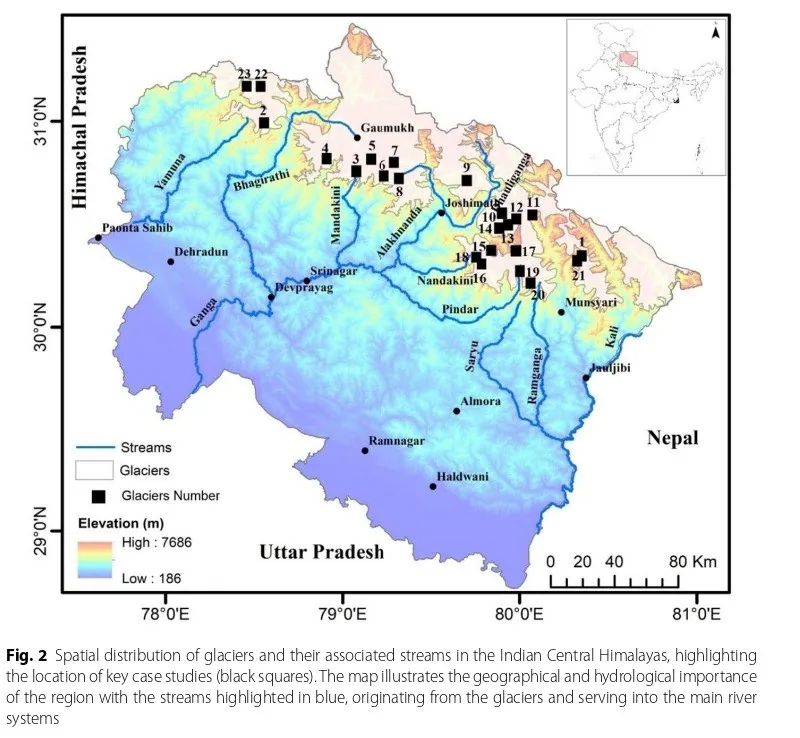
Over the past few years, chunks of ice are breaking off big glaciers and sweeping down the valleys, causing destruction in populated areas. This is why scientists, environmentalists and governments are now focusing on the Himalayan glaciers at risk, since they supply water for irrigation, drinking and hydropower projects not only in India but in neighbouring countries. Major rivers such as the Ganga, Bhagirathi, Sutlej, Ravi, Indus, Brahmaputra, Yamuna, Alaknanda and Mahakali originate in the Himalayas. The research paper was published in the journal ‘Discover Geoscience’ by Jyoti Kumari, Girish Chandra Kothiyari, Atul Kumar Patidar and Manish Mehta, scientists at the Wadia Institute of Himalayan Geology. The map that’s part of the research paper, showing the key glaciers. Pindari glacier was studied twice. If glaciers continue to melt at this rate, there is a risk of rising sea levels eventually. The risk of natural disasters, such as glacial lake outburst floods (GLOFs), avalanches and debris flowing down from higher altitudes, has also increased. The summer season has also lengthened, winter snowfall has declined sharply, and the snow that does fall does not get time to consolidate.
The study happens to have been published just days after Nepal’s deadly flood, which killed over 1,400 people, was linked to a glacier’s melting. Records of 23 glaciers were examined, and the cause of each glacier’s melting was identified. Chorabari glacier in Rudraprayag, as per the 1962-2010 data, showed it melted 327 m, at a rate of 6.8 m a year. The first study, a 121-year record (1845-1966), showed it melted 2,840 m, at a rate of 23.4 m a year. The second, an 18-year record (2000-2018), shows it melted 825.23 m, at a rate of 45.85 m a year. The rate of glacier melt has risen sharply since 2000. One reason for the melting is rainfall at altitudes of up to 4,000 m, where snow used to fall but now it rains.