
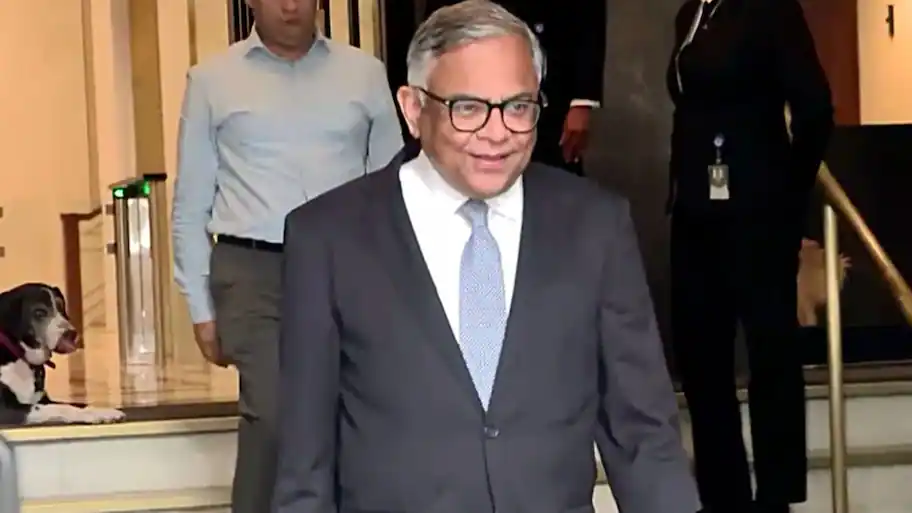
Tata Trusts announced on Sunday that the resolution to reappoint N Chandrasekaran as Chairman of Tata Sons was not properly passed during the board meeting held on September 17. The Trusts stated that the decision lacked the necessary backing from its nominee directors, raising questions about the legitimacy of the resolution.
With two Tata Trusts nominees on the board, both directors would need to support the resolution for this separate requirement under the AoA to be fulfilled. The Trusts also clarified that the Chairman’s casting vote cannot be used to override this requirement. Such a vote applies only when there is a tie in the overall board vote and does not extend to the separate condition requiring support from Tata Trusts’ nominee directors. “There was no paralysis and there was no deadlock. However, the Supreme Court accepted Tata Sons’ position and overturned the tribunal’s finding. Tata Trusts also rejected the contention that listing Tata Sons would be necessary to improve its corporate governance. It pointed to existing provisions relating to independent directors, audit and nomination committees, related-party transactions, retirement of directors by rotation and insider trading.
Tata Sons’ Articles of Association (AoA) require the affirmative vote of a majority of directors nominated by Tata Trusts, which holds around 66% of the company, according to Tata Trusts. Tata Trusts said that one of its two nominee directors voted against the resolution on September 17, meaning the required affirmative support was not secured. The Trusts also cited Supreme Court proceedings related to the removal of former Tata Sons chairman Cyrus Mistry, noting that Tata Sons had previously defended the affirmative voting rights of Trusts’ nominee directors under Articles 104B and 121.
The Board put a question, and the AoA answered it in the negative,” the Trusts said. The National Company Law Appellate Tribunal had earlier held these voting rights to be oppressive, according to the release. The Trusts said Tata Sons cannot now disregard the protections it had previously defended before the Supreme Court.
With ANI inputs …
Tata Sons had voluntarily adopted these governance standards before the current dispute arose, according to the Trusts.
