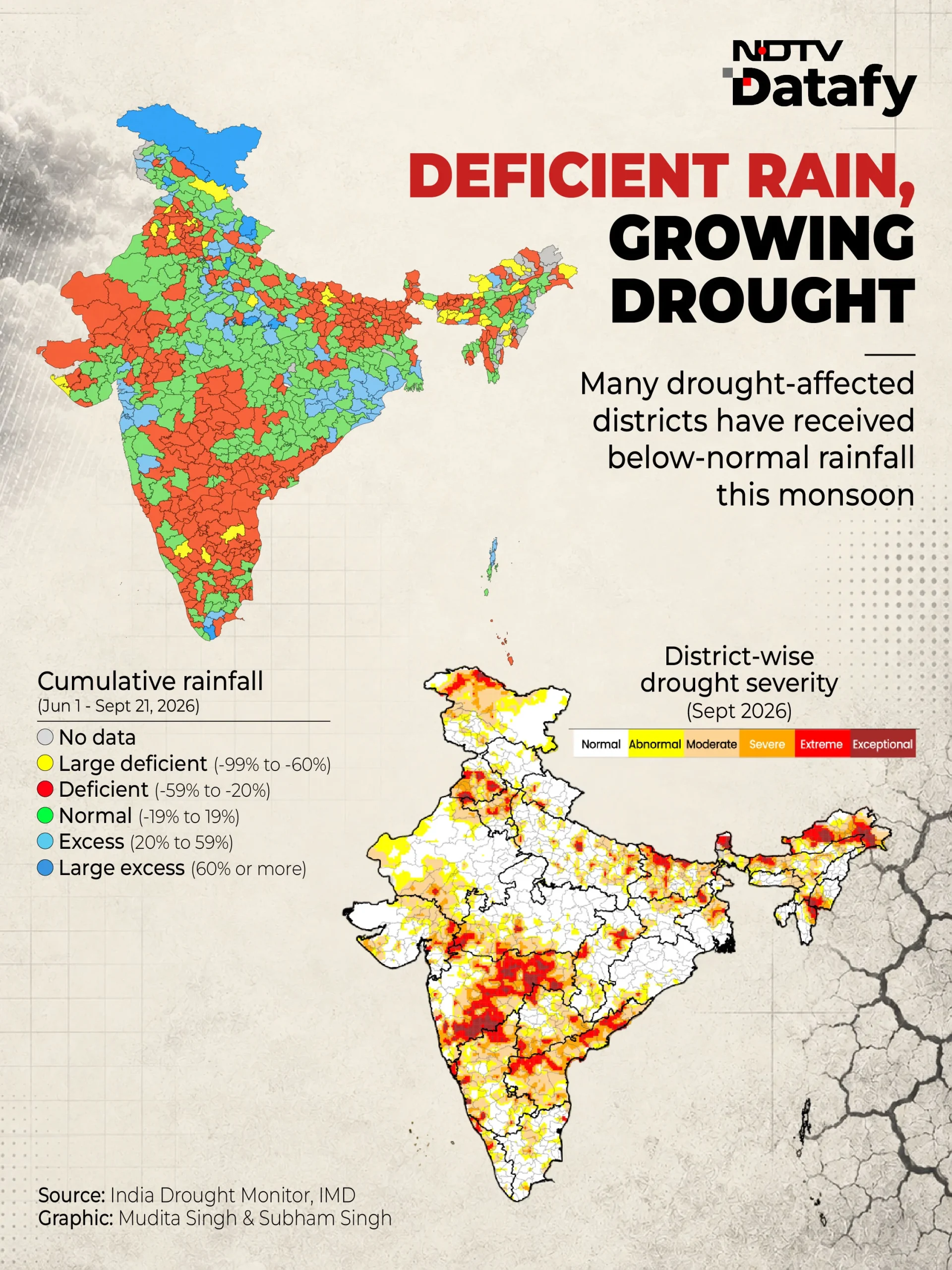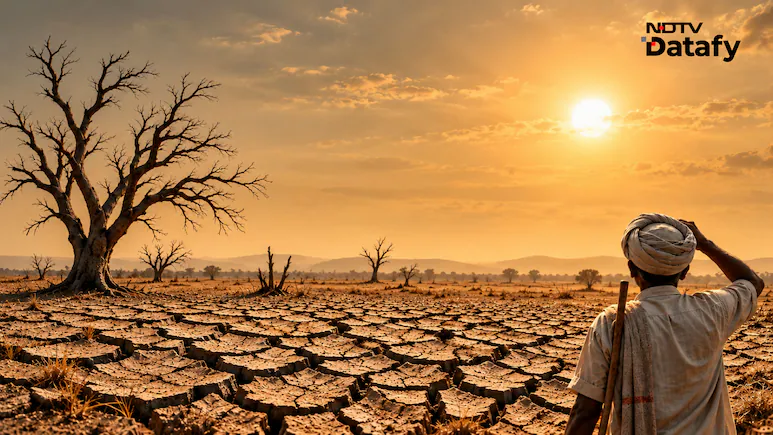
A weak monsoon in several parts of the country is translating into a growing drought crisis, with September 2026 emerging as the most drought-affected September in at least the last five years.
The drought situation is particularly alarming in Maharashtra, which has emerged as one of India’s worst-hit states this September. A comparison of cumulative rainfall by IMD and drought maps by the India Drought Monitor portal shows a clear pattern: districts that received deficient rainfall are also among the worst affected by drought. Large drought hotspots are visible across Maharashtra, parts of central India, Gujarat, Telangana, Karnataka, and pockets of eastern and northeastern India. The overlap suggests that the rainfall shortfall is now being felt on the ground through declining soil moisture and worsening crop conditions. The drought map indicates that many districts have already slipped into moderate, severe or even extreme drought categories. the benefits of the monsoon have been unevenly distributed, leaving several regions struggling with persistent dry conditions While some parts of the country have recorded normal or excess rainfall. The situation appears more serious when compared with previous years. With September nearing its end and drought-affected areas continuing to expand, the coming weeks will be crucial for farmers across some of India’s most vulnerable regions.
Calling it the worst dry spell he has witnessed in his lifetime, the minister said major crops such as soybean, cotton and sugarcane have suffered extensive damage due to prolonged rain deficits. Concern has grown after Maharashtra Cooperation Minister Babasaheb Patil said the state could face 100% drought by the end of September. Weekly drought maps for September from 2022 to 2026 show that the drought footprint this year is the widest among the five years compared. In other words, a larger geographical area is under drought stress in September 2026 than during the same period in 2022, 2023, 2024 or 2025.