
New Delhi: India’s military planning is changing with artificial intelligence, drones, cyber threats and cheaper technologies that can now reach even small groups. The technology is also being developed for use by soldiers on the frontline.
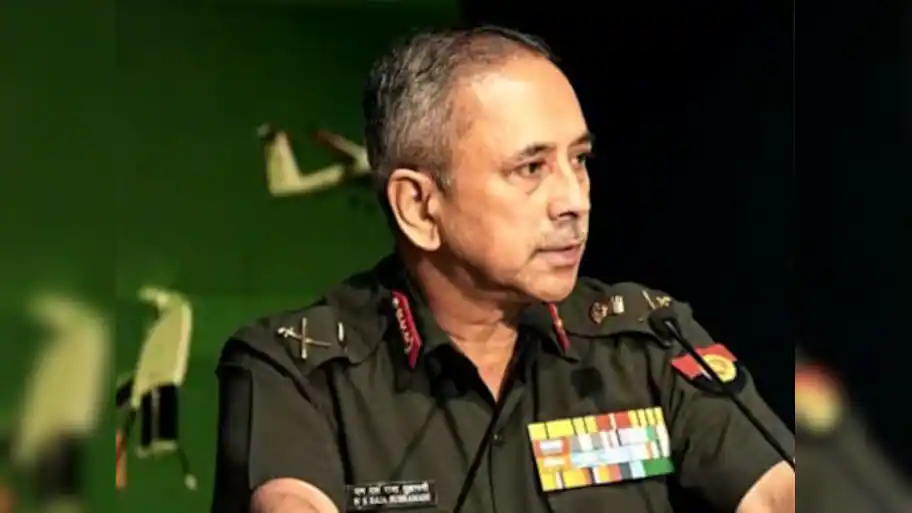
Chief of Defence Staff General NS Raja Subramani said the armed forces are working on AI systems that can support planning, logistics, intelligence and decision-making.
Addressing a gathering in New Delhi on Sunday, he said technology is changing at a very fast pace and AI is changing the battlefield. He described AI as both an opportunity and a challenge for the armed forces. “All three services have made considerable progress in this direction. AI will change the battlefield in every way, whether it is planning, logistics, decision-making support or intelligence. For this, you need computing power, data, networks and skilled personnel. He added AI is being used in areas such as open-source intelligence and predictive intelligence. “AI should also be capable of working on the frontline of the battlefield. It is not enough to have AI only at headquarters. India is also working on smaller language models suited to military requirements. The CDS also explained the limits he wants to place on AI-based military systems. “It will give us more options, improve the way we work, boost productivity and enhance our capabilities, but it will not make decisions in place of the commander. He also warned that AI systems can create new vulnerabilities if they are allowed to interfere with existing systems or if hostile actors get access to military networks. The emphasis on AI comes as Indian military planning is also dealing with drones, long-range precision strikes and electronic warfare. Surveillance and precision weapons have made it difficult for military assets to stay hidden. “The battlefield now stretches from the front to the rear and across the entire depth of the conflict.
Security checks and safeguards will therefore be part of the systems being developed for defence use.
General Subramani said all three services have made progress in using the artificial intelligence. As far as computing is concerned, the defence forces are working together with the National AI Mission and the MeitY (Ministry of Electronics and Information Technology),” he said. The armed forces, he said, are also looking at ways to upgrade older systems with AI and ensure that new systems have AI capabilities. Soldiers should have access to AI capabilities where they are deployed,” he said. The CDS said the armed forces are working with private companies and the Defence Research and Development Organisation (DRDO) on these systems. General Subramani said the armed forces need their own sovereign AI capabilities and must build safeguards against cyber attacks and other attempts to interfere with AI systems. He said the technology can provide options and improve productivity and capability, but decisions must be made by commanders. It will provide the commander with options, but the decision will have to be made by the commander,” he said. General Subramani said the battlefield now stretches from the front line deep into the rear areas. There is no place that can be considered safe,” he said.
What the CDS wants from defence startups
One of the examples he gave in support of his arguments was the changing economics of warfare. Cheap drones can now be used by smaller groups, creating a problem when expensive missiles are used to destroy them. The CDS stated India needs layered defence systems that combine high-end platforms with hard-kill and soft-kill counter-drone systems. The aim is to build a response that matches the cost and nature of the threat. Recent Indian defence planning has also placed greater emphasis on joint operations among the Army, the Navy and the Air Force. The integration of air defence systems across the services is part of this effort. The CDS also addressed the changing relationship between the armed forces and India’s defence industry. Industry should then develop the technology needed to solve it. He wants defence companies to move faster from prototypes to products and work with the armed forces during development. The approach fits into a larger defence effort to develop AI, drones, autonomous systems, space technology and domestic manufacturing. He urged engineers and technologists to build resilient systems and become problem solvers.
Because affordable technology is now available even to non-state actors and small groups, “The economics of warfare has changed. It does not make sense to counter a $30,000 drone with a $1 million air-defence missile,” he said.
General Subramani said forces operating under Northern and Western commands are working together on drones, electronic warfare and integrated air defence. He said the services must operate as a “system of systems”, with joint planning, logistics and operations. He said the military now sees industry as a partner and wants companies to develop practical solutions to problems faced by soldiers. The armed forces should explain the problem and the capability they need, according to him. His three demands from industry were “speed, scale and volume”. He also called on industry and academic researchers to become “problem solvers, not problem creators”. Research, he said, should produce results that can be used by the armed forces and deployed at scale. The CDS’s comments also came days after he told IIT Roorkee graduates that technology is changing faster than people can keep up with.
