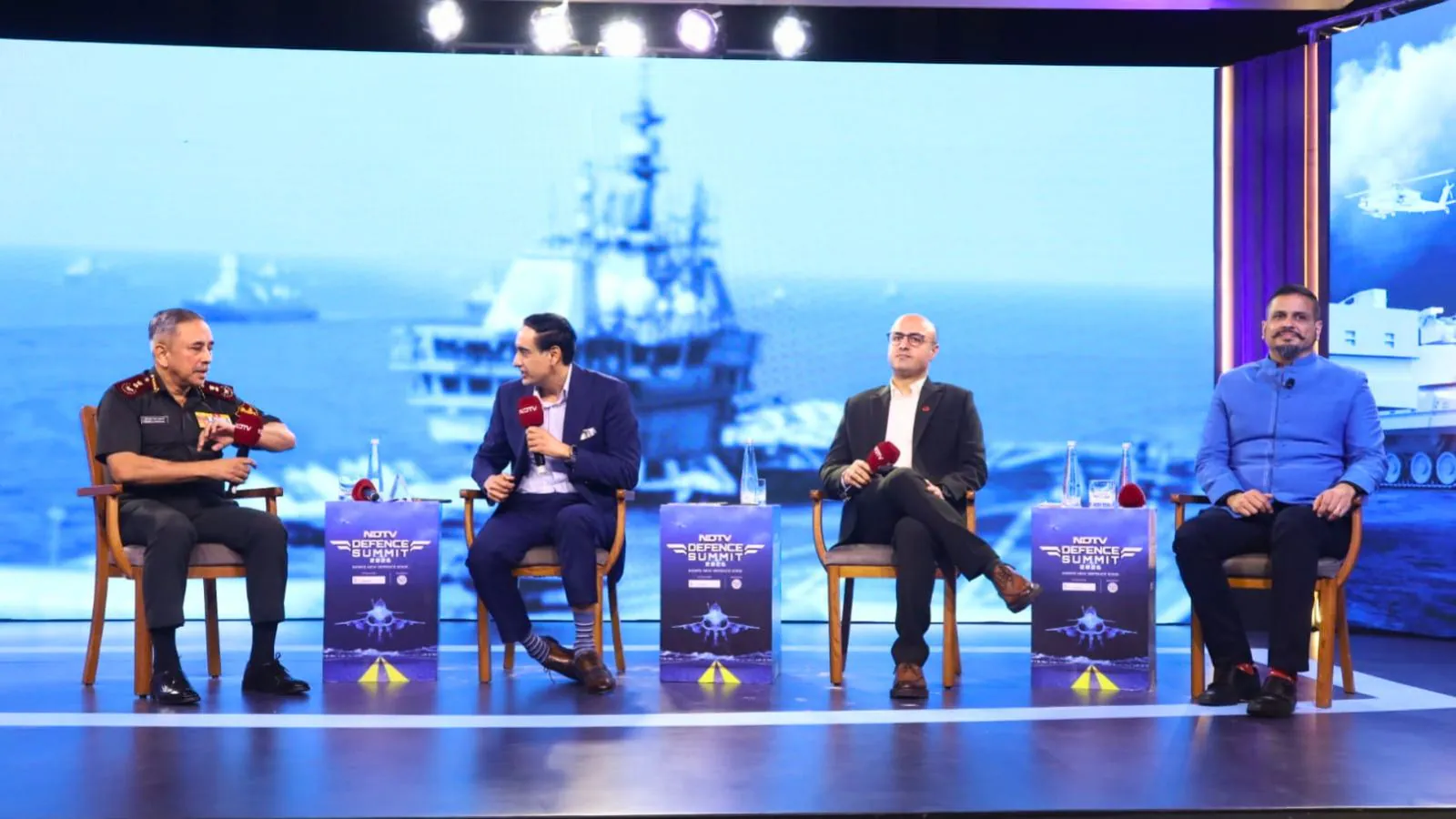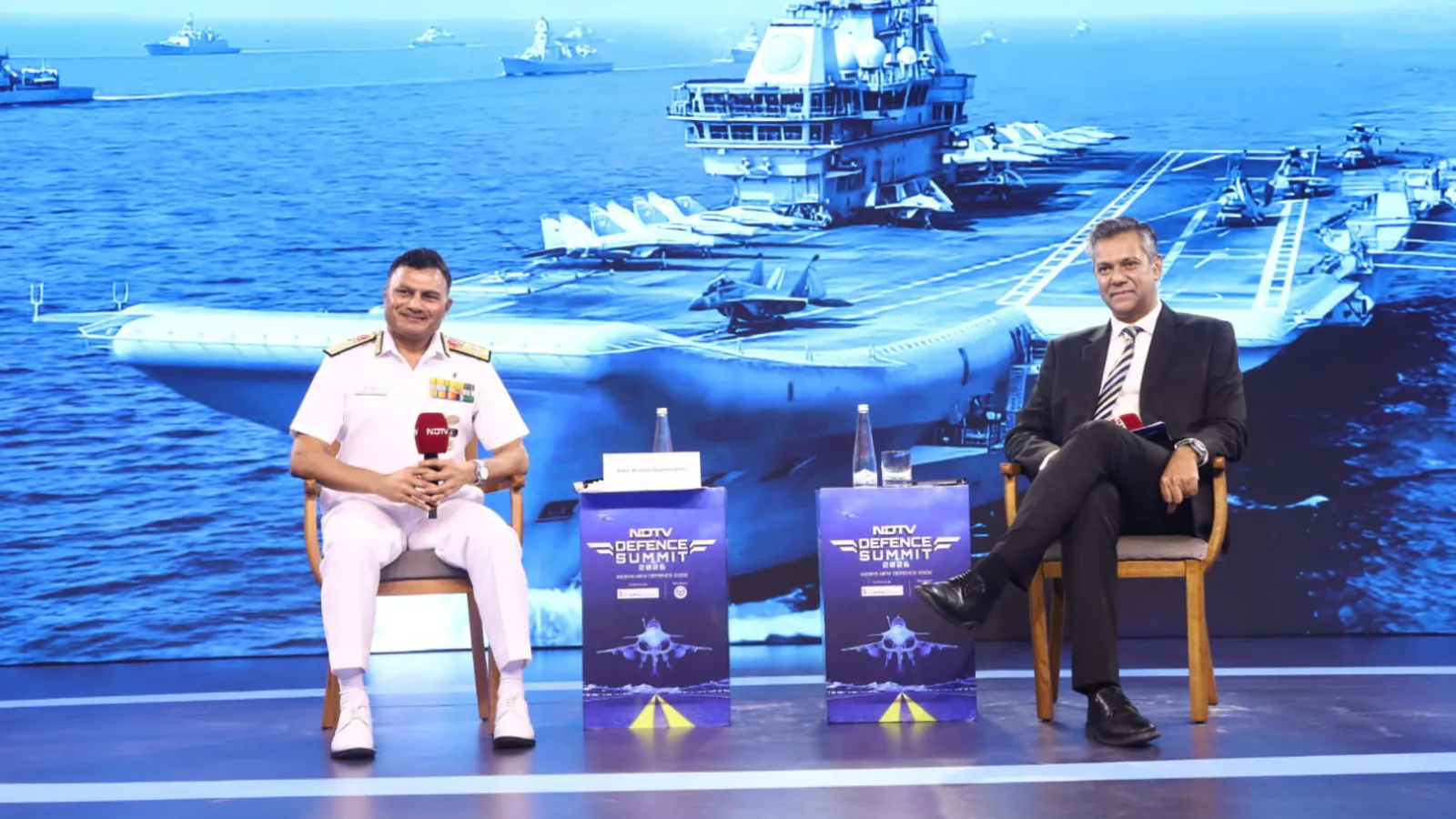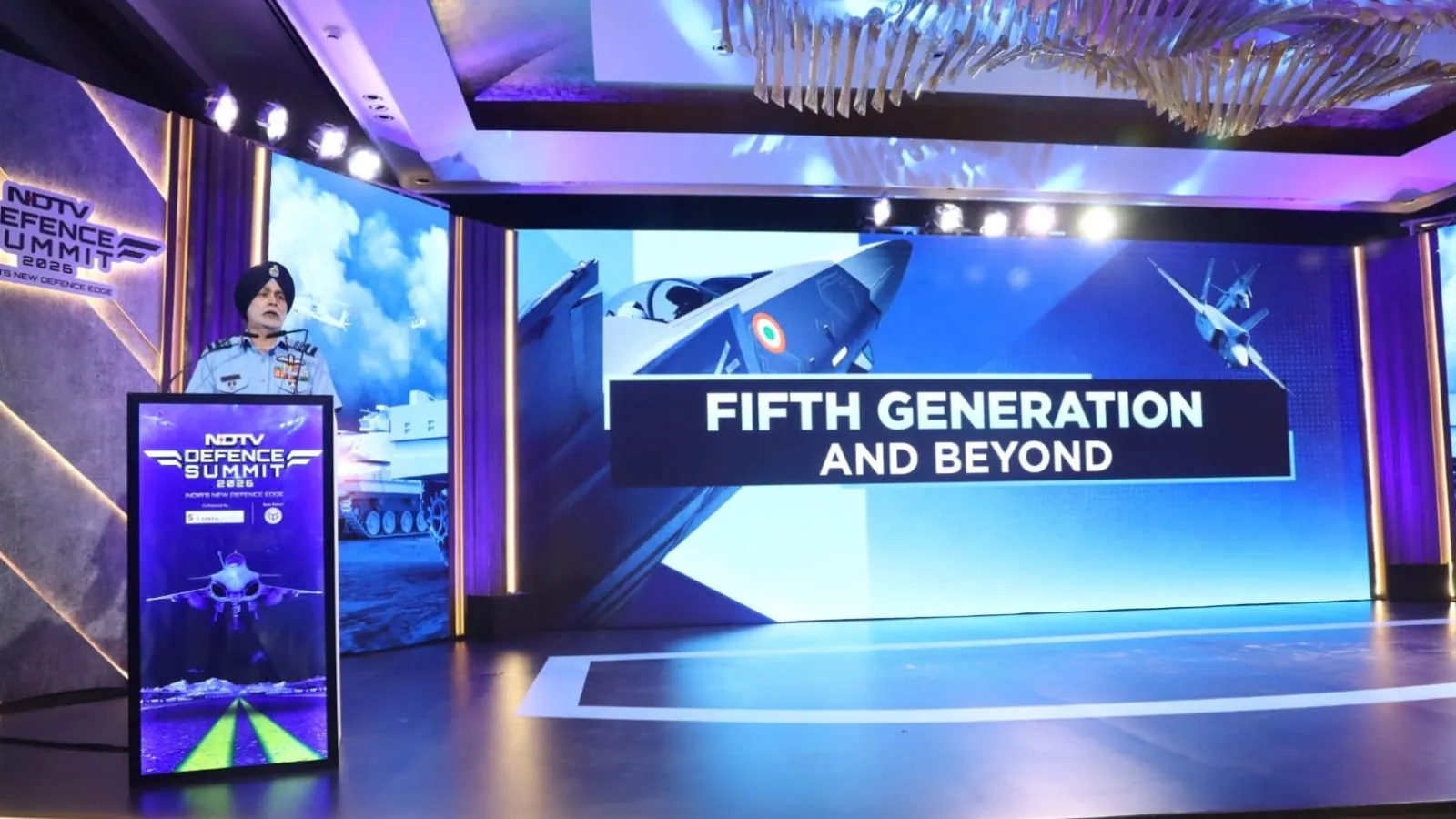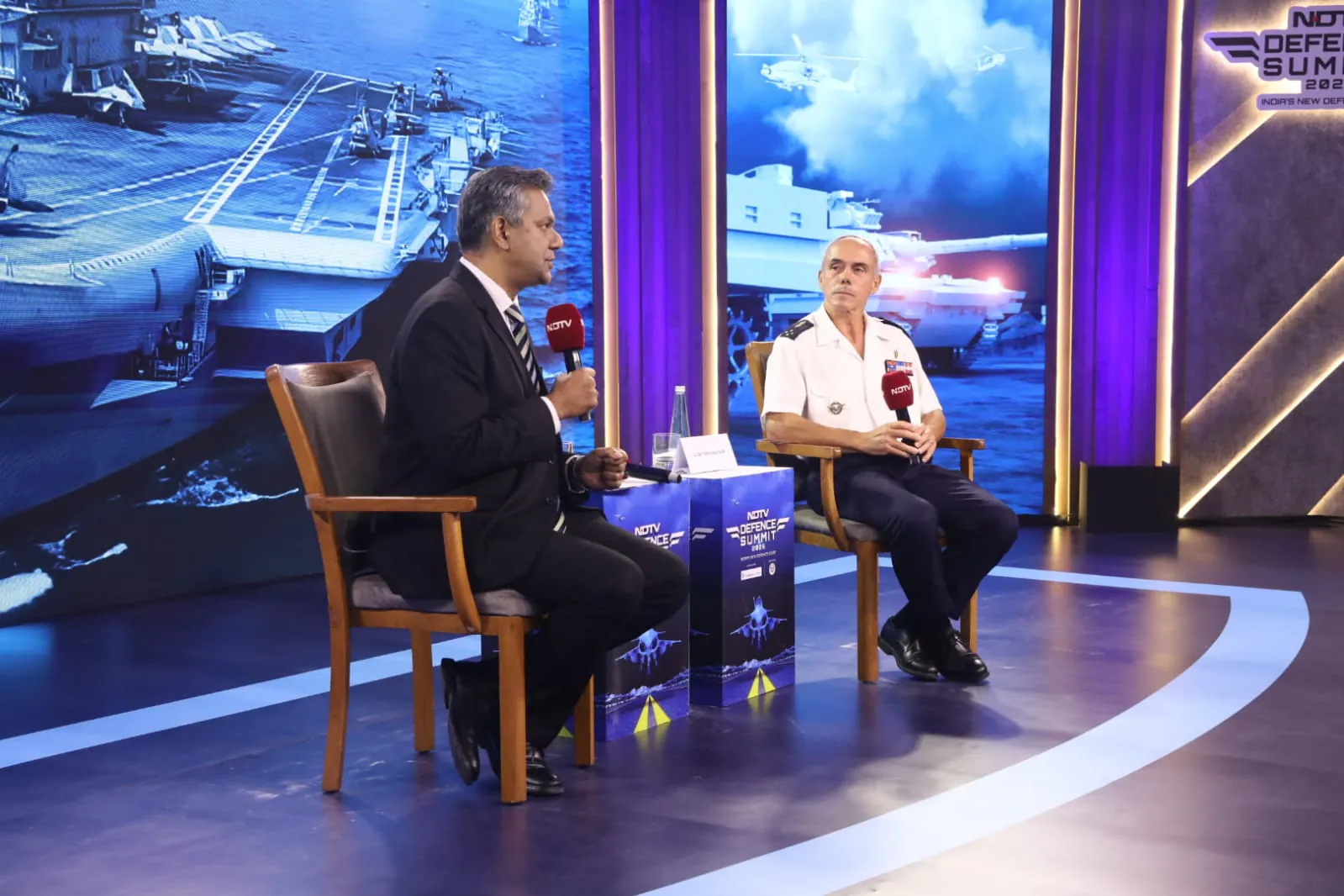
Senior military commanders and the Defence Minister spoke about the capabilities India is building, the gaps it must address immediately and the technologies expected to shape warfare in the years ahead. At NDTV Defence Summit 2026, India’s defence establishment and private sector players spoke at length about a range of topics from sixth-generation fighter aircraft and artificial intelligence to submarines, combat architecture and preparedness for threats from Pakistan.
The summit also brought into focus the importance of self-reliance and the need to prepare for both present and future battles.
- Defence Minister Reveals ‘Sixth Generation Fighter’ Plan India is working towards developing sixth-generation fighter jets, Defence Minister Rajnath Singh said at the NDTV Defence Summit 2026. He said India was building capabilities with the warfare of the next two decades in mind. “Today, large-scale efforts are underway in India to manufacture everything from aircraft engines to drone engines. India is working towards developing not just fifth-generation fighter jets, but sixth-generation fighter jets as well,” Singh said. “I am aware that there will be challenges along this path, yet our resolve remains unwavering. India is fully prepared to take a giant leap in defence manufacturing over the next decade,” he added.
- Land One And Only Indisputable Marker Of Success: Army Chief Chief of the Army Staff General Dhiraj Seth said technology is certainly shortening battles, but it is not necessarily shortening wars. He argued that even as warfare becomes increasingly shaped by technology, the physical control of land remains an indisputable measure of victory. “We see salvo after salvo in today’s social media covering warfare across the globe, where information narratives and warfare are being fired to fog the real battle picture, creating uncertainty and confusion… General Seth said. “However, I strongly feel, through all this clutter, one reality that does not change: land will always be the one and only tangible and useful factor of success. Victory was, is, and will always be measured in territorial terms and that territory will be occupied, secured, and defended only by the force.”
- Defence Minister’s Warning To Pakistan
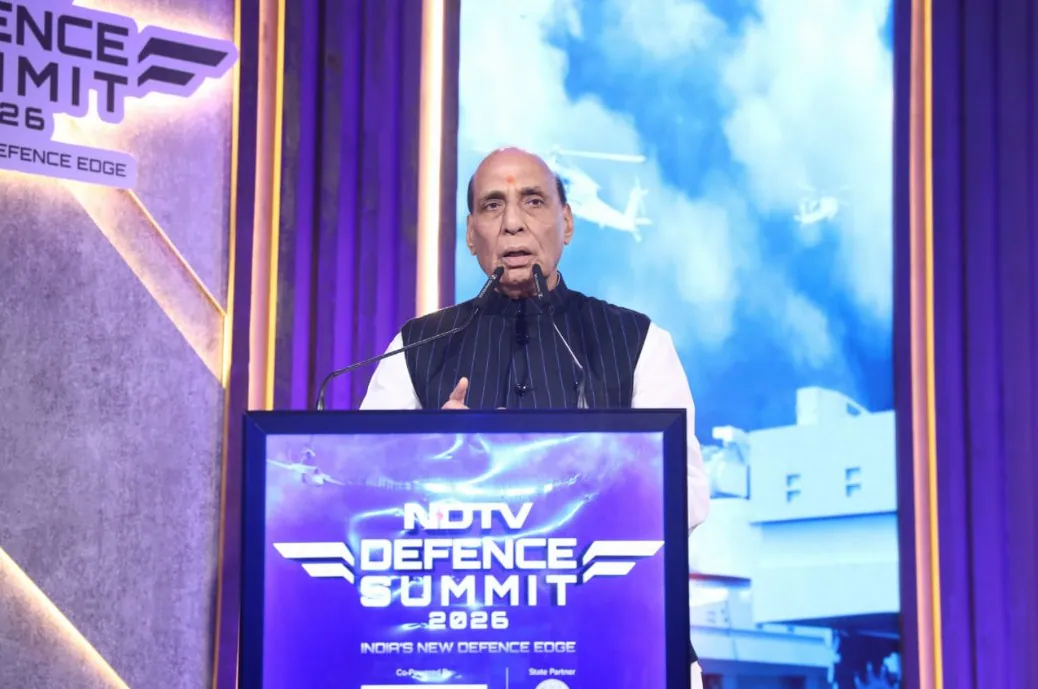
Defence Minister Rajnath Singh said India would not compromise on national security and would remain prepared to carry out strikes against terrorists as long as a neighbouring country continues to “propagate terrorism”. Singh said India wanted peace and did not seek war or the territory of another country, but warned that a desire for peace should not be mistaken for weakness. “India believes in peace, does not want war. India does not want to take over another land, does not want to threaten anyone. But there is a difference between silence and weakness,” he said. “India wants peace, but it will not compromise on its security. Till the time our neighbouring country propagates terrorism, we will be ready for any strikes against terrorists – we want to tell them and the world.”
- 1st Word From Chief Of Defence Staff On India’s AI Threat Perception Chief of Defence Staff General NS Raja Subramani said artificial intelligence would transform the battlefield in all aspects and said the Indian armed forces had made significant progress in the field. He described AI first as “an opportunity and then as a challenge”. Speaking to NDTV’s CEO and Editor-in-Chief Rahul Kanwal, Managing Editor Shiv Aroor and Senior Executive Editor Aditya Raj Kaul, General Subramani said all three services had progressed significantly in understanding how to use AI. “All three services have progressed a great deal in terms of how to go about it. AI is going to transform the battlefield in all aspects, whether it be planning, logistics, decision-support or intelligence. For that, you require compute, data, networks, and skilled personnel. As far as compute is concerned, the defence forces are working very closely with the national AI mission and MeitY (Ministry of Electronics and Information Technology),” he said.
- 1st Word From Chief Of Defence Staff On India-China Border Situation The situation along the Line of Actual Control with China is currently stable and there is no cause for concern, Chief of Defence Staff General NS Raja Subramani said at the summit. “I think the border situation at the moment is stable. You have also seen recently the meeting that was held between President Xi Jinping and Prime Minister Narendra Modi. Dialogue is the best methodology for defending as well as ensuring peace,” General Subramani said.
- Chief Of Defence Staff’s Appeal To Gen Z On Joining Military General NS Raja Subramani said the armed forces were providing young officers and soldiers opportunities to acquire skills in emerging areas. “We are giving our young officers and soldiers adequate opportunities in terms of career skills to learn the latest, whether it be AI, whether it be quantum, whether it be cyber. And we are identifying talent, giving them adequate opportunities and time. And simultaneously, we are working with experts in the civil sector to ensure that we remain up to date,” he said.
- Navy Chief’s 1st Detailed Word On India’s Hormuz Posture Chief of Naval Staff Admiral Krishna Swaminathan said the government had diversified lines of supply and that the Navy had learnt several lessons from the disruption to shipping traffic in the Strait of Hormuz and Bab el-Mandeb. He said the Navy was also working towards self-sufficiency. “One of the things we do is constantly try and recognise the threat environment. The threat environment is changing as technologies, adversaries and geographies change… All the capability that we build is not built in isolation. It is built to address the threats and challenges that we are likely to face,” the Navy chief explained. “In terms of energy security, the government has been very, very quick to diversify our sources of supply. The Indian Navy’s primary responsibility is to make sure that our sea lanes are always safe. So through the wars, there have been many tactical, operational and strategic lessons, but the biggest lesson we have learnt as a Navy – and this is going to be a recurring theme in everything – is that we have got to be self-sufficient,” he added.
- ‘Fight With What We Have’: Navy Chief On Submarine Shortages Admiral Krishna Swaminathan said submarines remained a critical part of India’s military capability and that the Navy was building more even as the government pursued several projects. He said that until new submarines could be commissioned and deployed, the Navy had to operate with the platforms it already had. “Submarines play a very important role in whatever we do. You know, they are very, very potent platforms for combat. We have a very good force. We might want more. We are building more. The government is cognizant of it. We are pursuing several projects,” he said. “Until we get new submarines that we can commission and deploy, we have to fight with what we have. And we are quite cognizant of that, and we are quite capable of fighting with what we have,” he added. “Having said that, the government is very cognizant of the fact that, you know, we need three different kinds of submarines, a nuclear-propelled ballistic submarine, which we are building. We have nuclear-propelled attack submarines, which we are already building. And conventional submarines as well we are building,” he added.
- IAF Deputy Chief’s Big ‘Capability’ Warning: Cannot Wait 20 Years Air Marshal Tejpal Singh said India could not afford to wait for an ideal future before addressing the operational requirements of today. He called for first identifying what the armed forces already have and simultaneously building the architecture needed for fifth-generation and beyond warfare. “We cannot stop at the capability we have today while we wait for that ideal future to emerge 20 years from now. Our challenges are actually more demanding. Firstly, we have to find what we have, detect what we urgently need, and at the same time build the architecture for what is going to come next, keeping in mind the fact that in a battlespace, that is how we should shape how we think about fifth generation and beyond,” he said.
- IAF Deputy Chief’s Big Word On Jumping Generations Of Combat Infra Air Marshal Tejpal Singh said India might not be able to “jump generations” when it comes to aircraft, but it should seek to make such a leap in the architecture surrounding those aircraft. “That is what we should aim for. We can begin by building autonomy, distributed sensing, resilient communications, and open mission systems before the aircraft normally associated with 6th generation warfare when it actually arrives,” he said.
- France Air Force Vice Chief: India A Crucial Partner In France’s Interest In Indo-Pacific Vice Chief of the French Air and Space Force Dominique Tardif explained France’s interest in the Indo-Pacific. He pointed to France’s territories across different parts of the region as a reason for that interest. Because we have French territories in the ocean, in different oceans: in India, Indonesia, we have La Reunion Island (not so far from Madagascar), “Even if France is very far from India, perhaps we also have a big national interest in the Indo-Pacific region. We also have some Antarctic territory that is French in the Pacific: New Caledonia, Wallis and Futuna, and French Polynesia,” Tardif said. “We have a big responsibility in the Indo-Pacific, so we are concerned with all the different stuff related to defence, security, and strategy across this very large region,” he added.
- ‘Prepared To Respond Quickly, Decisively’: Defence Chief On Pakistan Threat Chief of Defence Staff General NS Raja Subramani said India’s armed forces were not letting their guard down when it came to Pakistan. He said preparedness was central to deterring threats or what he described as any “misadventure” by an adversary. “As far as Pakistan is concerned, what I would like to focus on is, we are not letting our guard down,” General Subramani said at the NDTV Defence Summit. “And the best way of deterring any threats or any misadventure by our adversaries is to ensure that we are fully prepared. We are prepared to respond quickly, decisively, and ensure that when we act, we act in a manner that the appropriate lessons are conveyed.”
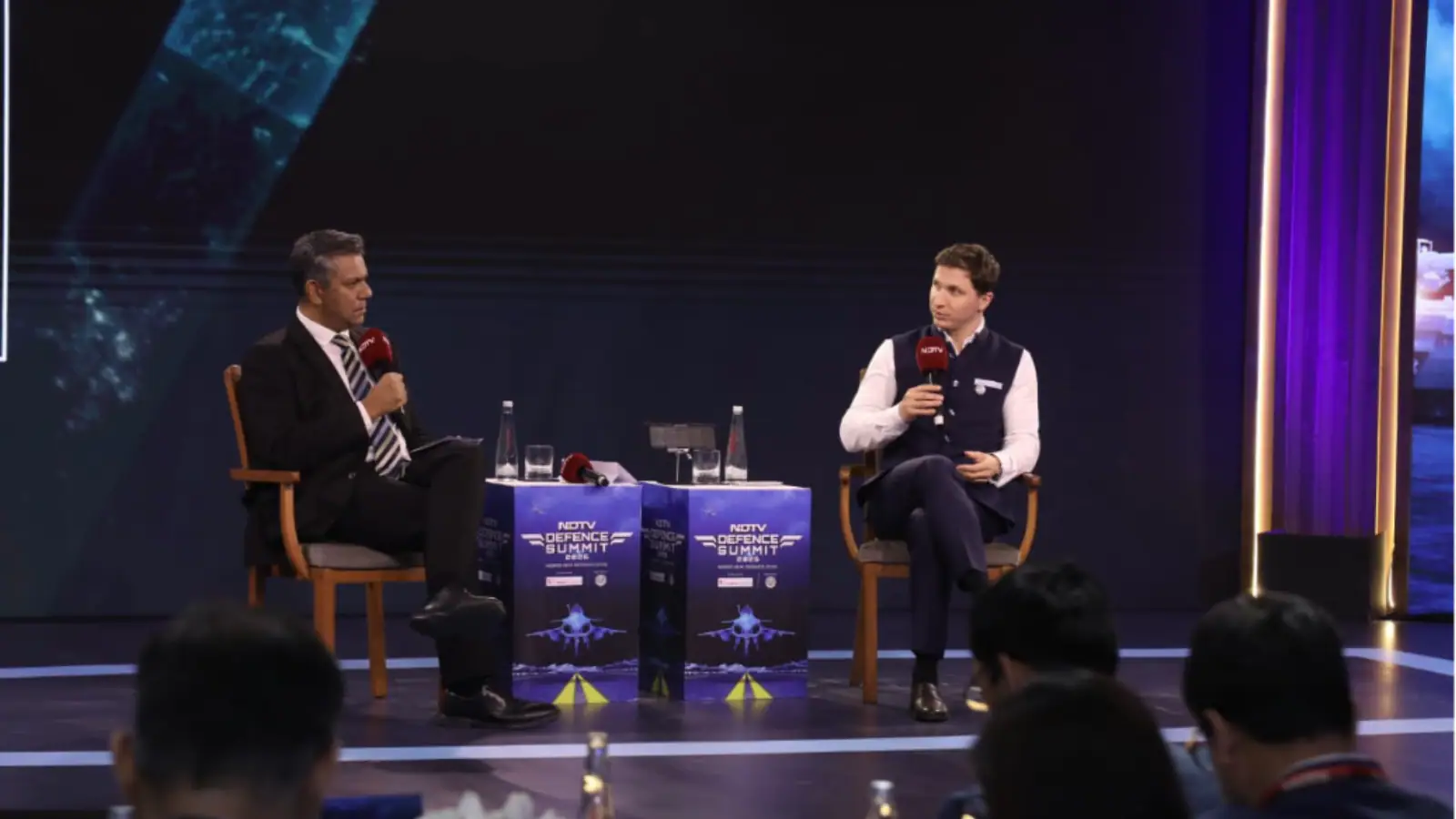
- ICEYE CEO On Supplying India With Post-Op Sindoor Imagery For Battle Assessment ICEYE Co-Founder and CEO Rafal Modrzewski said the geopolitical interests of India and Europe were “extremely aligned” and added that cooperation between his Finland-based company and India’s armed forces made sense. ICEYE was founded 12 years ago, and the company now operates 76 synthetic aperture radar satellites. Modrzewski said ICEYE was already a “provider” for the armed forces when India carried out Operation Sindoor in response to the Pahalgam terror attack last year. “India and Europe are extremely aligned in their geopolitical interests and, as such, this is a collaboration that makes a lot of sense. We have been so happy to see the trade deal ultimately being signed between the (European) Commission and India. This supports the business relationship and the collaboration between the armed forces. When Operation Sindoor was taking place, we were already a provider,” the CEO said.
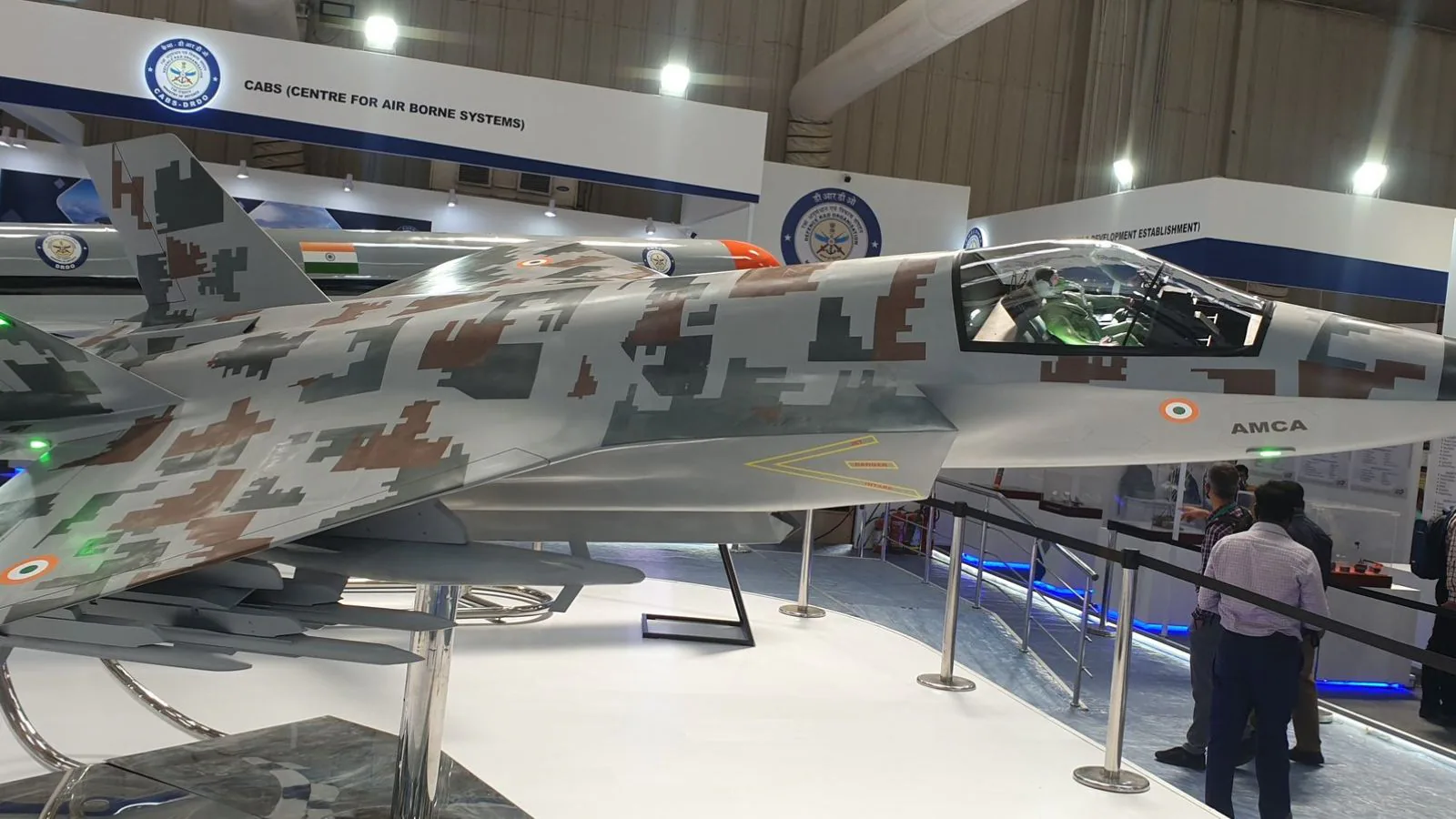
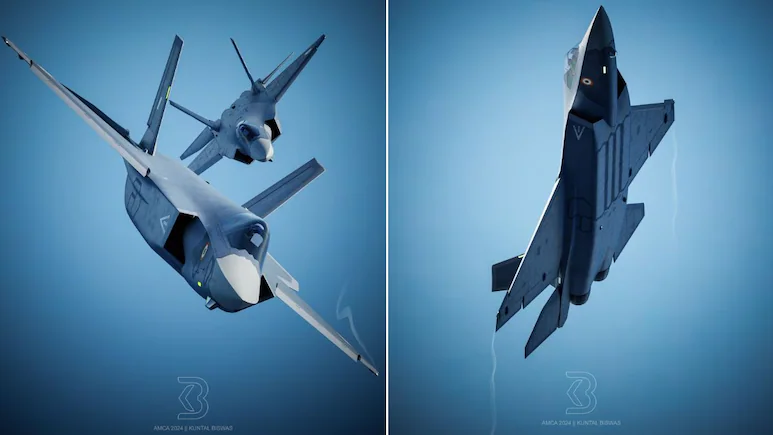
- Defence Secretary Confirms India’s AMCA Stealth Fighter Lifts Off In September 2028 India’s Advanced Medium Combat Aircraft, or AMCA, remains a national priority for the Defence Ministry, with the first prototype expected to fly in September 2028. The programme comes at a time when reports suggest China has already inducted more than 500 stealth fighters, including the J-20 and J-35, with the J-35 also expected by observers to enter service with the Pakistan Air Force. Defence Secretary RK Singh said state-run aircraft manufacturer Hindustan Aeronautics, or HAL, did not qualify to build prototypes of the indigenous AMCA stealth fighter on technical grounds. The decision meant that HAL was kept out of an indigenous fighter-jet project for the first time. “When I first came to the ministry, a little less than two years back, they had three major concerns. The depleting size of the fighter fleet, multipliers like AWACS and refuelers. On all three of those, irrespective of what we do with the AMCA program, which hopefully the first prototype flies in September 2028, if things are on track,” he said.
- No Su-57 Decision Yet, Says Defence Secretary No decision has been taken so far on the acquisition of the Russian Sukhoi-57 stealth fighter, Defence Secretary RK Singh told NDTV. “On the induction of fifth-generation fighter aircraft from global sources, the government has not taken a decision as yet,” Singh said at the NDTV Defence Summit.