
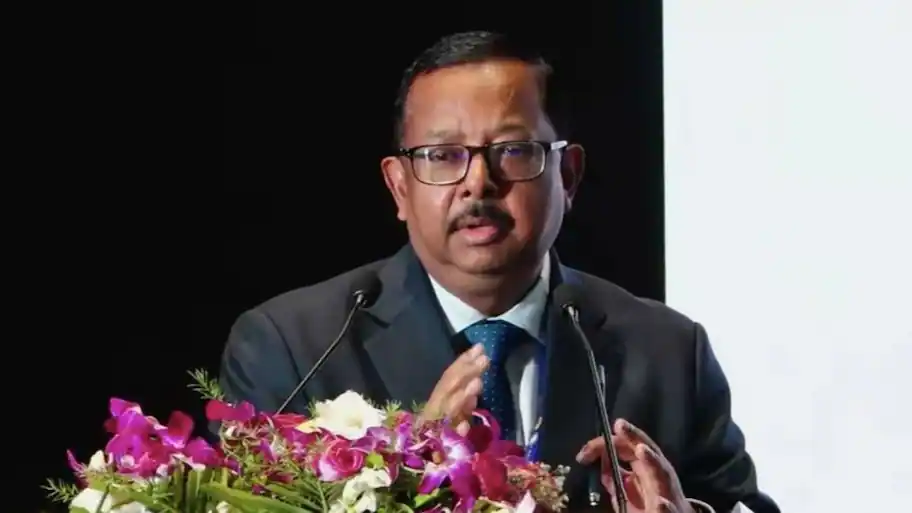
Any process or exercise that leads to the disenfranchisement of millions of Indian citizens, making them second class citizens in their own country by denying them the right to vote, is “intrinsically arbitrary” and in violation of Articles 14 and 326 of the Constitution, Supreme Court Justice Ujjal Bhuyan said on Sunday amid the row over the Election Commission’s special intensive revision (SIR) of electoral roll.
Delivering the valedictory address at the 19th NALSAR-Justice B.R. The provision mandates elections to the Lok Sabha and State Legislative Assemblies on the basis of adult suffrage. He also higlighted that the consitution does not envisage two classes of citizens, those with voting rights and those without them. His remarks come amid growing legal and political scrutiny of the SIR exercise, with concerns arising over the deletion of lakhs of names from electoral rolls, the criteria for issuing verification notices, and the substantial backlog of appeals. These issues have raised apprehensions that eligible voters could potentially be deprived of their right to vote. “Indian citizens’ right to vote is intertwined with India’s long years of struggle against foreign rule. It is a manifestation of our freedom achieved after so much of struggle and sacrifice. No authority can do it; no court can condone it.
Sawhney Memorial Moot Court Competition 2026, Justice Bhuyan said the right to vote is not merely a statutory entitlement but a constitutional right derived from Article 326. Article 326 cannot be tinkered with at all.
Justice Bhuyan said, “If any process results in disenfranchising millions and millions of Indian citizens making them second class citizens in their own country in the sense of being citizens without voting rights, such a process is intrinsically arbitrary”. “No amount of whataboutery can justify it,” said Justice Bhuyan, cautioning that such a process would strike at the very heart of the Constitution and amount to “a negation of the constitutional order which we have adopted under the Constitution of India”. No one is above the Constitution,” he said.
