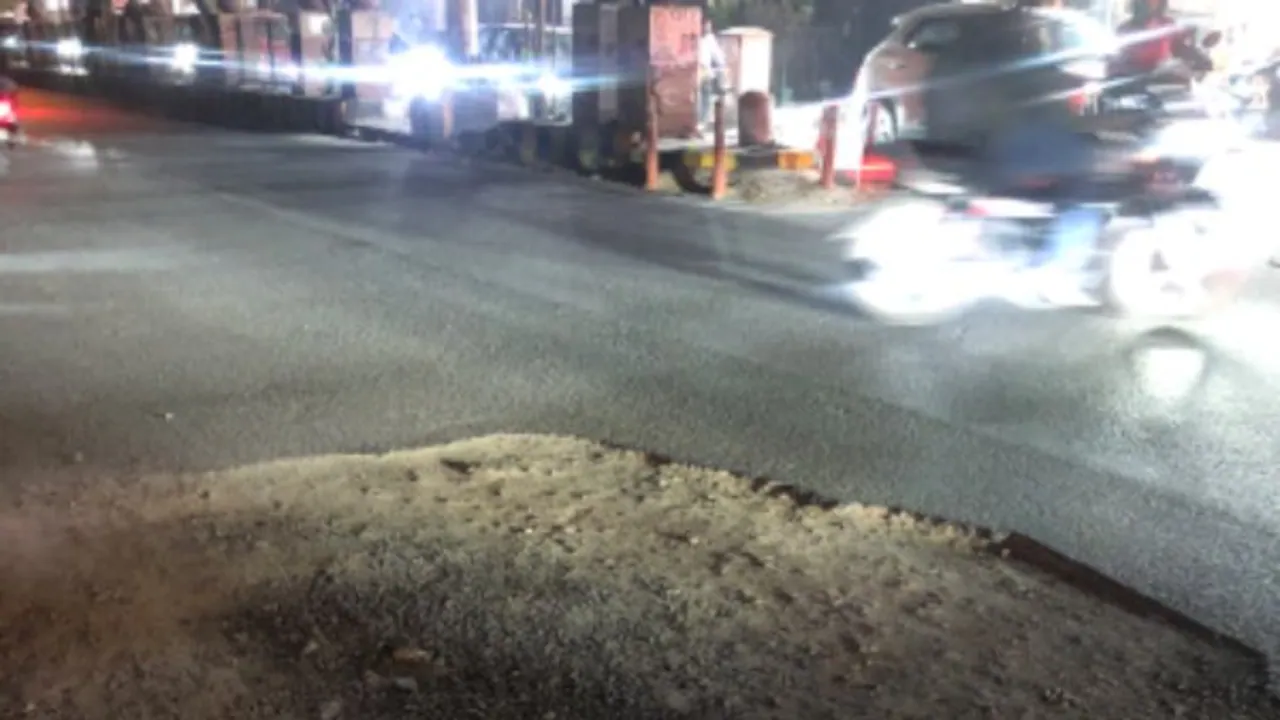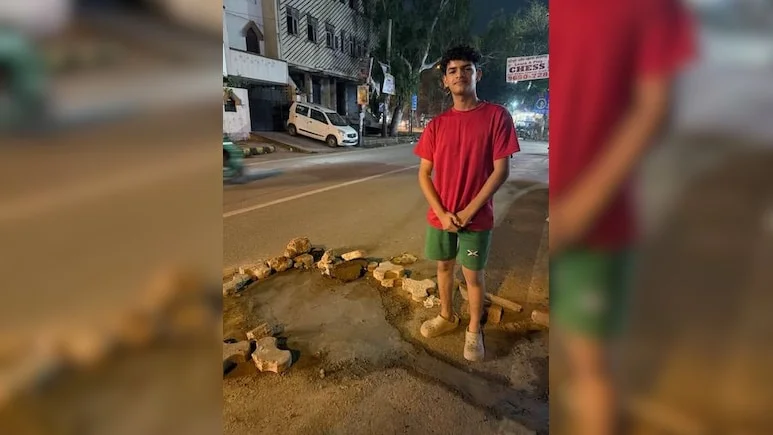
What started with his parents getting injured in a pothole accident has taken 16-year-old Parth Anand from Delhi’s broken roads to pitching an AI-powered solution to authorities overseas.
When he started looking into how such incidents were reported, Parth realised the problem was not merely finding a complaint mechanism. The platform records the location and, according to Parth, analyses the image to determine whether it actually shows a pothole, assesses how severe the damage is and checks whether someone has already reported the same one. “Our system looks at the photo itself: is this actually a pothole, how severe is it, is it the same pothole someone already reported and it also identifies the exact authority to which the road belongs to and files a complaint with them. Reported potholes appear on a public map, allowing people to see how long they have remained unresolved. When a repair is reported, Parth says the platform uses before-and-after photographs to check what actually happened on the ground. Verified means we’ve confirmed the pothole was reported through Sadak and later fixed,” he said. No formal partnership has yet been publicly announced by the civic body.
‘We Just Have More Tools’ Parth does not think that youth today are necessarily more willing than previous generations to take on civic problems. Closer home, he is also working on a proposed data-sharing agreement with Gajendra Jangid, co-founder of Cars24 and founder of Crashfree India. But despite all the AI behind Project Sadak, Parth has learnt that getting a pothole repaired can sometimes require something far simpler – knocking on the right door. In one Delhi case, he went to his MCD ward councillor’s office with pothole reports generated through the platform and requested action. One Accident, One Question The idea for Project Sadak came after Parth’s parents were injured when their motorcycle hit a pothole. It was what happened after the complaint was filed. “My parents were on a motorcycle when they hit a pothole and got hurt. “Complaints go into a system where nobody can see what happens next and the same potholes stay there for months. Filing one more complaint felt pointless. The problem is much bigger than a rough commute. There are already official ways to report damaged roads. But another complication remains: roads can fall under different government agencies. That is where Parth believes Project Sadak can help. “You don’t need to know whether it’s MCD, PWD or someone else’s road. Click A Photo, AI Finds The Authority Project Sadak starts with a photograph. But Project Sadak’s job does not end when the complaint is sent. When AI Is Not Enough The response from government departments has not been uniform. “It’s mixed. In Delhi, one such follow-up took him to his ward councillor’s office. Those experiences have also exposed the limits of technology. AI may be able to identify a pothole, locate it, detect a duplicate and determine where the complaint should go. It cannot guarantee that somebody at the other end will act. Sometimes technology can build the trail. Someone still has to keep pushing. MCD Talks, Fiji Pilot Proposal Parth now wants Project Sadak to move beyond individual complaints and work more closely with organisations responsible for roads. The proposal is awaiting approval. The Fiji Roads Authority already has channels for people to raise road-related complaints. Sadak’s pitch is to add its AI-led classification, routing, tracking and repair-verification system to that process. If approved, it would be the platform’s first test with a road authority overseas. Those discussions remain preliminary. From Complaints To Road-Safety Data The next phase of Project Sadak may be about more than individual complaints. Parth believes thousands of citizen reports can collectively show where road problems are concentrated, which potholes are the worst and how long they remain unresolved. That is also behind a proposed collaboration closer home. One pothole report identifies one damaged stretch. For Project Sadak, that would mean moving from simply helping people file complaints to building a bank of road-condition data that could help decide where intervention is most urgently needed. They simply have access to tools that make building something easier. Now you can. But building a platform, he has discovered, is only one part of the problem. Getting people to believe that reporting something can lead to action is another. For those commuters used to swerving around the same pothole day after day, that may be the bigger promise of Sadak- not another place to complain, but a reason to believe the complaint might actually matter.
His platform, Project Sadak, has received more than 1,900 pothole reports and recorded 30 verified repairs, according to the latest figures shared by Parth with NDTV. Now, the Delhi teenager says he is in talks with the Municipal Corporation of Delhi (MCD) for a working partnership, has proposed a 90-day pilot to the Fiji Roads Authority, and is in early discussions with Liberia’s National Road Fund. Parth was 15 when he began working on Sadak. He has since turned 16. Government data show that 5,432 road crashes attributed to potholes were recorded across India in 2024, killing 2,385 people and injuring 4,643. Delhi recorded 84 such crashes and 16 deaths. In Delhi, for instance, the MCD’s 311 platform accepts complaints about potholes and other civic issues. “We’ve had over 1,900 reports and 30 verified repairs. Outside India, Parth said Project Sadak has proposed a 90-day pilot to the Fiji Roads Authority, under which the platform could be used as part of its grievance process. More than 1,900 can begin to show a pattern. “Ten years ago, a 15-year-old couldn’t build an app, put it online and get thousands of people using it.
“Within a few days the potholes were repaired,” Parth told NDTV. When I looked into how to report it, I realised the problem wasn’t just one bad road,” he said. “I wanted to build something that makes each pothole visible, tracks it, and keeps pressure on until it’s actually fixed,” he said. We figure that out,” he told NDTV. AI agents then identify the authority responsible for that road and file a complaint with it, he said. “An ordinary complaint app just forwards whatever you send,” Parth said. The idea, he says, is to prevent officials from receiving repeated complaints and poor-quality photographs of the same damaged stretch. “That means officials get a clean, prioritised list instead of hundreds of duplicates and blurry photos,” he said. “It also lets us check before-and-after photos to confirm a repair is real, not just marked ‘resolved’ on paper,” he said. Project Sadak is now live in Delhi, Bengaluru and other parts of India, according to Parth. Some departments now respond much faster than when we started, and others still need follow-ups,” Parth said. In Bengaluru, Parth said a pothole was repaired within two days of Sadak filing a complaint with the BBMP. In Delhi, he said discussions are underway with the MCD. “The focus is getting an MCD letter of intent into a working partnership,” he said. “The Fiji pilot will be starting as soon as we hear back from them,” he told NDTV. Parth also said Project Sadak is in early talks with Liberia’s National Road Fund over road-reporting systems. Parth said he is working with Gajendra Jangid, co-founder of Cars24 and founder of Crashfree India, on a data-sharing agreement. “The idea is that Sadak’s citizen reports show exactly where the worst potholes are and how long they’ve been left open so that data can guide where Crashfree India focuses its road safety and rapid-repair work under their ZeroPotholeIndia push,” he said. “I think we just have more tools,” he told NDTV. “Most people aren’t less willing to fix things, they just assume nothing will change,” Parth said. “If you can show even 30 potholes getting fixed, people start believing it’s worth trying,” Parth said.