
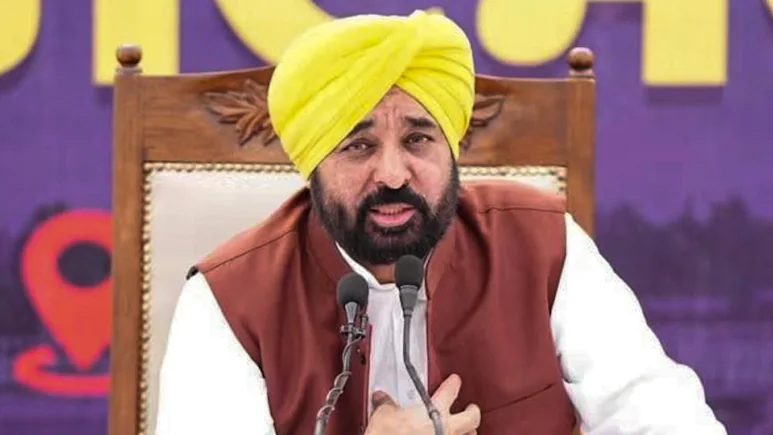
Punjab Chief Minister Bhagwant Mann’s OSD Rajbir Singh Ghuman has moved the Punjab and Haryana High Court challenging the CBI investigation and search conducted at his residence in Sangrur. The agency, he contended, acted without obtaining the mandatory prior approval under Section 17A of the Prevention of Corruption Act.
Punjab Chief Minister Bhagwant Mann’s OSD Rajbir Singh Ghuman has moved the Punjab and Haryana High Court challenging the CBI investigation and search conducted at his residence in Sangrur.
He has also questioned the manner of the search and seizure proceedings, alleging that only one independent witness was present. The petition argues that Section 17A bars a police officer from conducting any inquiry or investigation into allegations under the Prevention of Corruption Act against a public servant, where the allegations relate to a recommendation made or decision taken in the discharge of official duties, without prior government approval. CBI, arguing that even where a court directs registration of an FIR, investigation must remain subject to the statutory requirement of obtaining prior approval under Section 17A. Ghuman has sought quashing of the investigation against him until the mandatory approval under Section 17A is obtained. Alternatively, he has sought directions that no further proceedings against him be carried out without prior approval under the provision.
In his petition filed on Thursday, Ghuman has alleged that the CBI registered a First Information Report around 11.50 pm on October 5 and conducted a search at his family residence in village Gharachon, Sangrur, within 24 hours, without securing the statutory approval required under Section 17A. Ghuman has claimed that the search was carried out from around 5.50 pm on October 6 to 4 am on October 7, when neither he nor his family members were present at the residence. The petition also challenges the CBI action on the ground that the FIR was registered following the Punjab and Haryana High Court’s October 5 order. The petitioner has cited the Supreme Court’s 2020 judgment in Yashwant Sinha vs.
The exception is an on-the-spot arrest in a trap case, which, according to Ghuman, does not apply here.
