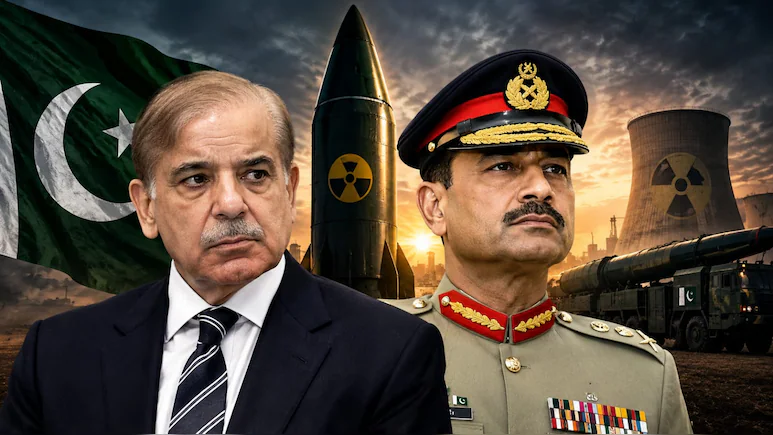
Nearly two decades after Pakistan was battered by revelations that its most celebrated nuclear scientist, Dr Abdul Qadeer Khan, had run a clandestine global nuclear proliferation network that supplied sensitive nuclear technology to countries including Iran, Libya and North Korea, the world’s nuclear watchdog has endorsed Pakistan’s civilian nuclear security framework.
However, investigations eventually revealed that his network had secretly transferred uranium enrichment technology, centrifuge designs and other sensitive nuclear know-how to foreign states seeking nuclear capabilities. In a significant development, the Vienna based global nuclear watchdog the International Atomic Energy Agency’s International Physical Protection Advisory Service, or IPPAS, completed its first-ever nuclear security review mission to Pakistan and concluded that the country has established “a robust nuclear security regime for physical protection of nuclear material and nuclear facilities. The IAEA further stated that the regime was being appropriately implemented at the facility reviewed and was being continuously strengthened through periodic reviews and capacity building efforts. The assessment marks a striking contrast from an era when Pakistan’s nuclear establishment was associated internationally with the activities of Dr A.Q. Khan, whose illicit network became one of the biggest nuclear proliferation scandals in modern history. Indian strategic affairs experts say the IAEA review should be viewed cautiously and in its proper context. Former Indian diplomat Ambassador Rakesh Sood, who served as the Prime Minister’s Special Envoy for Disarmament and Non-Proliferation Issues, was even more blunt. “Pakistan needs such certificates for reasons that are well known. Let’s not forget that it was described as the ‘Nuclear Walmart’! The remark recalls one of the darkest chapters in global nuclear history. Notorious Pakistani nuclear scientist AQ Khan Photo Credit: AI Generated For years, Dr A.Q. Khan was celebrated in Pakistan as the father of the country’s atomic bomb programme. The proliferation network stretched across continents and relied on front companies, middlemen and clandestine supply chains. International investigations subsequently linked the network to nuclear assistance provided to Iran, Libya and North Korea. Facing mounting global pressure, Pakistan placed Khan under investigation. Shortly afterwards, then Pakistani President General Pervez Musharraf granted him a pardon but placed him under house arrest. many international experts continued to debate how such an extensive network could have operated unnoticed Although Pakistan consistently maintained that the proliferation activities were conducted without state authorization. The scandal severely damaged Pakistan’s global reputation and generated enduring questions regarding oversight, accountability and security within its nuclear establishment. Independent experts note that the exact size of the arsenal remains classified, but the Bulletin’s assessment places Pakistan among the world’s major nuclear weapons states. India and Pakistan remain the only two openly hostile nuclear armed neighbours sharing a common border. Relations have been marked by decades of conflict, crises and military confrontations. Most recently, tensions surged during Operation Sindoor, underlining the persistence of strategic instability in South Asia. Against this background, any international assessment involving Pakistan’s nuclear infrastructure inevitably attracts close scrutiny in India. The IAEA nuclear security (IPPAS) team visited the spent nuclear fuel dry storage facility in Karachi Photo Credit: IAEA/KDP and PNRA Point of Contact for IPPAS The IAEA mission itself was narrow in scope and focused on civilian nuclear security arrangements rather than Pakistan’s nuclear weapons programme.
Because pakistan today possesses one of the world’s fastest-growing nuclear arsenals, those questions have become particularly relevant. Libya’s abandonment of its nuclear programme in 2003 exposed critical elements of the operation. In February 2004, Khan delivered a nationally televised confession in which he accepted responsibility for unauthorized proliferation activities. According to estimates published by the Bulletin of the Atomic Scientists in its widely cited Nuclear Notebook, Pakistan is believed to possess approximately 170 nuclear warheads.
The episode earned Pakistan the deeply unflattering description of being the world’s “Nuclear Walmart”, a phrase used by former CIA Director George Tenet to describe a marketplace where nuclear technologies and expertise appeared to be available to multiple buyers. A top Indian disarmament and foreign affairs expert, speaking on condition of anonymity, told NDTV: “International Atomic Energy Agency inspections applying international standards of nuclear safety to Pakistan nuclear facilities is a measure of reassurance to the international community, given its concerns of terrorist groups gaining access to sensitive material in Pakistan.

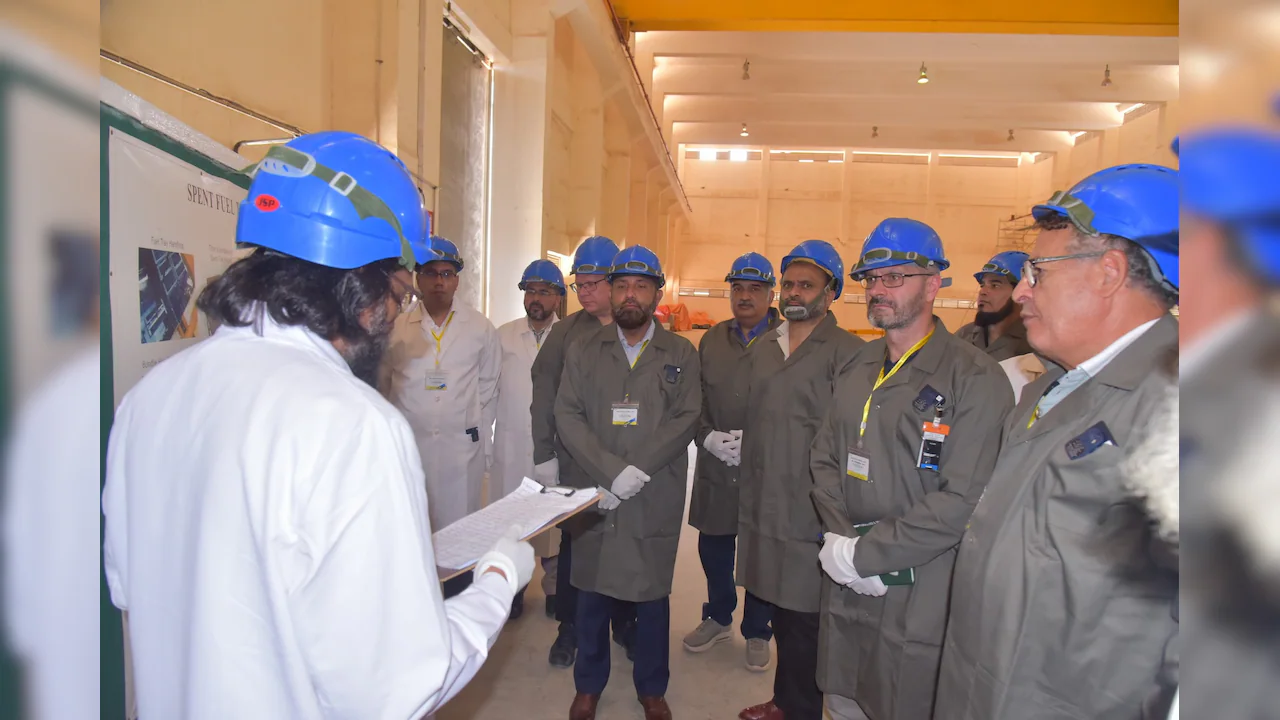
It was the first IPPAS mission ever hosted by Pakistan. The review was hosted by the Pakistan Nuclear Regulatory Authority and examined Pakistan’s legislative and regulatory framework for securing nuclear materials and facilities. The review also included examination of a specific civilian nuclear facility. The international team held discussions with officials from the Pakistan Nuclear Regulatory Authority, the Pakistan Atomic Energy Commission and other relevant stakeholders. The experts also visited the KANUPP Decommissioning Project at the Karachi Nuclear Power Generating Station, Pakistan’s first nuclear power plant. The visit allowed the team to observe decommissioning operations and spent fuel storage arrangements. The seven-member mission was led by Khammar Mrabit, former Director General of Morocco’s nuclear and radiological safety and security authority. The review team included experts from China, Romania, Russia and Slovakia, along with two IAEA staff members. At the conclusion of its work, the team stated that Pakistan had established a robust nuclear security regime for the physical protection of nuclear material and nuclear facilities and that the arrangements observed at the reviewed facility were being appropriately implemented. The IAEA also noted that Pakistan’s capacity-building infrastructure contributes expertise at national, regional and international levels. The team nevertheless provided recommendations and suggestions for further strengthening procedures and security arrangements.
The 12-day IPPAS mission was conducted at the request of the Government of Pakistan between September 28 and October 9, 2026, according to the IAEA. The reactor, a Canadian Deuterium Uranium or CANDU reactor, began operating in 1971 and was permanently shut down in 2021. Pakistan’s, nuclear power is provided by six atomic reactors in two commercial nuclear power plant sites with a net capacity of 3,545 MW, according to estimates.
The findings in a statement were welcomed by senior IAEA officials. She also praised Pakistan’s contribution to training and developing the nuclear security workforce. Pakistan’s nuclear regulators similarly hailed the review as international validation of their security measures. NDTV Photo However, an important caveat remains. The IPPAS mission did not inspect Pakistan’s nuclear weapons facilities. Such facilities remain outside the scope of the review. Pakistan is not a signatory to the Nuclear Non-Proliferation Treaty as a nuclear weapons state, and its strategic nuclear assets are not subject to IAEA safeguards and inspection in the manner applied to civilian facilities in many other countries. The mission instead focused on nuclear security arrangements associated with civilian nuclear materials, facilities and regulatory structures reviewed under the agreed scope of the visit. That distinction is central to the debate now unfolding in strategic circles. Supporters of the mission argue that international peer reviews improve nuclear security practices and strengthen confidence in how civilian nuclear materials are protected. Critics counter that the review does not directly address concerns related to Pakistan’s military nuclear infrastructure, which remains opaque and inaccessible to international inspectors. The two countries have fought multiple wars, remain locked in a long-running rivalry and possess sizable nuclear arsenals. Still, the symbolism of the IAEA’s findings is difficult to ignore. A country once internationally embarrassed by the activities of the world’s most notorious nuclear proliferation network has now received a positive assessment from the world’s premier nuclear watchdog regarding the security arrangements at the civilian facilities it reviewed. Whether that is sufficient to erase memories of the A.Q. Khan era remains another question entirely.
Because of geography and history, for India, the issue carries particular significance. Any international endorsement of Pakistan’s nuclear security framework is therefore likely to be carefully examined in New Delhi.
Karine Herviou, IAEA Deputy Director General and Head of the Department of Nuclear Safety and Security, said the successful completion of the first IPPAS mission demonstrated Pakistan’s commitment to enhancing regulatory and operational aspects of its nuclear security regime. As Ambassador Rakesh Sood observed, the legacy of the “Nuclear Walmart” continues to cast a long shadow over Pakistan’s nuclear reputation, even as the IAEA says the country has established a robust nuclear security regime for protecting nuclear material and civilian nuclear facilities.