
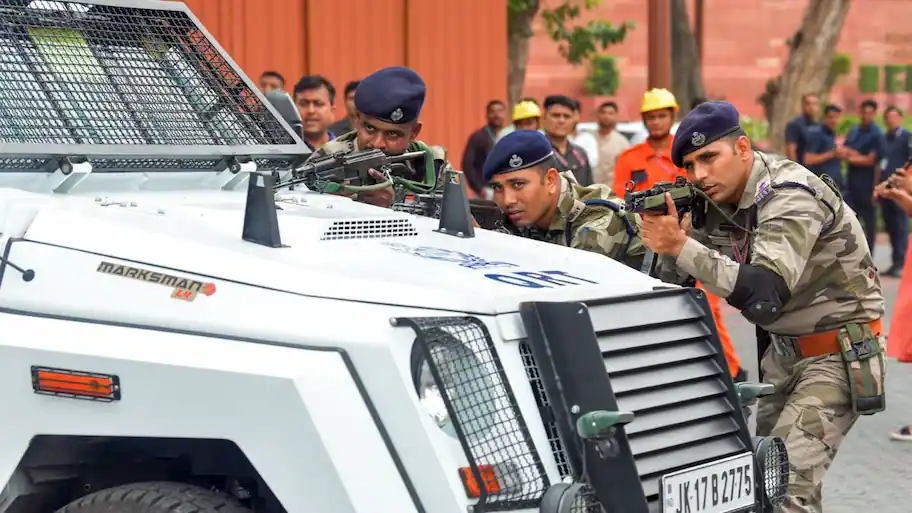
The Central Industrial Security Force (CISF) will undertake a major reorganisation of its administrative and operational command structure from November 1, replacing territorial supervision with sector-specific arrangements to strengthen security at critical infrastructure and strategic establishments across the country.
The restructuring, approved by the Ministry of Home Affairs (MHA), will introduce dedicated supervisory sectors for power, coal, steel, petroleum and natural gas, ports, government buildings, monuments and mass rapid transit systems.
Under the new structure, the National Capital Region Sector will be renamed the Government Buildings, Museums and Monuments and Mass Rapid Transit System (GBMM & MRTS) Sector, headquartered in New Delhi.
Under the existing system, CISF units are largely supervised according to their geographical locations, even though the installations they protect have different operational requirements and security vulnerabilities. The force said the experience had demonstrated the benefits of focused training, sector-specific standard operating procedures, better deployment of specialised personnel and closer coordination with installation managements.
The new command structure is expected to improve accountability, streamline supervision and facilitate faster coordination between CISF formations and the organisations whose installations they protect. The force guards airports, seaports, nuclear and space establishments, power plants, steel facilities, coal mines, petroleum installations, currency note presses, government buildings and mass transit networks across the country.
