
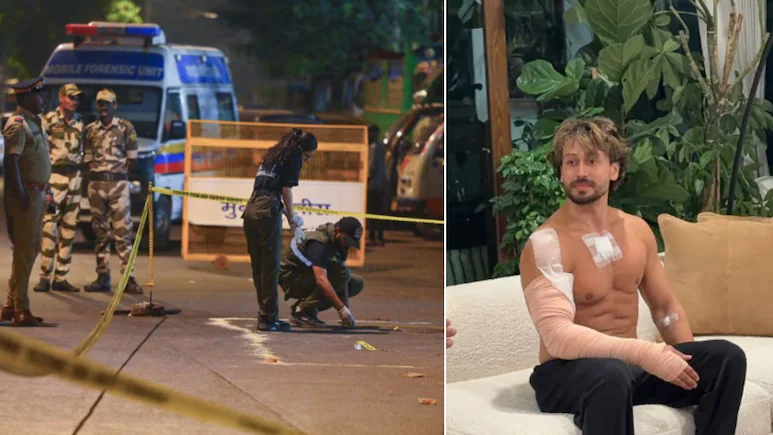
Over the last two decades guns were silent as all the major gangs of the Mumbai underworld collapsed. The Bollywood felt relieved as it was the prime source of revenue from extortion for those gangs. With the firing at actor Tiger Shroff’s car this Sunday, the underworld, it appears, has resurfaced. This time the gangs of north India are attempting to capitalise on the vacuum.
The attack on Tiger Shroff has once again highlighted concerns over the safety of Bollywood celebrities. The incident, reminiscent of a time when the underworld dominated Mumbai, raises pressing questions about the security of film personalities.
A police constable accompanying Rai saved his life by returning fire. During the 90s the Bollywood came under so much pressure from the gangs that a delegation of film personalities met the then Police Commissioner MN Singh and threatened that the Bollywood will withdraw from Mumbai and shift to Hyderabad. The pressure from politicians and the film industry led Mumbai Police to deal with the underworld with an iron hand. The Mumbai Police countered underworld influence through a rigorous encounter policy and strict enforcement of the Maharashtra Control of Organized Crime Act (MCOCA). Key gang leaders were either imprisoned or eliminated, leading to the decline of Mumbai’s underworld. Dawood Ibrahim’s gang quit making extortion calls to Bollywood by the first decade of this century. Similarly, Arun Gawli’s gang operation also ended with his arrest and conviction in the murder case of a Shiv Sena leader. With all the major players neutralised, there was a vacuum in the Mumbai underworld. The police stopped receiving complaints of extortion calls and Bollywood blood no longer spilled on Mumbai streets.
Attack on Rajiv Rai (1997): Shooters linked to Chhota Shakeel ambushed the filmmaker outside his Tardeo office. Abu Salem’s terror ended after his arrest in Lisbon, Portugal in 2002. Chhota Rajan is serving a life sentence after he was arrested in Bali, Indonesia and deported to India in 2015.
