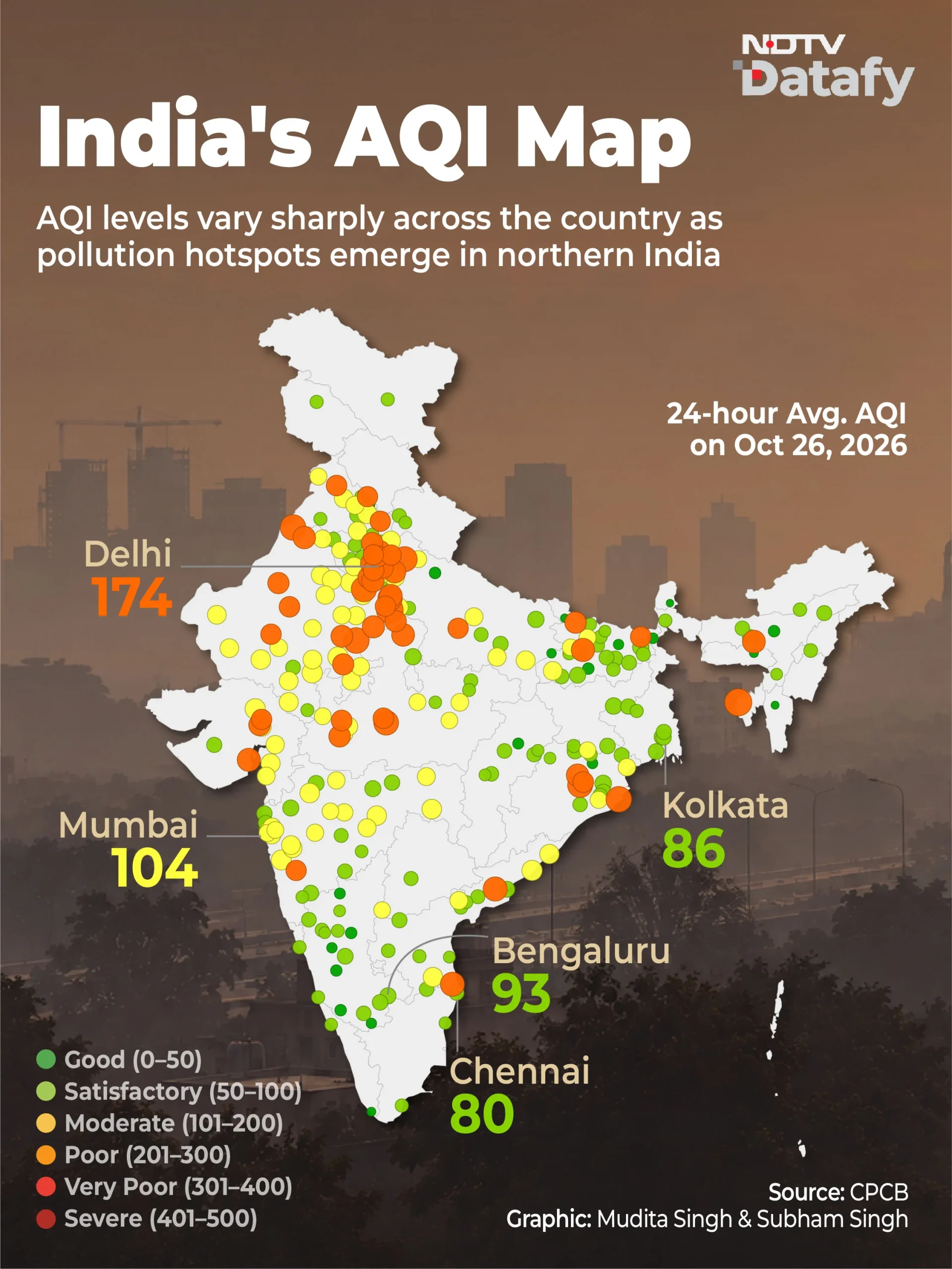
The air people breathe in India depends heavily on where they live. Official data show that many cities in the north are recording poorer air quality than much of the south, with pollution clustering across the Indo-Gangetic Plain.
Data from the Daily AQI bulletin of the Central Pollution Control Board show that the 24-hour average air quality index in many cities across northern India is worse than in much of southern India.
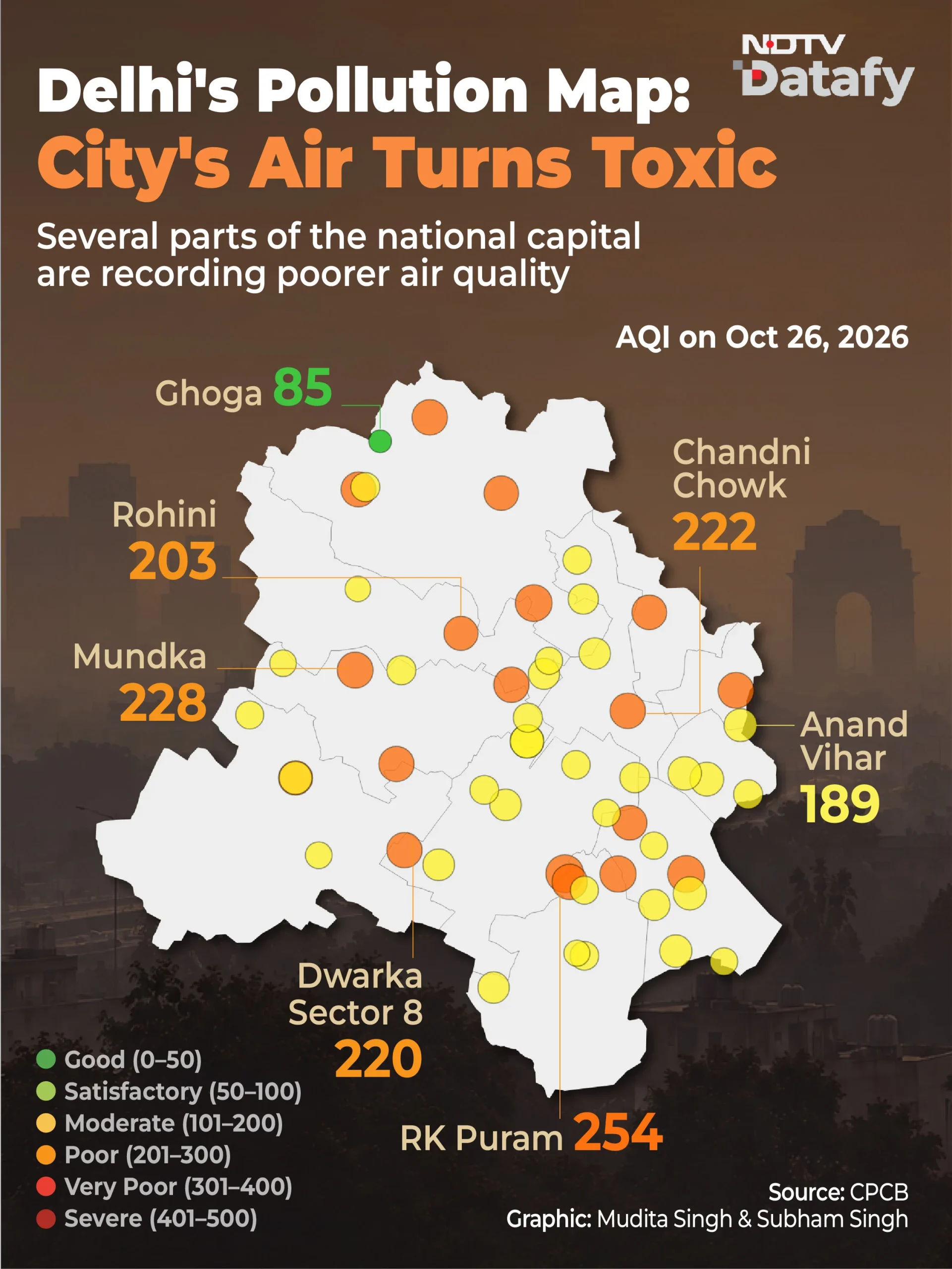
Delhi is among the cities facing elevated pollution levels. Data from the board’s monitoring stations show notable differences between locations, with several parts of the city recording worse air quality than others. This shows how exposure to pollution varies within the same urban area. What Is Driving Delhi’s Pollution? Data from the Decision Support System for Air Quality Management in Delhi, from the Ministry of Earth Sciences, show that the city’s air pollution comes from several sources, not a single one. Data from the same system show that the share of stubble burning in Delhi’s pollution stayed relatively low through September and the first half of October. The rise indicates that farm-fire emissions are becoming a more significant part of Delhi’s pollution mix as winter approaches.
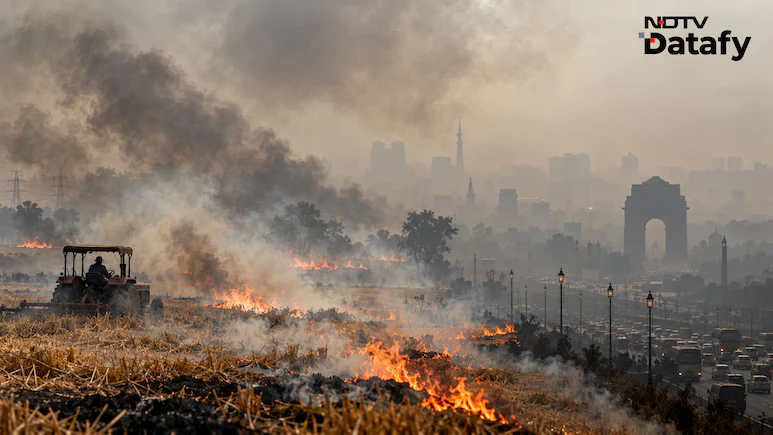
Data from the Daily AQI bulletin of the Central Pollution Control Board show that the 24-hour average air quality index in many cities across northern India is worse than in much of southern India. As crop-residue burning intensified in neighbouring states, the contribution from stubble smoke climbed steadily, reaching 10.94 per cent (forecast) on 26 October.