
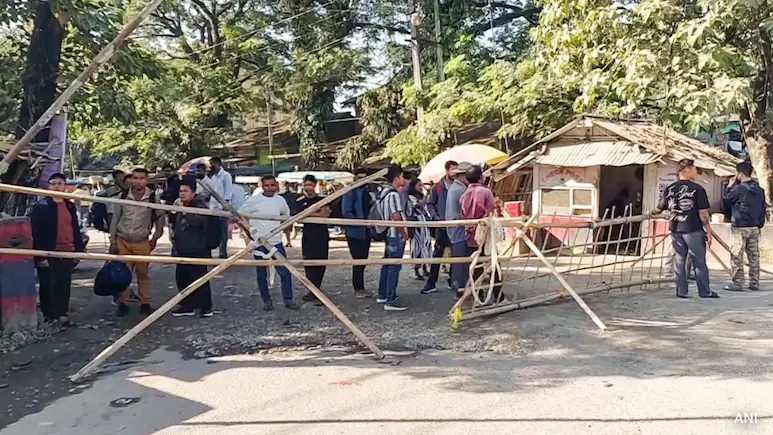
A tense situation prevails in Arunachal Pradesh’s Pasighat, which emerged as the epicentre of a massive protest against a mega dam that has been proposed. The tension continues in the wake of protests that have been building up over the last two weeks in the three districts of the state’s Siang valley region.
The administration and the police have taken strong steps to ensure that there is no strike. Huge contingents of Central Armed Police Force have been deployed in Pasighat town and all across the East Siang district. Vehicular movement was regular and the functioning of educational institutions, government offices, and banks were normal. Markets were opened and people were seen on the roads. To counter this, the government has planned the Siang Upper Multipurpose Project or SUMP which is being handled by the National Hydro Power Corporation or NHPC. The state’s BJP government has maintained that the work on the Pre-Feasibility Report is just a technical assessment and do not amount to approval for construction of the dam.
New Delhi estimates that the project could divert 40 billion cubic metres of water. On October 23, the protesters — who were demanding the scrapping of the project — allegedly set fire to an NHPC office and police vehicles. What Government Says On October 24, Chief Minister Pema Khandu expressed concern on the matter and over the violence and offered to talk to the protesters.
They were also said to have vandalised and looted the residences of two MLAs and the state BJP chief. Khandu has said the project will not be taken forward if it is found to be technically unviable, and that it would not be implemented against people’s wishes.
