
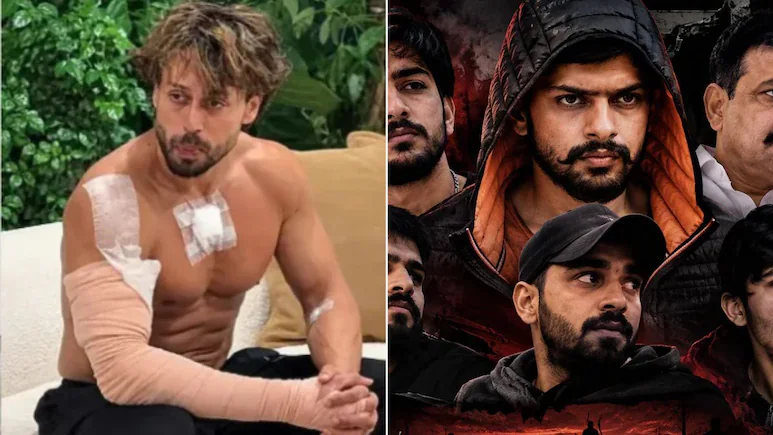
The shooters of the Lawrence Bishnoi gang, who attempted to kill actor Tiger Shroff recently, have been booked under the Maharashtra Control of Organised Crime Act (MCOCA). It is the same law which the Mumbai Police used to break the backbone of the underworld gangs that operated in the 1990s.
Interestingly, apart from gangsters, the people arrested under the law have ranged from scamsters, police officers, film producers and journalists to a sitting judge. TADA was a stringent law which the Mumbai Police applied not only against terrorists but also in cases related to the underworld. Criminals feared this law as it gave extraordinary powers to the police, and it was not easy to get bail. The lack of a stringent law impacted Mumbai’s crime scenario as criminals would get away under regular laws. However, the policy came under heavy scrutiny from the judiciary and human rights groups and had its own side-effects. Hence, the political leadership led by the then Deputy Chief Minister Gopinath Munde decided to arm the police with a law that had provisions like TADA. Under this law, the confession of an accused made before a Superintendent of Police (SP) or above-ranking officer is admissible against him. If MCOCA has been applied in a case, the accused cannot get anticipatory bail, and it becomes difficult to secure regular bail after arrest. The provisions of MCOCA make interception of telephonic conversations or wiretapping easy for the cops. One of the most significant features of the law is that it puts the burden of proof on the accused and not on the prosecuting agency. In some cases, it implies that the accused is considered guilty until proven innocent. Read | Gang Dominance, Extortion Behind Tiger Shroff Murder Attempt: Probe The new law started delivering results within the first year of its enforcement. Three shooters of Dawood Ibrahim’s gang booked under MCOCA were sentenced to death for firing on Milind Vaidya, former Mayor of Mumbai. Vaidya survived the attack, but some of his workers were killed. However, two years later, the Bombay High Court overturned the judgement of the lower court. MCOCA became one of the most discussed criminal laws of India when Bollywood’s biggest financier Bharat Shah was arrested under the Act. Nazim Rizvi, director of the film, and a few others were also arrested. Many top film personalities were summoned to depose as witnesses in the case. All, except Preity Zinta, turned hostile. Salim Shaikh aka Salim STD, a henchman of Chhota Shakeel who disguised himself as a journalist and planned to bomb the Crime Branch building, was arrested under the law. Read | ‘They Are Going To Kill Shah Rukh’: How Underworld Terror Haunted Bollywood Then And Now A Sessions Court judge, whose telephonic conversation with Chhota Shakeel was intercepted, was also prosecuted under MCOCA. The Act was also invoked in the multi-crore fake stamp paper case known as the Telgi scam. Several cops who investigated or supervised the case, ranging from a Sub-Inspector to the Police Commissioner, were arrested under MCOCA and were incarcerated in Pune’s Yerwada Jail for around a year. There was a lull in the Mumbai underworld for around a decade and a half. Now, as organised crime has resurfaced once again, the police are relying on the same MCOCA which helped them combat the underworld in the 1990s.
However, TADA, which was dubbed draconian by several human rights groups, was not extended due to several controversies. In 1995, when the Terrorist and Disruptive Activities (Prevention) Act (TADA) lapsed, there was no equivalent legislation with law enforcement agencies to book criminals associated with organised crime syndicates. MCOCA came into force in 1999, and it gave wide powers to the police. Under general laws, the police can get custody of an accused for a maximum of 15 days, but MCOCA allows the cops to interrogate the accused for 30 days. In case of other laws, the police have to file a chargesheet within 60 to 90 days, but under MCOCA, the investigating agency gets 180 days to file the chargesheet. The twist in MCOCA’s story came in 2003 when the cops who were using this law against gangsters were themselves arrested under MCOCA.
The police had adopted an unwritten and controversial policy of “encounters,” wherein alleged gangsters were shot dead. It was the first conviction under this law, and DCP Pradip Sawant, who supervised the investigations, was presented the “Best Detection Officer” award by the Police Commissioner. He was accused of financing the film “Chori Chori Chupke Chupke” at the behest of Dawood’s lieutenant Chhota Shakeel. The Mumbai Police, while pursuing the policy of “encounters,” also used MCOCA against people who were part of the underworld’s ecosystem.
All the accused, including Yakub Memon and actor Sanjay Dutt, in the 1993 Mumbai serial blasts case were booked under TADA.
