
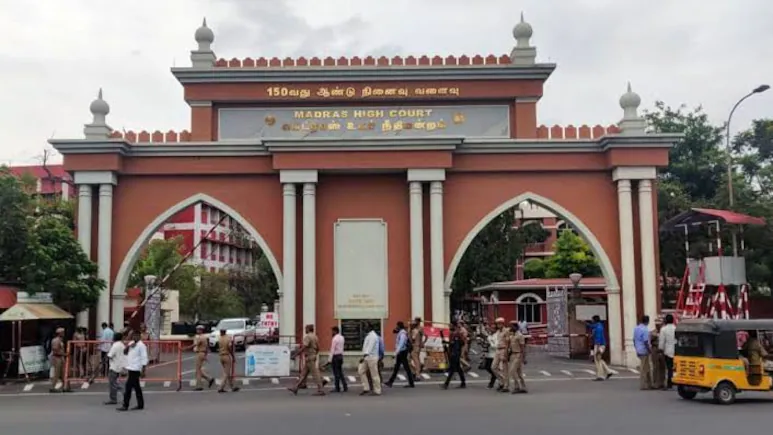
The Madras High Court has directed the Tamil Nadu Police’s Cyber Crime Division to actively monitor digital platforms for content amounting to criminal intimidation of sitting judges and initiate swift legal action against violations. The court has also instructed the police not to grant permission for public gatherings or marches aimed at personally targeting, defaming, or intimidating sitting judges.
The court has also instructed the police not to grant permission for public gatherings or marches aimed at personally targeting, defaming, or intimidating sitting judges.
A Division Bench of Chief Justice Sushrut Arvind Dharmadhikari and Justice G Arul Murugan further directed that if a permitted assembly turns into a personal attack on a judge, the officers concerned must immediately end the event and take appropriate legal action. The court also asked the police to complete the investigation into two FIRs registered in connection with the protests in a fair, thorough, and expeditious manner. The judgment held that a person could not claim backward class benefits purely by virtue of religious conversion. The petitioner had sought directions from the Union and Tamil Nadu governments and the police to take effective preventive and penal measures against such campaigns, register criminal cases, and investigate cognisable offences. He had also sought action against the two organisations, their office-bearers, and others allegedly involved in organising or facilitating the protests, besides guidelines regulating permissions for public meetings and demonstrations relating to judicial proceedings. The High Court underlined the need to balance freedom of expression with judicial independence, observing that the independence of the judiciary was part of the basic structure of the Constitution. “Citizens have an undeniable right to disagree with a judgment.
The petition was triggered by protests following a June 25, 2026, judgment of the Madurai Bench of the High Court, which declared unconstitutional a government order providing 3.5 per cent reservation benefits to Muslims who had converted to Islam.
However, there is a clear legal line between criticising a legal conclusion and attacking the individual judge who authored it,” the Bench said.
