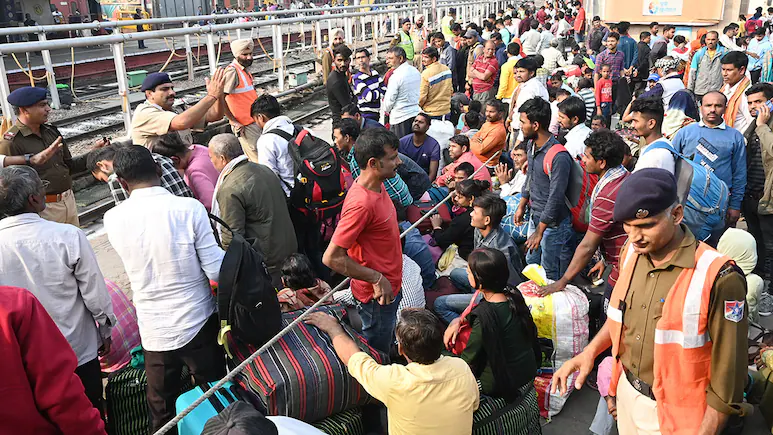
The festive season in India, which starts from late October and continues till November end, is a time for workers employed in factories, construction sites, restaurants and other informal job sectors to travel home. It is an occasion to meet family members and celebrate festivals with them. But this great Indian return journey also gives an interesting picture when it comes to economics. These migrant workers don’t just spend on new clothes, sweets or other equipment but a large chunk of their earnings goes to travel.
The scale of India’s festive travel movement is reflected in the arrangements made by Indian Railways. India has a vast migrant workforce, although the precise number of people who travel home specifically for festivals is not officially recorded. The expense is not limited to the ticket. Workers may also have to pay for local transport to railway stations, food during long journeys, luggage, last-mile travel and, in some cases, higher-priced alternative transport when regular trains are unavailable.
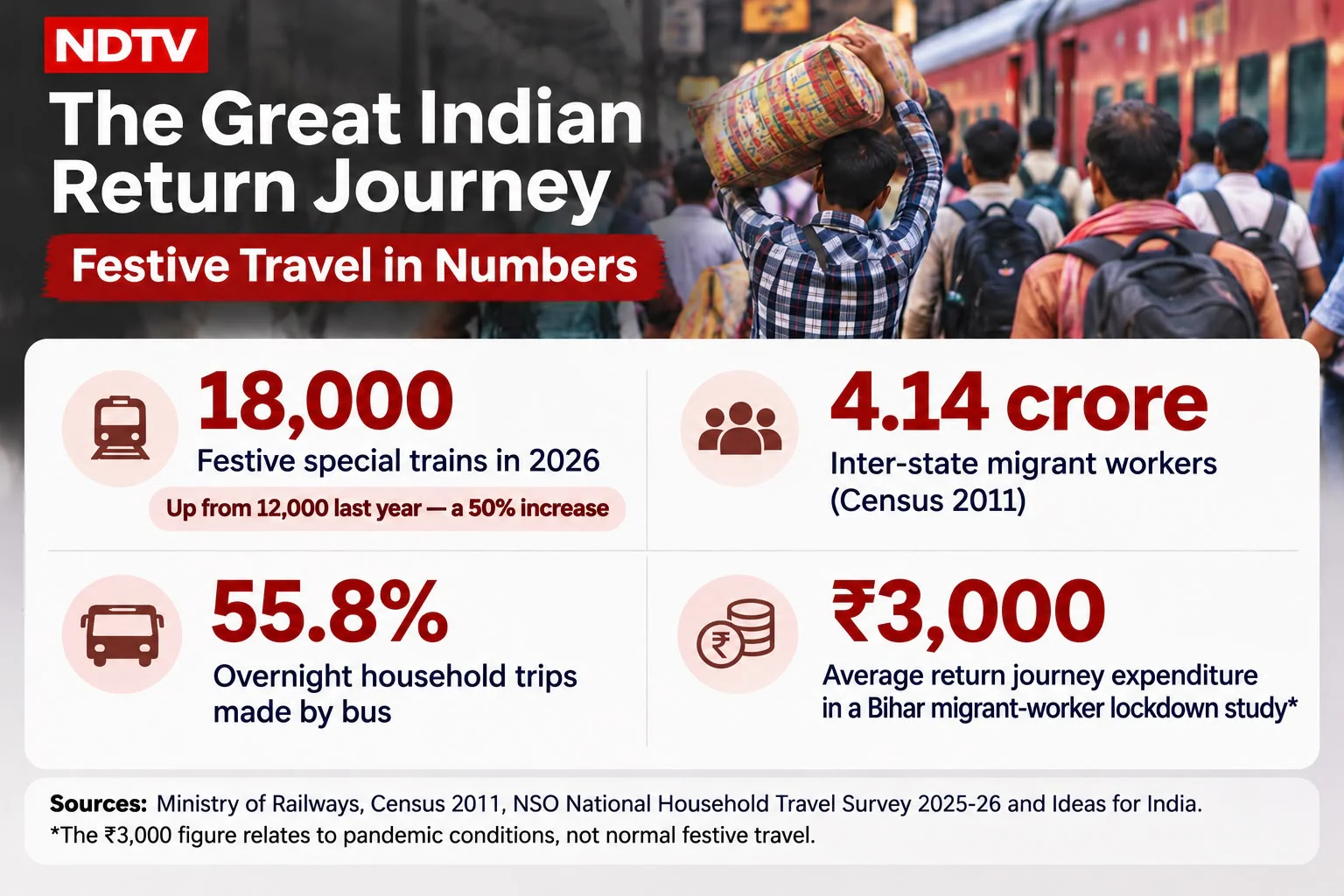
For the 2026 festive season, which covers Durga Puja, Diwali and Chhath, Union Railways minister Ashwini Vaishnaw said on Thursday that the national transporter is running 18,000 special trains compared to 12,000 last year – an increase of 50 per cent. The latest National Household Travel Survey , conducted by the National Statistics Office between July 2025 and June 2026, offers another insight into why Indians travel. Social and religious activities accounted for 70.2 per cent of household overnight trips. Buses were the preferred mode for 55.8 per cent of overnight journeys, while inter-city railways accounted for another 17.7 per cent.