
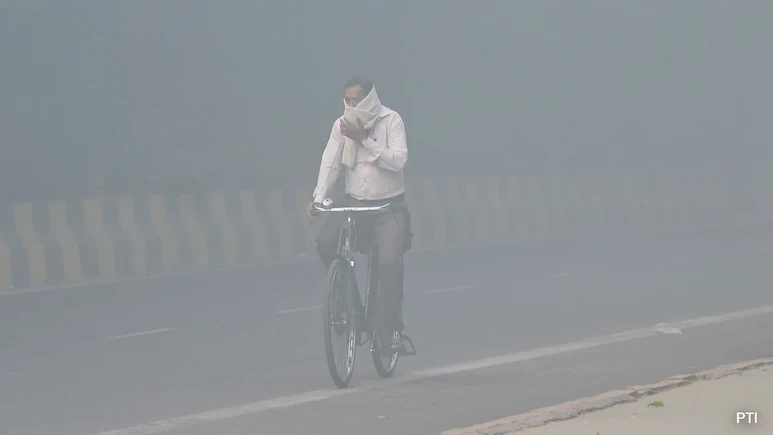
India’s oldest and largest industry body, the Federation of Indian Chambers of Commerce and Industry (FICCI), has issued one of its strongest warnings yet on the country’s worsening air pollution crisis, painting a grim picture of a public health emergency that is costing millions of lives, shortening lifespans and imposing a massive burden on the economy. In its report, ‘Clean Air, Healthy India’, FICCI argues that the country can no longer treat air pollution as merely an environmental issue and must instead place it at the heart of India’s healthcare agenda.
The study points to lost work days, reduced productivity, healthcare costs, and premature mortality. The rest comes from sources outside city limits, underscoring the futility of limiting solutions to municipal boundaries. The report describes air pollution as a whole-body health risk rather than merely a respiratory problem. Long-term exposure is linked not only to asthma and chronic lung disease but also to heart attacks, stroke, heart failure, neurological disorders, cognitive decline, dementia risk, adverse pregnancy outcomes and even accelerated biological ageing. The report’s economic assessment is equally troubling. Air pollution is not merely a health burden but a drag on economic productivity. Speaking about the report, Dr. He stressed that healthcare institutions have a significant role in creating awareness, tracking pollution-related illnesses, and improving preparedness. Dr. Arun Agarwal, Chair of FICCI’s Working Group on Air Pollution and former Dean of Maulana Azad Medical College as well as former Additional Director General of Health Services, argued that India must move beyond seasonal responses that focus only on winter smog episodes. One of the report’s most important recommendations is a shift in how success is measured. But the central message running through the report is clear. India already has many of the policies needed to combat air pollution. The challenge is implementation, enforcement, and coordination. FICCI argues that clean air should no longer be treated as a seasonal issue that triggers emergency responses only when pollution levels become unbearable. Instead, it should become a measurable public health objective backed by science, governance and accountability.
He called for stronger collaboration among government, industry and healthcare providers so that clean air commitments translate into measurable public health improvements. Local sources account for approximately 36 per cent of Delhi’s PM2.5 pollution during winter and about 26 per cent during summer. Fine particulate matter known as PM2.5 can penetrate deep into the lungs, enter the bloodstream and affect nearly every organ system. It notes that approximately 1.3 billion working days are lost annually and productivity can decline by 8 per cent to 10 per cent during heavily polluted periods. The 76-page report prepared in partnership with EY highlights that air pollution-related losses could be as high as $95 billion a year or a loss of about 3 per cent of GDP annually. FICCI says the National Clean Air Programme currently relies heavily on PM10 levels, whereas PM2.5 is the more dangerous pollutant from a health perspective. The report recommends explicit PM2.5 reduction targets, expanded monitoring, and public health indicators linked directly to pollution reduction efforts.
Delhi itself contributes only a fraction of the particulate pollution that residents breathe, according to the study. Ashutosh Raghuvanshi, Chair of the FICCI Health Services Committee and Managing Director and CEO of Fortis Healthcare, said clean air must become central to India’s healthcare agenda rather than being viewed solely through an environmental lens. He said reducing exposure to pollution must become a year-round public health priority supported by stronger monitoring, health surveillance and targeted interventions tailored to local pollution sources.
