Every year, post-Diwali, Delhi gets shrouded by thick layers of smog.
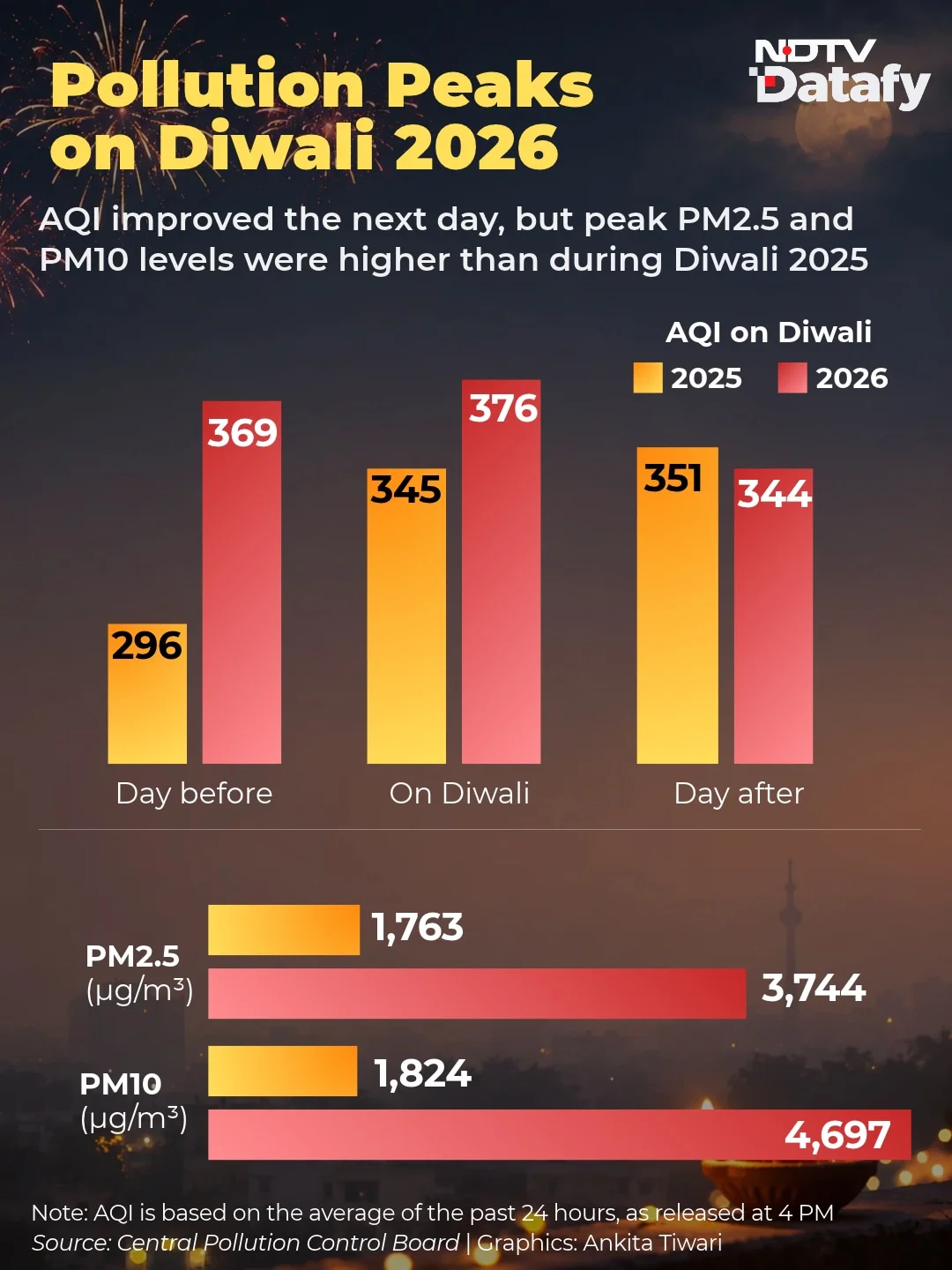
This year was no different, with the city’s air quality index (AQI) being higher than last year.
Delhi’s Air Was Already Worse Before Diwali
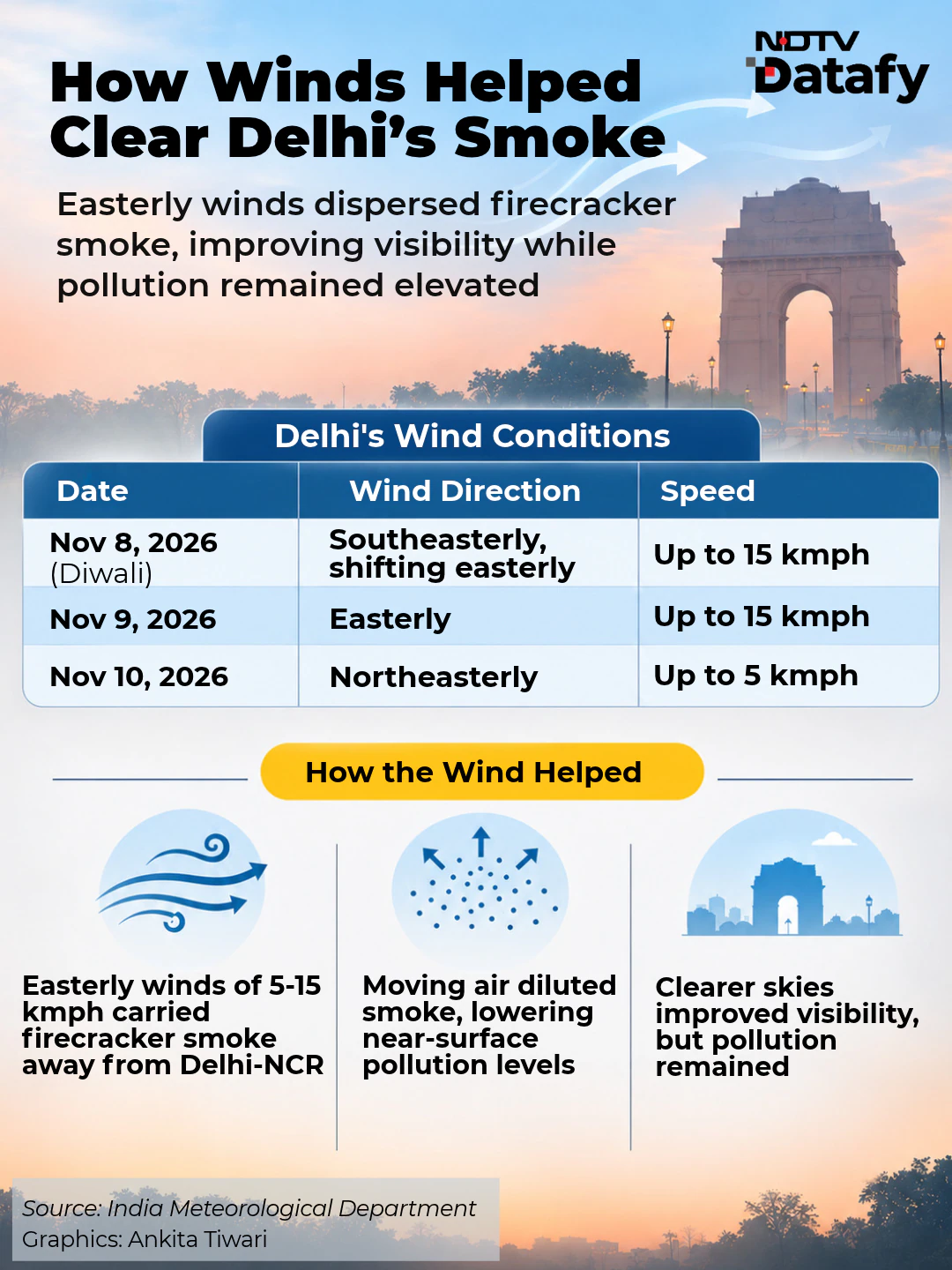
Yet, unlike previous years, visibility in the national capital and surrounding areas did not appear to be as bad. So, where did the pollution go? It was also the highest pre-Diwali average in three years. Farm fires added to the pollution burden.
The average PM2.5 concentration during the week before Diwali stood at 236 micrograms per cubic metre, almost double the 120 ug/m3 recorded in 2025, according to a Centre for Science and Environment (CSE) report. Their contribution to Delhi’s PM2.5 reached a seasonal high of 16.2 per cent on November 4, according to CSE’s analysis. However, it fell to around 8 per cent by November 6, even as the AQI remained at 382. CSE’s analysis of IITM data for November 1 to 8 found that pollution transported from neighbouring NCR districts accounted for 54.43 per cent of Delhi’s PM2.5, while local sources contributed 33.06 per cent and stubble burning accounted for 14.29 per cent. Among local sources, vehicles were the biggest contributor, accounting for 52 per cent.