
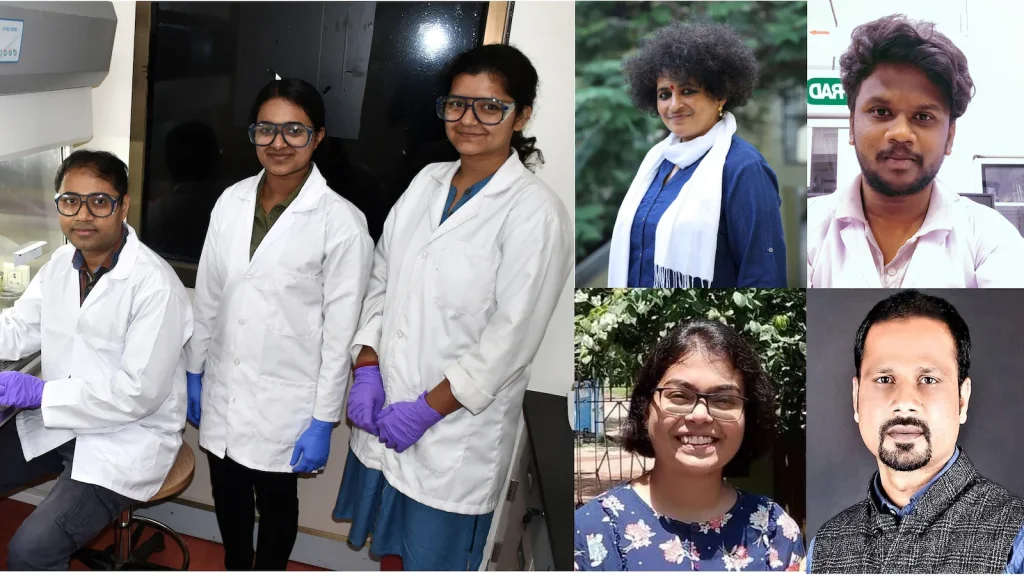
Do cows hold the answer to controlling some superbug infections? In a discovery that could have far-reaching implications for medicine, scientists at the Indian Institute of Science (IISc), Bengaluru, have identified an enzyme from the gut of cows that can help disable one of the world’s most feared hospital superbugs.
The research offers a fresh approach to tackling antibiotic-resistant infections at a time when many antibiotics are steadily losing their effectiveness. The research is still at the basic science stage and is years away from becoming a therapy. But scientists say it opens up a promising new line of attack against dangerous, drug-resistant bacteria. A. baumannii, the most common disease-causing species, can trigger severe infections of the lungs, wounds, bloodstream and urinary tract. The researchers went a step further, developing a medical gauze coated with the enzyme. In a mouse wound infection model, the enzyme-coated dressing reduced bacterial colonisation and improved wound healing.
Acinetobacter bacteria are commonly found in soil and water, but human infections occur mainly in hospital settings, according to the US Centres for Disease Control and Prevention (CDC).
Scientists are cautious about overstating the findings. CRhAB is not a drug and is not available to patients. Extensive research, safety studies and clinical trials lie ahead before it could be considered for human use. For now, this is an important scientific discovery, not a ready-made cure. Still, at a time when the pipeline for new antibiotics has struggled to keep pace with rising drug resistance, even incremental advances matter. By targeting a superbug’s defences rather than the superbug itself, the IISc study points to a potentially smarter way to make existing antibiotics work again, reason enough to keep watching this space closely.
