
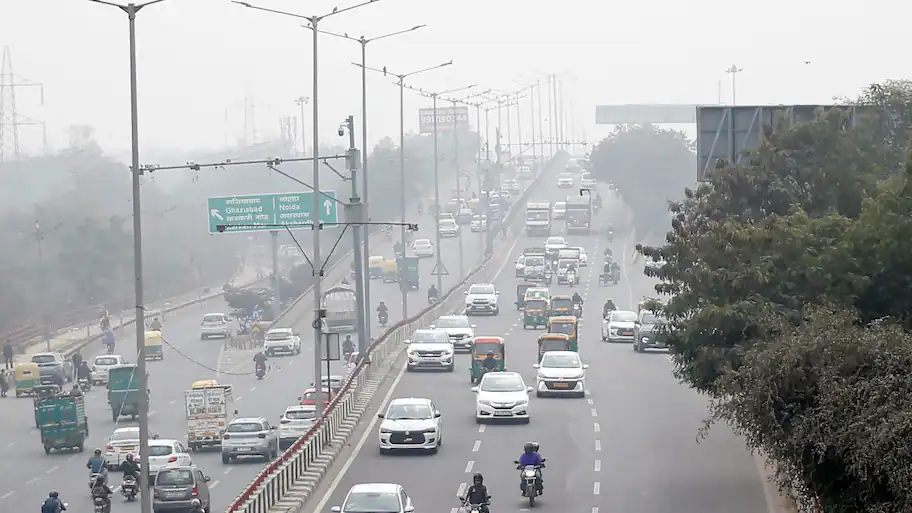
As the national capital braces for seasonal winter pollution, the Delhi government has announced a series of measures starting in November to curb air pollution and reduce private vehicle use. These include a 50 per cent work-from-home policy for government and private offices, doubled parking fees, and staggered office timings.”
The government has also announced restrictions on construction and demolition activities during the peak pollution period. The measures were announced after a meeting on Monday chaired by Union Environment Minister Bhupender Yadav and attended by Delhi Chief Minister Rekha Gupta, Delhi PWD Minister Parvesh Verma and Delhi Environment Minister Manjinder Singh Sirsa. Parking facilities owned and managed by the Delhi Metro Rail Corporation will be exempt.
Parking charges at authorised parking facilities will be doubled from November 1, 2026, to February 28, 2027, as part of efforts to discourage the use of private vehicles. The government has announced a complete ban on construction and demolition activities from December 10, 2026, to January 20, 2027. Dust-generating demolition work and outdoor civil construction activity will also remain prohibited from November 1, 2026, to January 31, 2027.
‘No PUCC, No Fuel’ policy to be intensified
A public awareness campaign on the measure will be launched in October, while Pollution Under Control (PUC) centres will be upgraded in November. Office timings will also be staggered during the period. The focus, he added, includes managing cremation grounds, dumping sites and construction and demolition waste sites within the identified areas through the respective district administrations. “Creating ‘brown patches’ is crucial for greenery. The government has also initiated a deep-cleaning programme for roads. Under the plan, roads will be deep-cleaned every fortnight to remove accumulated soil and dust. Teams will comprise four people per vehicle, including representatives from the Delhi Pollution Control Committee (DPCC) and the Municipal Corporation of Delhi (MCD). The government is also coordinating with the Delhi Police. The measures form part of Delhi’s wider winter pollution response, with the government seeking to tackle emissions from vehicles, road dust, construction activity and other local sources before pollution levels typically worsen during the colder months. (with agencies input)
Municipal Corporation of Delhi (MCD) offices will operate from 8:30 am to 5 pm, while offices under the Government of the National Capital Territory of Delhi (GNCTD) will function from 10 am to 6:30 pm. Government and private offices will also have to reduce their in-office workforce by 50 per cent from November 1 to February 28. Half of the staff will work from home, while the remaining 50 per cent will work from the office. Sirsa also said fitness checks would be conducted for 2.5 lakh vehicles through three Automated Testing Stations. Delhi currently has 588 electric buses in operation, with another 150 buses planned for addition to the fleet, according to Sirsa. Of the 62 pollution hotspots identified in Delhi, pollution levels at 42 have already been brought under control, Sirsa said, adding that work was continuing at the remaining locations.
Sirsa said the government would strengthen its “No PUCC, No Fuel” policy as part of the wider pollution-control drive. “A strict drive against ‘end-of-life’ vehicles will be conducted at all 500 petrol pumps in Delhi equipped with ANPR cameras,” he said. He said the government was also working on a comprehensive plan for air-quality and traffic-congestion hotspots across the capital. “I am visiting the offices of all 11 District Magistrates to review the activities causing pollution within a 3-kilometre radius of these hotspots,” Sirsa said. The minister also outlined plans to tackle road dust by creating “brown patches” and increasing greenery along road edges through public participation. We aim to address the issue of soil and dust rising from road edges by developing these ‘brown patches’ and greenery through a public participation campaign, bringing everyone together in the effort,” he said. Under the “Zero Burning” initiative, the government had previously distributed heaters. This year, Sirsa said, designated “heating spots” would be created. Temporary shelters equipped with heating arrangements will be set up to ensure protection from the cold, he said.
