
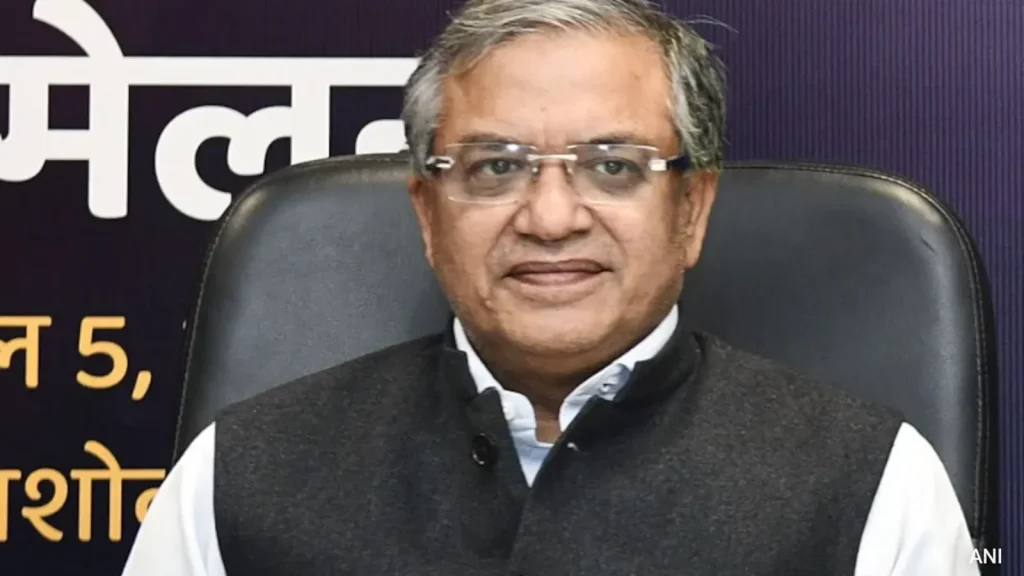
Chief Election Commissioner Gyanesh Kumar on Monday said Indian electronic voting machines (EVMs) are manufactured by public sector companies and do not have internet, Bluetooth, or Wi-Fi connectivity.
Kumar also implored young people to not only become voters themselves but also to encourage their family members and peers to participate in elections. When the electoral roll is prepared in India, its concurrent audit is carried out by the booth-level agents of all political parties. Similarly, during polling, a concurrent audit is conducted by the candidates’ polling agents; and likewise, during the counting process, a concurrent audit is performed by the candidates’ counting agents.
Highlighting the scale of India’s electoral exercise, Kumar said the country has around 100 crore voters and conducting elections for such a vast electorate was itself a massive task. He encouraged young people to actively engage in the democratic process and referred to Article 326 of the Constitution while urging students who have reached the age of 18 to register as voters.
During his two-day visit to Lucknow, Kumar interacted with students at the historic Colvin Taluqdars’ College and discussed India’s democratic system, the electoral process, the reliability of EVMs, and the importance of young voters, according to an official statement. He said his journey in public service eventually led him to the role of Chief Election Commissioner in the world’s largest democracy. Later, speaking at another programme, Kumar said, “As you are all aware, elections in India are conducted as per the Constitution, laws, and guidelines (‘nirdesho’). Kumar said the Election Commission had undertaken a concerted and proactive effort to strengthen the Electoral Literacy Club (ELC), an initiative that has been part of the commission’s tradition for a long time.
He emphasised the importance of engaging young citizens, asserting that their trust and informed participation in the electoral process is an investment in the future of democracy.
