
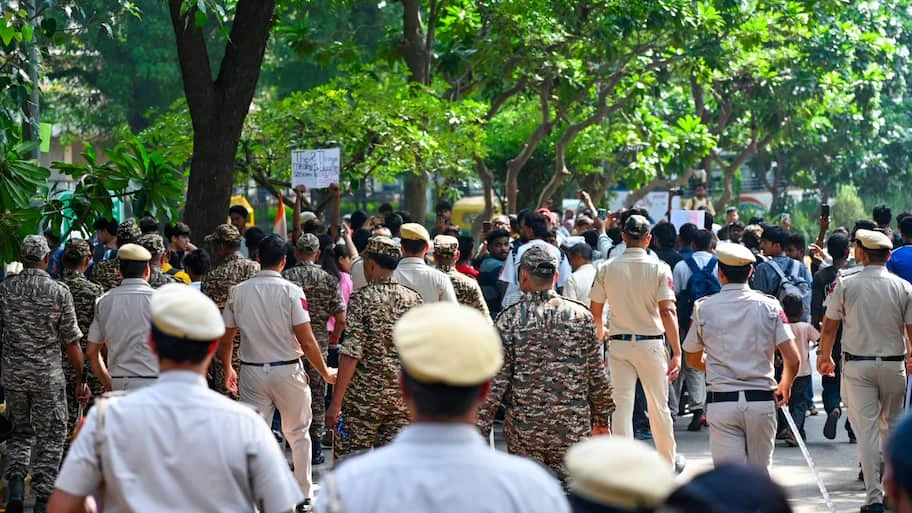
Following the large-scale protests that followed, violent crackdown at the Jantar Mantar on July 20 and the Delhi Police has decided to strengthen and overhaul its intelligence-gathering system to improve preparedness for major demonstrations and public gatherings.
As the situation escalated, clashes broke out between protesters and the police. The use of force by the police later drew widespread criticism. In the aftermath of the incident, Delhi Police reviewed its intelligence system. Officials felt that they had not received adequate and accurate information in advance regarding the number of protesters, their mobilisation, and the involvement of different organisations. As part of the new approach, police will also profile protesters to understand how many participants are arriving from different states, how they are being mobilised, and the role of key organisers and leaders. Police will gather information about where protesters are staying, their local contacts, and their connections within Delhi. This means the focus will no longer be limited to when and where a protest is taking place. Police will also examine who is organising the event, how demonstrators are being mobilised, where they are coming from, and how the protest has been planned. The Police Commissioner has also issued strict instructions regarding the wireless communication system.
Delhi Police Commissioner Anurag Kumar has directed the Intelligence Wing and the Special Branch to collect and analyse at least 10 key inputs before any large or planned protest, according to sources.
