
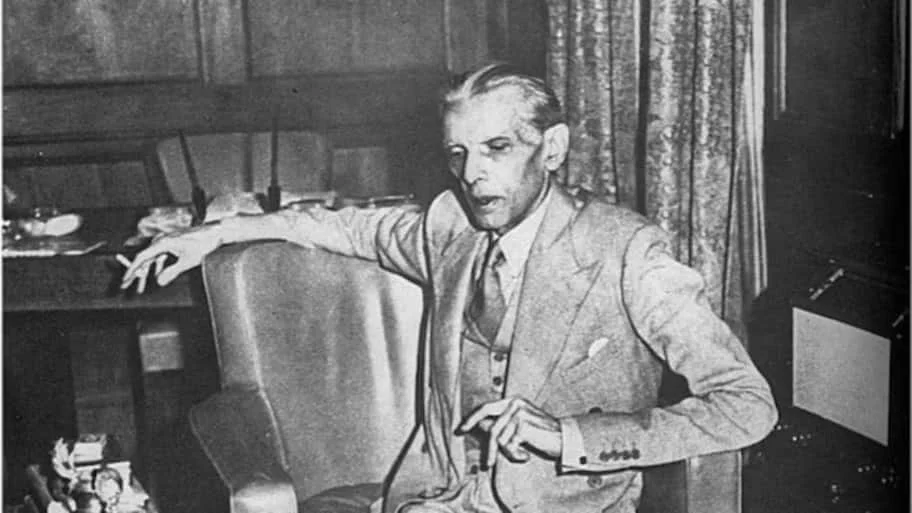
New Delhi: Two Parsi doctors who kept Muhammad Ali Jinnah’s terminal illness secret in 1946 are set to receive Pakistan’s highest civilian honour, decades after their silence became part of one of the most consequential secrets surrounding Partition.
Jinnah understood the political significance of his illness. I would have delayed the decision to grant independence by several months. Pakistan would not have existed.
Patel and radiologist Jal Deboo examined Jinnah’s chest X-ray in June 1946 and concluded that his tuberculosis had progressed so far that he might have only a year or two to live, according to Larry Collins and Dominique Lapierre’s ‘Freedom at Midnight’. Pakistan announced the Nishan-e-Quaid-e-Azam for Patel and Deboo on August 14, with the awards scheduled to be formally presented next March 23.
Doctors Jal Ratanji Patel and Jal Deboo have been nominated for the Nishan-e-Quaid-e-Azam for what Pakistan’s Planning Minister Ahsan Iqbal described as their “silent but extraordinary service”. He showed little emotion, according to Patel’s account. “He said that there was no question of giving up the struggle of his life merely to lie on a bed in a sanatorium. “Nothing short of the grave could remove him from the work which he had made the purpose of his life – to lead the Muslims of India at this critical turning point in history,” Patel said, according to the author. He feared that if his opponents learned he was close to death, they could change their strategy and wait for his death before attempting to weaken the Muslim League’s leadership, according to ‘Freedom at Midnight’. Mountbatten later said, “If I had known all this at the time, history might have taken a different course, according to the book. Iqbal said their professional discretion had played an important role, albeit unintentionally, in circumstances that helped make Pakistan’s creation possible.
