
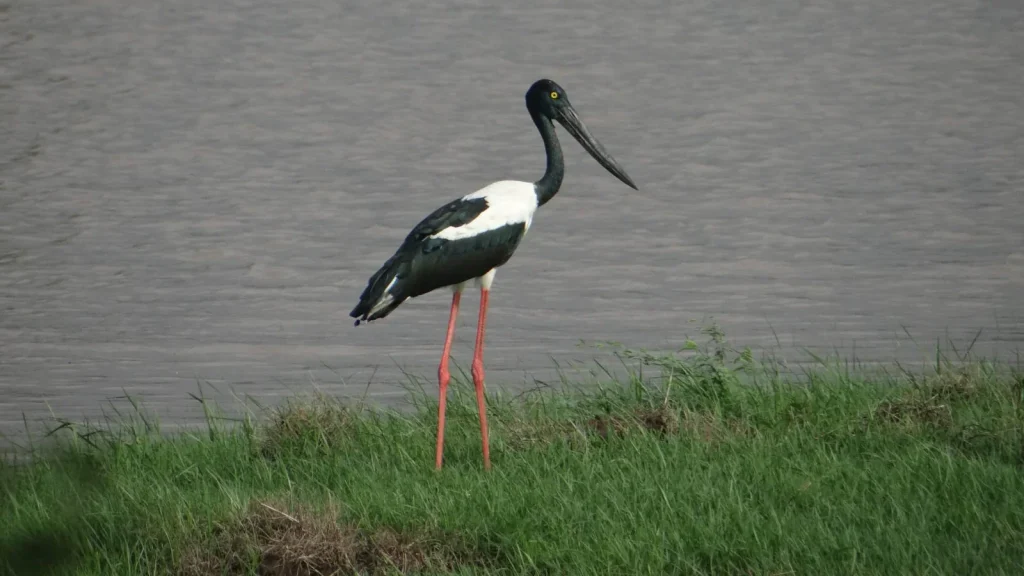
A comprehensive study by the Gujarat Ecological Education and Research (GEER) Foundation has confirmed that the Ramsar-designated Khijadiya Bird Sanctuary in Jamnagar serves as a critical breeding sanctuary for the Black-necked Stork.
A comprehensive study by the Gujarat Ecological Education and Research (GEER) Foundation has confirmed that the Ramsar-designated Khijadiya Bird Sanctuary in Jamnagar serves as a critical breeding sanctuary for the Black-necked Stork.
Monitoring data revealed exceptional biparental care throughout the breeding cycle, which spanned from initial nest construction in October to fledging by the end of the year. Field surveys across eight management zones identified four active nests within the sanctuary, each successfully producing two fledglings for a total of eight juveniles. This demonstrates the storks’ capacity to adapt to invasive plant species when native nesting trees are scarce. State officials and conservationists credited the sanctuary’s stable hydrological conditions, low human disturbance, and restricted-access habitats along the Central Asian Flyway for these positive outcomes.
Published in the international Journal of Threatened Taxa, the research evaluated the population, nest sites, and reproductive performance of the species between July 2024 and March 2025. Combined with non-breeding adults, the location supported a peak seasonal population of 21 storks. Remarkably, the study documented a 100% fledging success rate with zero instances of nest abandonment, predation, or chick mortality. The findings highlighted notable ecological adaptations, as all four nests were constructed on Neltuma juliflora (gando baval) at heights between 3 and 4.5 metres. The nest locations featured shallow waters ranging from 0.3 to 0.7 metres in depth, offering rich foraging grounds filled with fish, amphibians, and crustaceans essential for chick development. Adult storks attended their nests for an average of 62 minutes per visit during 89 field observations, with parents swapping places in 94% of foraging departures to maintain constant protection. Listed under Schedule II of the Wild Life (Protection) Act, 1972, the Black-necked Stork stands to benefit from ongoing targeted conservation strategies informed by the GEER Foundation’s field data.
