“Whatever melts in the Himalayas rises in the sea,” said Nepal Foreign Minister Shishir Khanal as he elaborated on the common threat to Nepal and India from the ecological fragility in the Himalayas.
But we have to reframe our relationship in ecological terms,” Khanal said at the NDTV World Anviksha Summit in Kathmandu on Thursday. This is what we saw live in front of our eyes on Wednesday. “Nepal and India have always talked about our relations in terms of Roti-Beti, Sita-Ram . Religion and civilisational links have always played a big role in our ties. “What melts in the Himalayas rises in the sea.
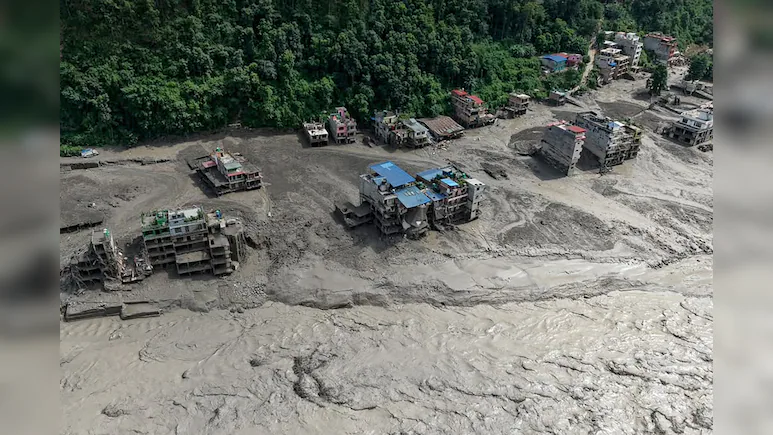
A burst in the Nepal-China border region in the Himalayas sent water rushing downstream, devastating areas of Nepal,” he said, talking about the devastating floods in the Himalayan nation.
Calling for more ecological cooperation, the minister added that while this time the floods have not gone further downstream and impacted India, such incidents have happened in the past and may happen in the future. “China, Nepal, India and Bhutan are connected by ecology and our shared survival and future depends on protecting the Himalayan ecology.
In this context, the minister said that India, China, Nepal and Bhutan are connected by ecology and will have to keep their differences aside and work together. There could be political rivalry, but we have to come together as the Himalayan region is most vulnerable to climate change,” Khanal said.