
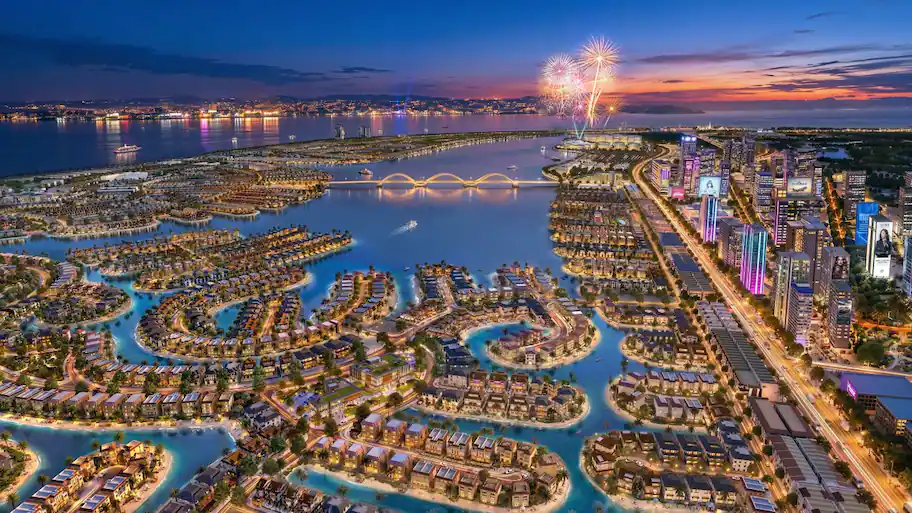
Vietnam is now testing a model in which data systems, governance standards and climate resilience are incorporated into the planning of a new city before it begins full operations.
New Delhi: The next generation of smart cities in Asia may be moving away from the idea that only technology can make an urban development “smart”.
The development comes as India’s decade-long Smart Cities Mission moves towards completion. The experience has also shown a larger issue for urban planners. Building digital infrastructure and smart systems is only one part of creating a city that works for its residents. It uses resident perceptions across two pillars – structures and technology. Structures include infrastructure and institutional conditions, while technology looks at the digital services and technological provisions available to residents. The report found that structures was a stronger and more consistent predictor of overall smart-city performance than technology. The system is expected to be monitored and evaluated annually.
As of March 31, 2026, the country had completed 7,790 of the 8,064 (97 per cent) projects taken up under the mission. The completed projects were valued at Rs 1.56 lakh crore out of the total Rs 1.65 lakh crore investment. The 2026 IMD Smart City Index, which assessed 148 cities, puts this issue into perspective.
IMD also said high-performing cities tended to score better on governance, transparency and public trust. Patricia McCarney, president and CEO of the World Council on City Data, said the project has established a foundational data system intended to support urban governance, infrastructure planning, technology use and sustainability goals.
That finding presents a different challenge for cities that are being built from the ground up. They do not have an established population whose experience can immediately be measured. The question is whether the same standards can be built into the city’s planning and data systems before residents move in. Climate resilience is a particularly important issue for Vietnam. Its eventual performance will depend on how those plans translate into actual services and living conditions. Vietnam’s policy direction is also moving towards greater use of technology, digital transformation and private-sector participation. It also calls for stronger national data infrastructure and greater use of digital data in governance. That policy environment gives private developers a larger role in Vietnam’s urban-development plans. It does not, however, remove the practical test that comes later: whether planned systems deliver better services and a better quality of life once people actually live in these cities.
The project is therefore being presented as a test of whether international urban standards can be applied before a city becomes fully operational. One such experiment is underway in Can Gio, Ho Chi Minh City, where Vinhomes, a subsidiary of Vietnamese conglomerate Vingroup, is developing the 2,870-hectare Vinhomes Green Paradise project. A World Bank assessment estimated that the country would need about $368 billion in additional investment through 2040 to follow a climate-resilient and net-zero development path. Resolution 57, issued in December 2024, identifies science, technology, innovation and national digital transformation as major drivers of development. Its 2030 goals include the development of smart cities in centrally administered cities and other provinces and cities that meet the required conditions. Resolution 68, issued in May 2025, focuses on developing the private economy and includes measures aimed at improving private companies’ access to finance, technology, digital transformation and other forms of support.
That does not establish how the city will perform once residents move in. Resident experience, service delivery and day-to-day governance will ultimately provide a different test. This is where the distinction between two generations of smart-city development becomes relevant. The first generation largely involved taking existing cities and adding technology. A greenfield model starts at a different point. Data architecture, digital services, resource management and urban infrastructure can theoretically be planned together rather than added to an existing urban system later. But that approach also has its own risks. A city designed around data still has to work for people. The IMD findings suggest that institutional capacity, infrastructure and governance can have a greater bearing on smart-city performance than only technology. That makes the planning of new urban areas more complicated than installing digital systems. Drainage, water management, energy use, mobility, construction and the protection of surrounding ecosystems all have to function as part of the same urban system.
India’s Smart Cities Mission followed this approach across 100 selected cities, with projects spanning mobility, water, sanitation, energy, governance and other urban services. The government says 100 Integrated Command and Control Centres were also created under the programme. Vietnam is exposed to climate risks, and the World Bank has estimated that climate change could cost the country 12 to 14.5 per cent of GDP annually by 2050 without adequate adaptation and mitigation measures.
