
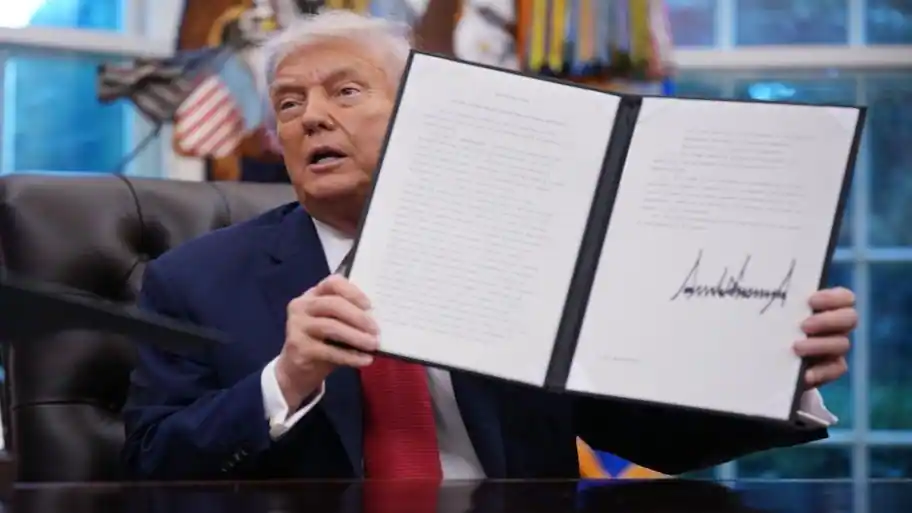
Washington: US President Donald Trump has officially enacted the Lindsey O. Graham Sanctioning Russia and Iran Act of 2026. This law empowers his administration to impose sanctions and tariffs on nations that continue to purchase Russian crude oil or natural gas, in accordance with the conditions outlined in the legislation.
The law strengthens statutory sanctions against Russia and extends the Iran Sanctions Act for another five years. The decision to use the authority rests with the US president, subject to the conditions set out in the legislation. The measure also gives the president waiver authority in specified circumstances. A waiver can be issued when the administration certifies to Congress that it is in the national interest.
He signed it on Friday (September 18), the White House said. The law does not automatically impose a 100 per cent tariff on India, China or any other specific country.
The legislation gives the president authority to impose tariffs of up to 100 per cent on the five largest importers of Russian crude oil or natural gas, as well as countries that meet specified criteria involving purchases of Russian energy, efforts to help Russia evade sanctions, financial institutions, defence-related networks, or the “shadow fleet” of vessels used to transport Russian energy while avoiding Western restrictions.
It was introduced by the late Republican Senator Lindsey Graham and was named after him. Reuters reported that the House vote sent the bill to Trump for his signature. Reuters reported that Zelenskyy had strongly backed the bill before its passage through Congress.
Ukrainian President Volodymyr Zelenskyy welcomed the legislation and described sanctions as an important tool for putting pressure on Russia to move towards peace. It passed the Senate by 86-11 in August before clearing the House of Representatives by 262-159 on September 16. The House vote also showed bipartisan support for the measure, with 58 Democrats joining Republicans in backing it, according to Reuters.
