
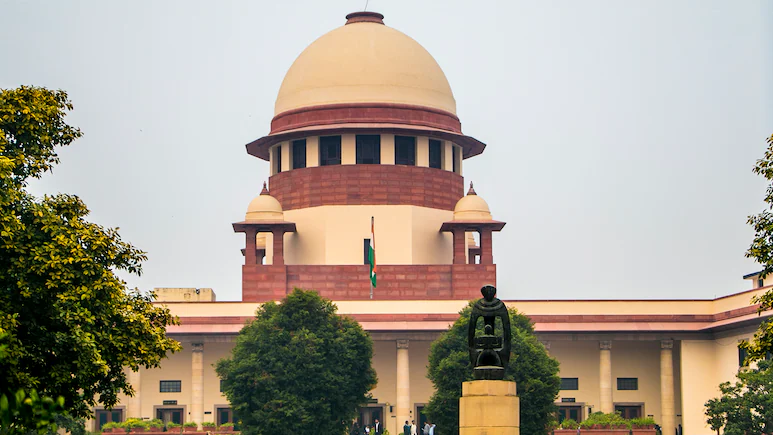
The Supreme Court has ruled that prolonged litigation against a tenant cannot mean the landlord’s legitimate need to take back the property’s possession has ended. The court delivered the ruling in a landlord-tenant dispute nearly four decades old in Uttar Pradesh’s Pilibhit. The bench of Justices Satish Chandra Sharma and Nongmeikapam Kotiswar Singh set aside a March 2025 order of the Allahabad High Court and restored the eviction order passed by the lower authorities.
The landlord then moved the Supreme Court. On the tenant’s petition, the Allahabad High Court intervened in March 2025 and set aside the eviction order. The bench noted that the landlord acquired the premises in 1984 and filed a civil suit in 1986, and that the tenant has occupied the property since. The landlord’s son has not been able to set up his clinic as the premises in question have not been vacated for the last 40 years, the court said.
The tenant must also pay all outstanding arrears of rent and any current rent due within the same period. The Supreme Court relied on a 2023 ruling, in which a matter had been pending for more than 38 years. The court directed the tenant to hand over vacant and peaceful possession of the premises to the landlord, who was represented by lawyers Prachi Mishra and Chaitanya, within 30 days from the date of the order.
In that case, the court held that asking a landlord to restart proceedings after such a delay “would be a travesty of justice”. “The interests of justice would be subserved by setting aside the impugned order of the High Court and restoring the concurrent findings and orders of eviction passed by the courts below,” the bench said.
