
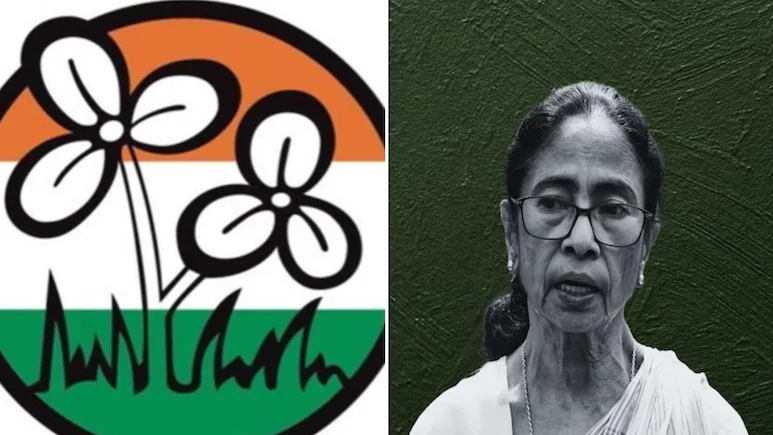
Even today, photographs from that period remain in the archives, showing the late Ajit Panja, Mani Shankar Aiyar, late Mukul Roy, Ratan Mukherjee and Banerjee – capturing the time when it took shape as Banerjee’s own political organisation. On 2 January 1998, the All India Trinamool Congress received recognition from the Election Commission, along with its own election symbol, which was hand-drawn by Mamata Banerjee.
The former West Bengal chief minister had decided not to contest the upcoming bypoll in Nandigram and her party announced that Sanchita Pradhan Dey, a former teacher, would be the candidate. But Dey withdrew her candidature on Friday, two days after the last date for filing nominations.
Analysis: As 2 Flowers In Trinamool Symbol Split, Questions About Party’s Future
Today, however, the same Election Commission has frozen both the TMC’s party name and its symbol. Addressing a press conference on Friday, Banerjee claimed every successive incident proves that the BJP is destroying democracy and wants to end the Trinamool once and for all to clear its path. Today, that identity lies fractured. When Banerjee managed to defeat the CPM, the BJP did not have the organisational capability it has today.
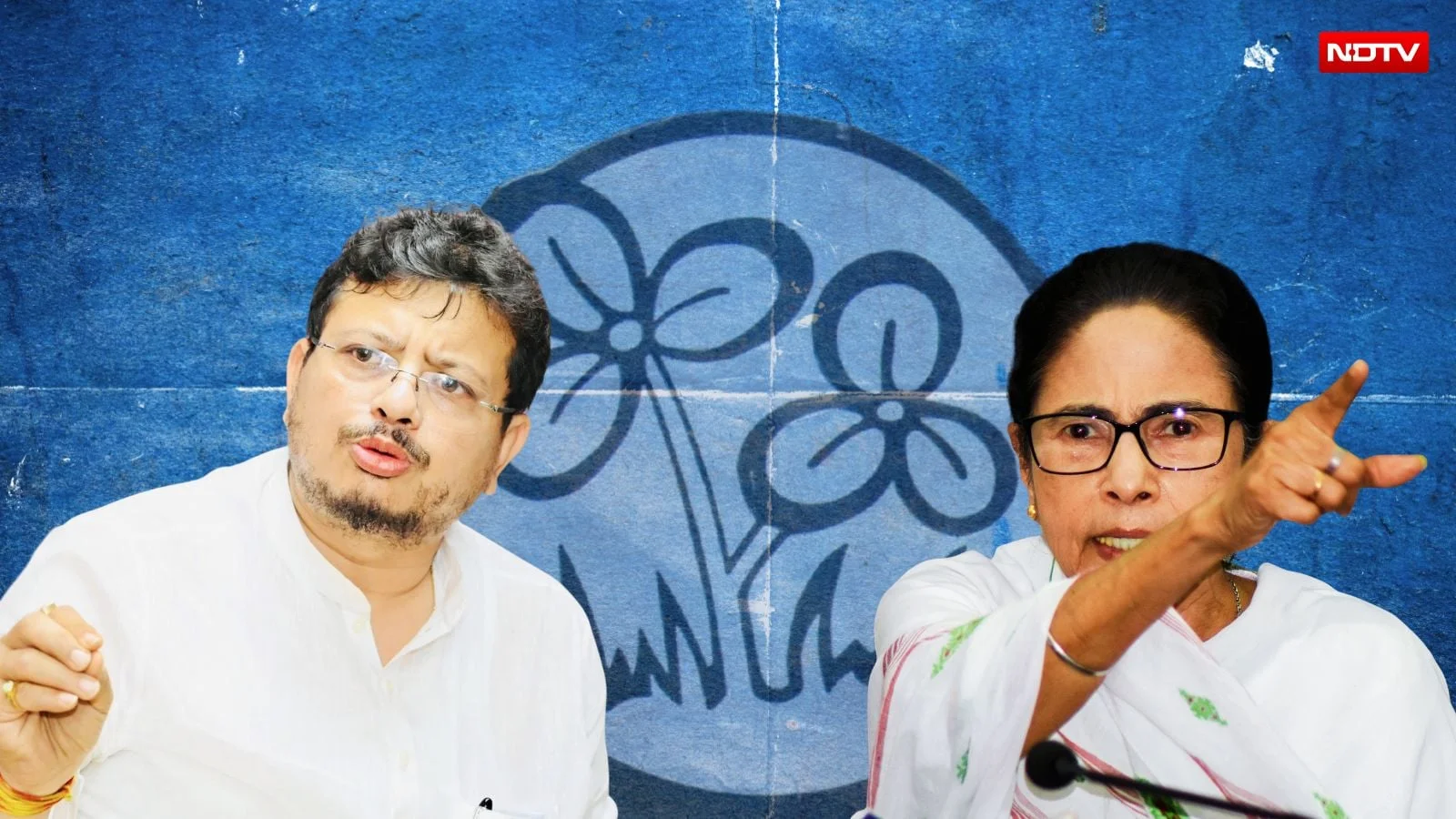
The Election Commission asked both the Mamata Banerjee and Ritabrata Banerjee factions to submit three proposed names and symbols. READ | Football vs Envelope: Mamata Banerjee’s Party, Rebels Get New Name, Symbol Dey also met Chief Minister Suvendu Adhikari to discuss defecting to the BJP. Adhikari claimed he has nothing to do with all of this, and if the Trinamool Congress is breaking into three or four factions, it is a sign of the party lacking cohesion. She also spoke about Indira Gandhi and how her party also went through the hassle of changing the party name and symbol thrice before landing on the final one. The symbol had been drawn by Mamata Banerjee herself at MS Flats, the multi-storeyed residential complex in Delhi, opposite Ram Manohar Lohia Hospital, where she used to stay. She drew the symbol and Mukul Roy put the sketch inside an envelope, sealed it, attached a letter and submitted it to the Election Commission. Then, in January, the approval came, and the announcement followed. Both the All India Trinamool Congress name and the ‘Jora Ghash Phool’ symbol formed the bedrock of the political identity Banerjee built from scratch. But the central question is much larger: Is this the endgame for the TMC? Rise The TMC that Mamata Banerjee created gradually rose to a very significant position in Indian politics. Banerjee became Railway Minister twice. She held the portfolio during the Atal Bihari Vajpayee government and later again during the Manmohan Singh-led UPA-II. The growth of the party was fuelled primarily by its anti-CPM struggle. Mamata Banerjee became the political face of the sentiment against the party, which ruled Bengal for decades, and eventually succeeded in removing the CPM from power. In that sense, she proved to be a formidable political strategist. She understood the political dissatisfaction that existed in the state, channelled it effectively and eventually became chief minister. READ | Nandigram Candidate Abandons Her, Mamata Banerjee Pulls A Congress Surprise Several Congress leaders had tried before her – Pranab Mukherjee, Barkat Ghani Khan Choudhury, Ashoke Sen, Priya Ranjan Dasmunsi and others – but none succeeded. When the CPM was in power, many of the Congress’s lumpen elements and goons gradually entered the party system. When the TMC took over, many of those same elements moved into the new ruling party. In power for three terms, Banerjee herself perhaps could not fully understand the extent of the erosion in the party. Then Abhishek Banerjee, her nephew, emerged as a youth leader. Initially, the organisation was built around the youth structure. Gradually, he rose to become the general secretary of the All India Trinamool Congress. The party began seeing a corporatisation and voters began feeling alienated. In district after district, corruption entered the TMC leadership structure and extortion and syndicate politics became part of the political vocabulary associated with the party. In some ways, this began to resemble what happened in Bihar when the Lalu Yadav regime eventually came to an end. Survival And that brings us to the central question: Can Mamata Banerjee survive politically? She remains physically active and is once again planning to revamp the party. She is considering district-wise campaigns and other steps. But there is an important historical point here. The Vajpayee-Advani period was still one of coalition governments, without a clear majority for the party. After that, it began trying to expand into areas where it traditionally had little or no organisational base. Amit Shah, when he became BJP president, spoke about making the party truly pan-Indian. For that to happen, the BJP had to expand beyond the Hindi heartland and establish itself in eastern and southern India as well. The party subsequently expanded in the Northeast, including Assam and Tripura. After those successes, the BJP became even more aggressive in West Bengal. The TMC divide, in one sense, is in the BJP’s interests. Party leaders are also saying that the split is the result of a BJP conspiracy. But there is also a counter-argument. Of course, the BJP will do what is politically advantageous. But the real question is whether the TMC itself has the organisational immunity to survive once it is out of power. If a party loses power and immediately begins to break apart, that raises a much larger question about its internal strength. One thing is clear: the TMC’s future presents a very grim and cloudy picture and it will need all of Mamata Banerjee’s political – and drawing – skills to change this.
Coming Up With Symbol I still remember Mukul Roy going to the Election Commission on 17 December, 1997, with a sketch of the ‘Jora Ghash Phool’ (flowers and grass) symbol. Banerjee is now 75 years old. READ | Congress’ Nandigram Pick Arrested After Mamata Banerjee Announces Support Then the BJP came to power on its own in 2014. And now, for the first time since 1947, the BJP has come to power in West Bengal under the leadership of Suvendu Adhikari.
The Mamata Banerjee faction has been allotted the name ‘Mamata All India Trinamool Congress’, with the symbol of a football player, drawing a connection with the “khela hobe” slogan. These developments, he said, have shattered Banerjee’s pride.
All eyes will now be on how long it takes for anti-incumbency against the BJP to emerge. The BJP has only recently come to power – it is still in what can be described as a political honeymoon period. But if it begins to open up after five years, who will occupy it?
The opposition space is therefore limited at present.
The BJP was still weak in West Bengal when Banerjee allied with it under Vajpayee. Fall When she swept to power in Bengal in 2011, that was perhaps the greatest achievement of her political career. But, over the next 15 years, structural decay set in.
