
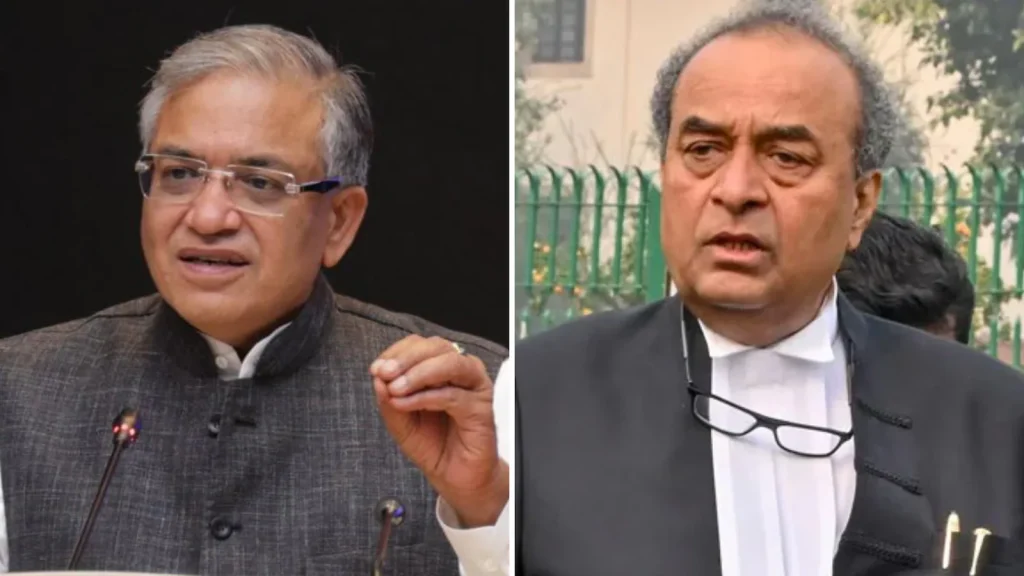
Former Attorney General Mukul Rohatgi said on Friday that there is no constitutional basis for the Opposition’s proposed move to try and impeach Chief Election Commissioner (CEC) Gyanesh Kumar, arguing that disagreements within the three-member Election Commission (EC) are actually a healthy sign of democratic decision-making.
Rohatgi also addressed the two Election Commissioners’ writing to the Cabinet Secretary over internal disagreements reportedly over assignment of some work. “This is a misunderstanding by the ECs of their constitutional position. “The cabinet secretary is the head of the executive and the bureaucracy. What role does he have to play? It’s completely wrong. He questioned how the notes became public: “God knows who leaked it. God knows how much it is correct. God knows why they wrote to the cabinet secretary. “Take the most classic case, the Emergency case, where Justice HR Khanna was in a minority.
Because the commission decides by majority, referring to that news report, Rohatgi said such notes were internal and could not form the basis of a removal case. The Opposition is preparing a fresh notice seeking Gyanesh Kumar’s removal, following a report by The Indian Express that the two Election Commissioners, Sukhbir Singh Sandhu and Vivek Joshi, sent 14 administrative notes to the CEC and wrote to the Cabinet Secretary raising objections to processes and decisions. Justice Khanna was the lone dissenting judge in the 1976 case in which a five-judge Constitution bench held that citizens could not approach courts to enforce the right to life and personal liberty during the Emergency, imposed by the then PM Indira Gandhi from 1975 to 1977. A nine-judge bench overruled the majority verdict in 2017.
“Finally, if the EC issues a unanimous order, then it means that the discordant notes have been synchronised and have been ironed out,” he argued. They are a constitutional body,” he said. Comparing the EC with multi-judge benches of the Supreme Court, Rohatgi said judges often disagree during hearings but deliver unanimous verdicts. “You have to go by the final official outcome,” he said. He said minority views are sometimes vindicated later. But posterity finally said that he was right and the majority was wrong.
He said the CEC had no greater say than the other two members. “The CEC is only one amongst the three. [CEC’s vote] is equal to the other two votes,” Rohatgi said. The EC, in a statement, said all its decisions had finally been unanimous.
