
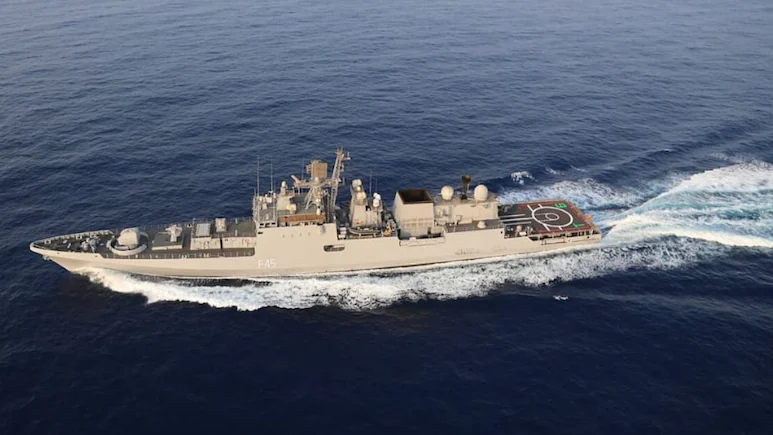
That framing isn’t wrong, exactly, but it skips past a more useful question: What does a navy actually owe the sea and the people on it, separate from who it happens to be facing that day?
Every time Indian and Pakistani warships end up close enough to touch, the story that follows tends to get told as one about rivalry – two militaries, two flags, another round in a decades-old contest.
The rule requiring naval vessels and submarines to keep a minimum distance of three nautical miles isn’t about affection between the two navies. It assumes the opposite. It assumes India and Pakistan will keep disagreeing strategically, and it creates a rule that reduces the odds of an accident.
The reason Article 10 exists is worth restating.
Distance buys time – to identify what the other ship is doing, to radio a warning, to correct course before anything touches. Close the distance suddenly and unexpectedly, and that time disappears, which can be genuinely dangerous between two states that both carry nuclear weapons. A sweeping claim about treaty rejection is not just harder to prove; it’s the wrong charge.
Because it’s checkable against radar and radio logs, more serious: did the Pakistani vessel involved in the recent incident hold a safe speed, keep a safe distance, answer the warnings it was given, and stick to the bilateral mechanism Islamabad signed, the question is narrower and,.
