
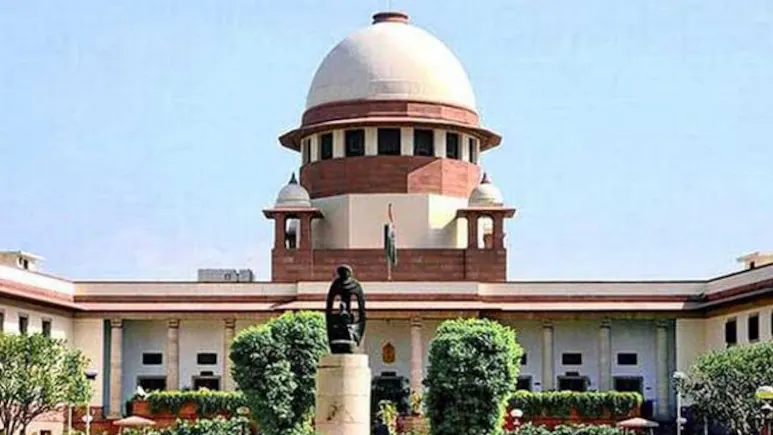
The Supreme Court on Thursday agreed to examine the Centre’s plea seeking a prospective application of its March 11 verdict that had held that the salary or income of a parent employed in a PSU or the private sector could not by itself be treated as the determinative criterion for creamy-layer exclusion for the Other Backward Classes (OBC).
The Centre, represented by Additional Solicitor General Aishwarya Bhati, urged a bench comprising Chief Justice of India (CJI) Surya Kant and Justices Joymalya Bagchi and V Mohana that the verdict be given a prospective effect, seeking a two-year window to implement the law laid down by the court and prevent disruption to past and ongoing recruitment processes. The top court took note of the submissions of the law officer that various high courts have entertained petitions concerning the judgment. If the judgment is not given a prospective effect, it will entail several harsh and unjust unintended consequences on employees or appointees who were not even parties to the litigation and complete administrative chaos.
In a case titled Union of India Vs Rohith Nathan, the apex court held on March 11 that the salary or income of a parent employed in a public sector undertaking or the private sector could not by itself be treated as the determinative criterion for creamy-layer exclusion. “It is submitted that this court has power under Article 142 of the Constitution to declare its judgment prospective. On September 1, another top-court bench headed by Justice P S Narasimha, who had authored the judgment, had agreed to consider another plea of the Centre seeking clarification on the applicability of its March 11 verdict on the OBC creamy-layer criteria on candidates of the Civil Services Examination (CSE) 2025.
Bhati said the Centre has moved the petition seeking a transfer of cases from various high courts to the top court or one high court.
