
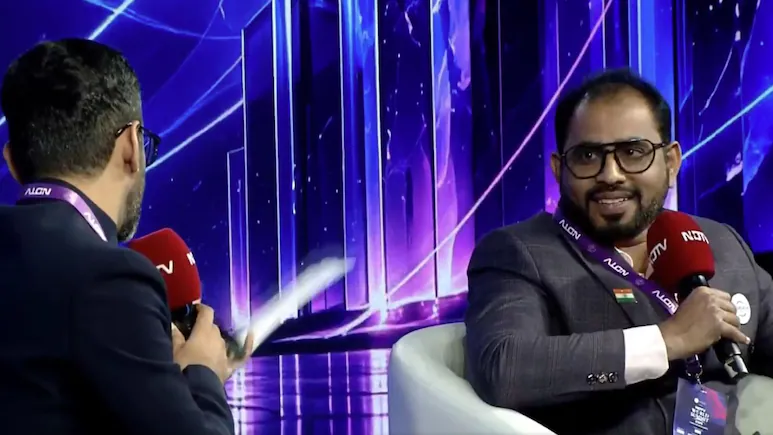
India needs to make more of its own solar equipment, improve energy storage and build stronger power infrastructure to meet its future energy needs, Dr Bondada Raghavendra Rao, Chairman and Managing Director of Bondada Group, said.

Rao asserted that India has the talent, money and resources to expand its energy sector. However, the country still depends on other nations for some important parts needed to produce and store electricity.
India has increased its ability to manufacture solar modules, used to convert sunlight into electricity. However, it still imports solar wafers and ingots, which are used to make solar cells. Rao added that solar power depends on sunlight, so India needs ways to store electricity and use it when required. The country should also explore other battery technologies, including vanadium redox flow batteries. He also pointed out that vanadium is available in India but is not being widely used. He also highlighted the growing demand for electricity from data centres. These facilities support digital services and artificial intelligence (AI) systems and need a continuous power supply.
Rao said his company has received a 100 megawatt-hour vanadium redox flow battery storage project from NTPC. He said India currently has a total installed power capacity of around 533 gigawatts (GW), of which about 281 GW comes from non-fossil fuel sources.
Rao said India needs to build factories to make these parts locally instead of depending on other countries. He said India currently depends almost entirely on imports for lithium-ion battery cells. “Vanadium is plenty available in India,” Rao said, adding that the country needs to focus on extracting and using the metal for energy storage. He said such projects could help test and expand the use of this technology in India. This means more than half of India’s installed power capacity now comes from sources that do not rely on fossil fuels, according to the figures he shared.
