
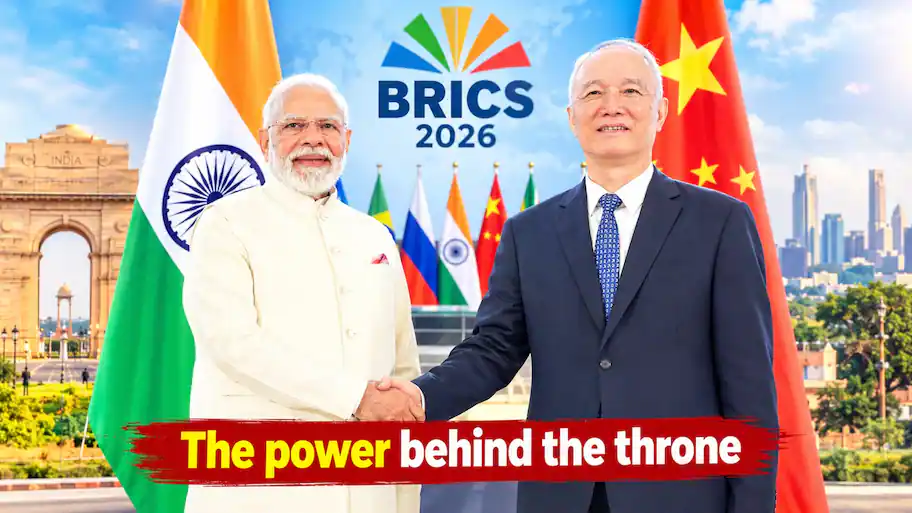
President of China Xi Jinping traveled to India’s capital, New Delhi, for the upcoming BRICS Summit, accompanied by Cai Qi, head of the General Office of the Communist Party of China (CPC), who is considered the second most powerful political figure in Beijing’s government structure.
His presence alongside Xi represents an unprecedented concentration of administrative powers and proven political loyalty at the top level of the Chinese state administration. Cai Qi managed to accelerate significantly his career path in the Chinese Communist Party, thus overcoming the traditional bureaucratic timelines of promotions. Breakneck access to Politburo : In 2017, Cai became appointed as a member of the ruling Politburo, which is the second-highest decision-making body in China, shortly after taking up the post of Communist Party chief in Beijing.
Norm-defying promotion : Prior to becoming the leader of the Politburo, Cai served as Beijing’s mayor; however, he has bypassed the standard five-year transitional timeline expected for such a move. Cai’s remit includes ideological training, schedule planning, and control over the machinery of the party’s center. Chief of Staff responsibilities : As the head of the CPC General Office, Cai operates as the operational chief of staff for Xi Jinping, managing core access and administrative processes. Ideological control : During his first months as a top-level official, Cai became the leader of the Central Party School, the elite educational institution responsible for the development of official ideology and training of young bureaucrats. Diplomacy : Moving out of the shadows of administration, Cai took up roles in diplomacy and welcomed international officials and received foreign delegations in important international summits. The basis for Cai’s power lies in decades-long political background and similar experiences of the supreme leader of China. Formative periods : Both Xi and Cai have gone through the turbulent periods of the Cultural Revolution as worker-peasant-soldier students in their formative years. Coastal alliances : Their professional partnership deepened over two decades of service in China’s eastern coastal provinces of Fujian and Zhejiang, forging a trusted alliance that endured through decades of leadership transitions. Strategic signaling : By bringing his most trusted administrative enforcer to New Delhi, Xi underscored the strategic weight Beijing places on repairing diplomatic and economic engagements with India.
Standing committee peak : By 2022, Cai had secured his place atop the pinnacle of state power by joining the seven-member Politburo Standing Committee, the pinnacle of China’s political power circles.
